24/7 call answering for contractors means your phone gets answered every time it rings, whether it's 2 p.m. on a job site or 11 p.m. on a Saturday. For HVAC, plumbing, and electrical businesses, this isn't a nice-to-have anymore; it's the difference between a booked job and a lead that quietly calls the next contractor on the list. Most owner-operators already know they're missing calls. What they often don't realize is just how much revenue walks out the door every time voicemail picks up instead of a live, capable voice.
Direct answer: 24/7 call answering for contractors is a service or AI system that answers every inbound call around the clock, qualifies the caller's needs, and books the job directly onto your schedule, so that no lead is lost to a missed call, a full voicemail box, or an after-hours silence.
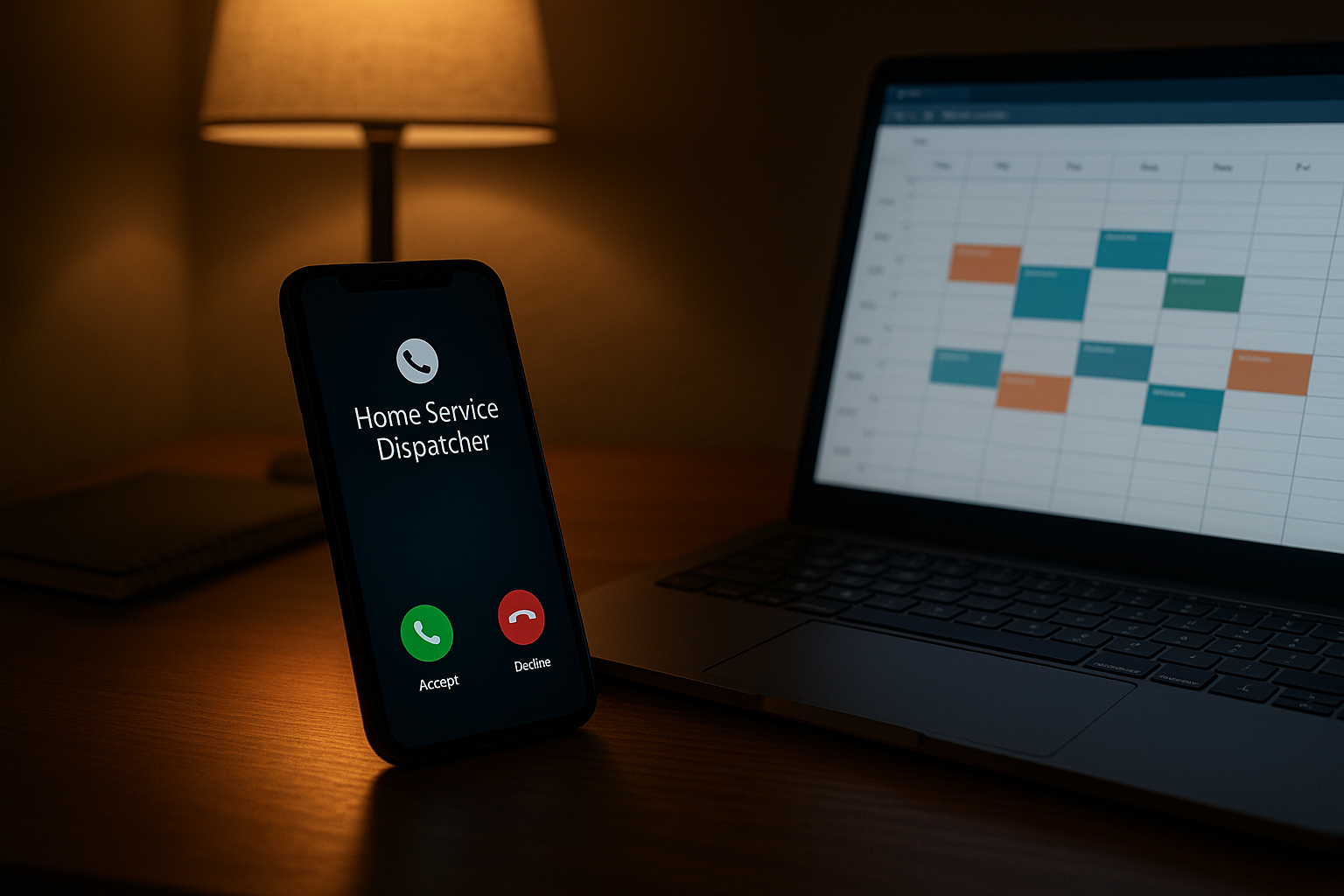
Late-night calls are often the ones contractors lose first without 24/7 call answering in place.
What Is 24/7 Call Answering for Contractors?
24/7 call answering for contractors is a system, either a live answering service or an AI receptionist, that handles every inbound call to a home service business at any hour, not just during posted office hours. Instead of forcing callers to leave a voicemail or wait for a callback, the system answers immediately, asks a few qualifying questions, and books the appointment in real time.
In practice, this looks like a caller dialing a plumbing company at 9 p.m. on a Sunday about a leaking water heater. Rather than hearing a generic voicemail greeting, the caller speaks with an AI receptionist, such as Kate from JobOS Pro, who checks live technician availability and confirms a Monday morning slot before the call even ends. As a result, the job gets booked before the homeowner has a chance to search for another contractor.
Why Contractors Lose Revenue Without Round-the-Clock Phone Coverage
Home service businesses don't usually lose work to competitors with better pricing. Instead, they lose it to their own handoffs. Industry estimates compiled from contractor call logs suggest that home service businesses miss between 20 and 30 percent of inbound calls during peak job hours and after 5 p.m., which is exactly when demand for emergency repairs tends to spike. Consequently, every missed call represents a potential job that quietly goes to whichever competitor picks up first.
Furthermore, according to the U.S. Bureau of Labor Statistics, demand for skilled trades such as HVAC technicians and electricians continues to outpace the available workforce, which means call volume for many contractors keeps climbing even as crews stay the same size (BLS Occupational Outlook Handbook). In other words, the phone problem doesn't resolve itself as a business grows; it typically gets worse unless something changes how calls are handled.
For a deeper look at this specific leak, see how to make sure no customer call goes unanswered.
How After-Hours Call Handling Works With an AI Receptionist
Modern after-hours call handling relies on AI voice technology rather than a human operator sitting by the phone all night. When a call comes in, the AI receptionist answers within one or two rings, greets the caller by business name, and asks a short set of qualifying questions: what service is needed, the property address, and how urgent the issue is.
What Happens During a Typical After-Hours Call
Once the caller's needs are understood, the system checks the live dispatch calendar for open slots, something a traditional voicemail or even a basic call center usually cannot do, since those services often rely on a separate, outdated schedule. If a slot is available, the AI books it and immediately sends a text confirmation. If the issue sounds like a true emergency, such as no heat during a cold snap, the call can be routed straight to an on-call technician instead of waiting for the next business day. This approach is explored further in who answers the phone when I'm on a job.
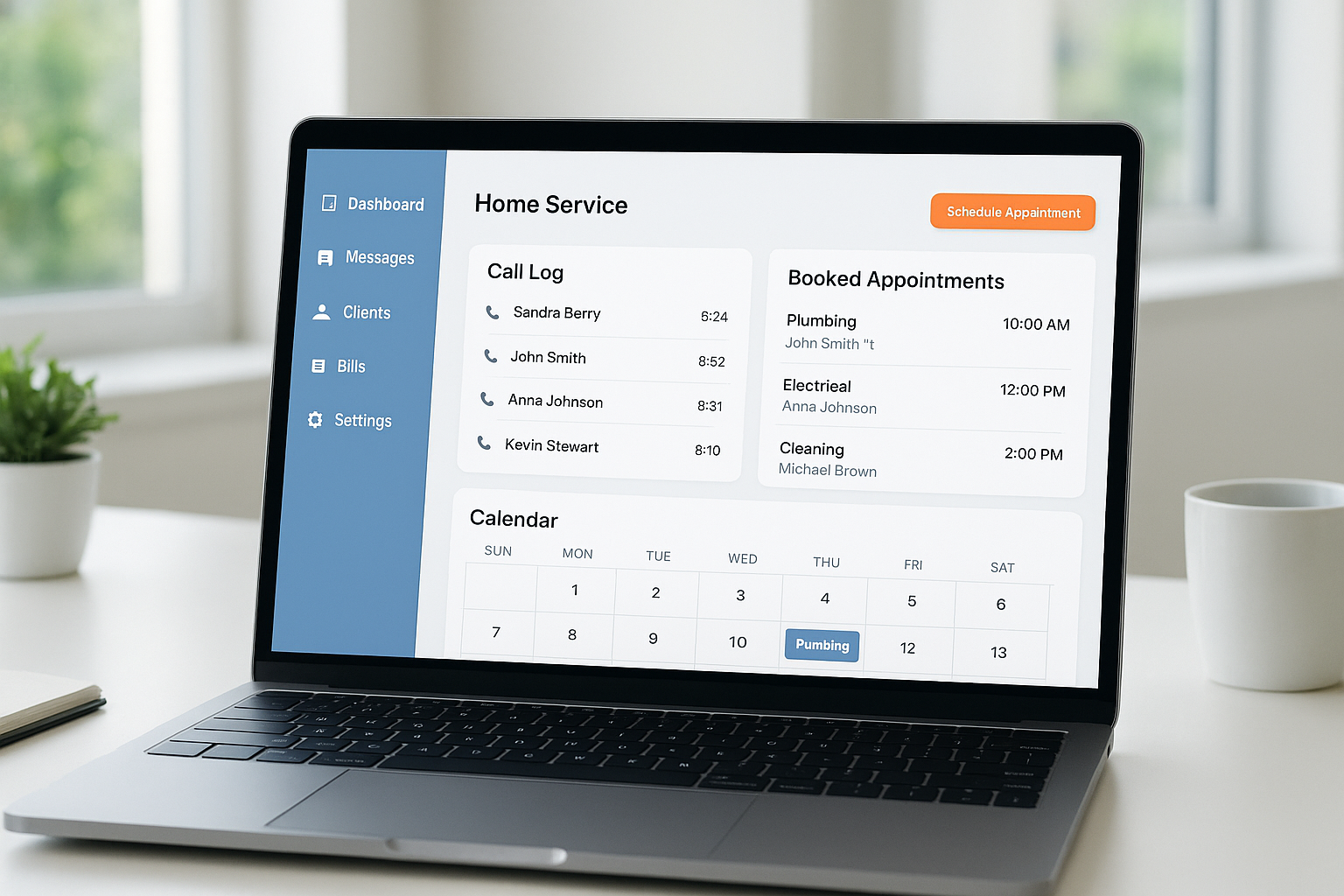
A dashboard view of 24/7 call answering for contractors, showing booked jobs captured outside normal office hours.
Step-by-Step: Setting Up 24/7 Call Answering for Contractors
Setting up round-the-clock call coverage doesn't require ripping out your existing tools. Instead, most contractors can layer it on top of what they already use within a day or two. Here's a practical sequence:
- Audit your current call gaps. Pull 60 days of call logs to see how many calls went unanswered and during which hours.
- Choose a platform built for trades. Pick an answering system designed around HVAC, plumbing, and electrical workflows, not a generic call center script.
- Connect your scheduling calendar. Link the system to live technician availability so bookings are real, not guesses.
- Set qualifying questions and service rules. Define what counts as an emergency, your service radius, and the job types you accept.
- Enable automatic text-back for missed calls. This catches anything that somehow still slips through, as detailed in automatically texting back missed calls.
- Test and monitor conversion. Review real call recordings weekly and track how many after-hours calls turn into completed jobs.
Traditional Answering Services vs. AI Call Answering for Contractors
Traditional live answering services have existed for decades, and the concept of a telephone answering service is well established across many industries. However, most of these services route calls to a generalist operator reading from a script, who then emails or texts the message to the contractor rather than booking the job directly.
In contrast, an AI call answering system built specifically for trades can check live availability and book the appointment itself, without a middle step. As a result, the caller gets a confirmed time before hanging up, rather than waiting hours for a callback. Additionally, flat-rate AI platforms don't charge per minute, so cost stays predictable even as call volume rises. If technicians frequently can't pick up while working, answering calls while on a job site efficiently covers additional tactics.
How Much Does 24/7 Call Answering Cost Contractors?
Cost varies considerably depending on the model. Live answering services often charge per minute or per call, which means the bill climbs along with call volume, sometimes unpredictably during busy seasons. Flat-rate platforms, on the other hand, charge a fixed monthly fee regardless of how many calls come in.
For example, JobOS Pro's plans are published at $199, $349, and $549 per month, each with unlimited technicians, dispatchers, and office staff. This matters because many competing platforms bill per technician, so the software bill grows every time an operator adds a truck. A flat structure means the cost of answering more calls doesn't scale against headcount, which is especially useful for the 3-to-15-truck operators this category typically serves. The trade organization Air Conditioning Contractors of America has noted that operational efficiency tools are increasingly central to margin protection in the HVAC trade, underscoring why predictable software costs matter.
Common Mistakes Contractors Make With Missed Calls
Even contractors who recognize the problem sometimes handle it poorly. One common mistake is assuming a voicemail greeting is sufficient; in reality, most callers simply hang up and dial the next business rather than leave a message. Another frequent error is delaying follow-up on missed calls by several hours or until the next business day, by which point the lead has usually already hired someone else.
Similarly, some contractors rely on a single office staff member to answer every call, which works fine until that person is on lunch, on another line, or out sick. Above all, treating call answering as an afterthought rather than a core part of the booking pipeline tends to be the costliest mistake of all. More ways to convert leads into booked work are covered in turning leads into booked jobs.
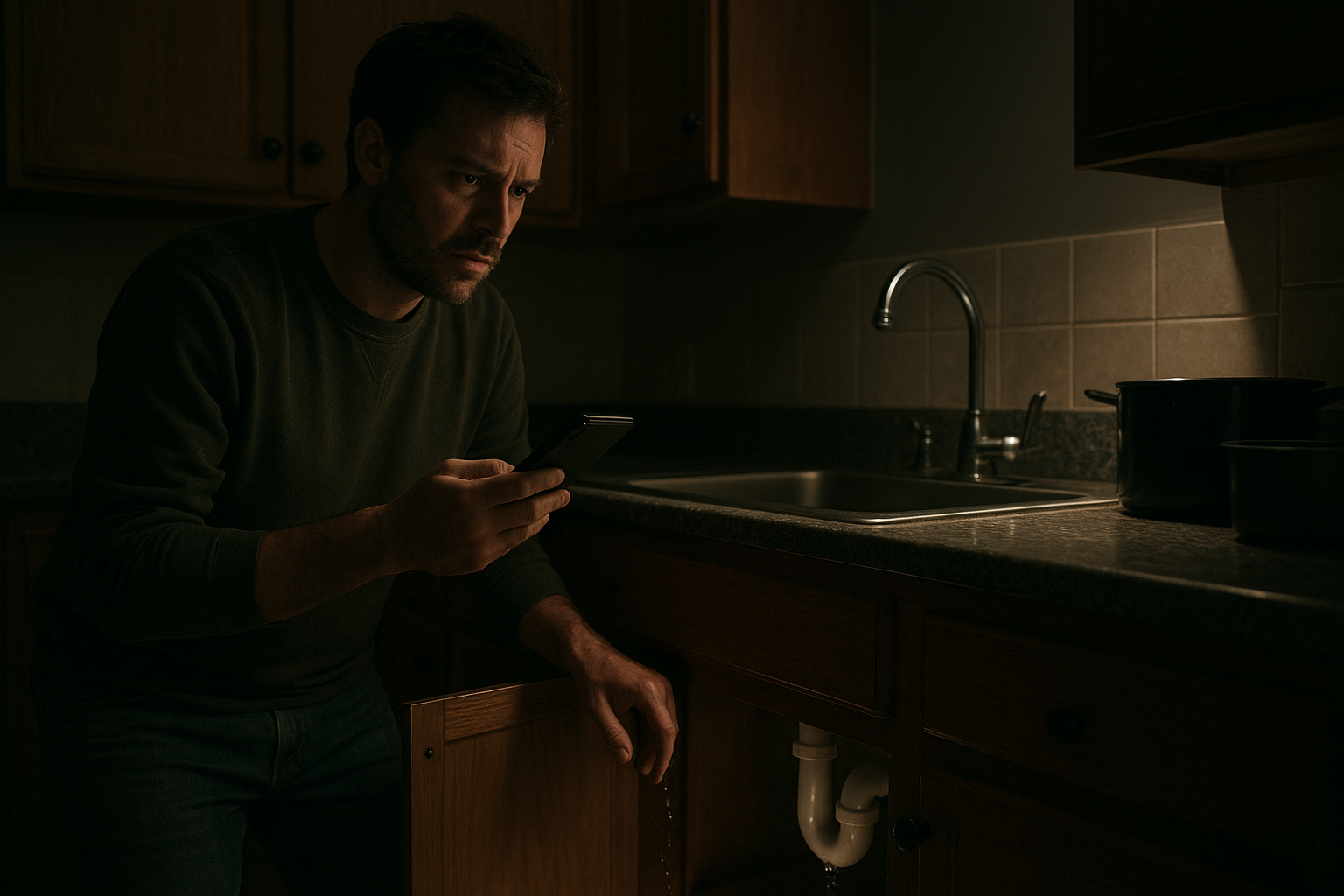
After-hours emergencies are exactly when 24/7 call answering for contractors prevents a lost job.
Frequently Asked Questions About 24/7 Call Answering for Contractors
What is 24/7 call answering for contractors?
24/7 call answering for contractors is a service or AI system that answers every inbound call around the clock, qualifies the caller, and books the job on the spot. It ensures no lead goes to voicemail, day or night, weekday or weekend.
How does 24/7 call answering work for home service businesses?
The system connects directly to your business phone line and scheduling calendar. When a call comes in, it answers instantly, asks qualifying questions, checks real-time availability, and either books the appointment or routes urgent calls to an on-call technician.
Why do contractors need round-the-clock phone coverage?
Most inbound calls happen during peak work hours when crews can't answer, or after 5 p.m. when the office is closed. Without coverage, those callers simply dial the next business on the list.
How much does 24/7 call answering for contractors cost?
Pricing ranges from per-minute live answering services to flat-rate platforms like JobOS Pro, starting at $199 per month with unlimited users. Per-minute services can become expensive quickly as call volume grows.
How long does it take to set up an AI receptionist for a contracting business?
Most platforms can be configured within a day or two, since setup mainly involves connecting a phone number, calendar, and service rules. A 30-day trial is common for testing before committing.
What is the difference between a live answering service and an AI call answering system?
A live answering service routes calls to a human operator following a script, while an AI call answering system books jobs directly into your calendar without a human in the loop. AI systems typically scale without added per-call cost.
Can 24/7 call answering book jobs directly onto my calendar?
Yes, platforms built for trades integrate with scheduling software to check live availability and place confirmed bookings automatically. Customers typically receive a text confirmation right after the call ends.
What happens if a customer calls after hours and needs an emergency repair?
A well-configured system flags emergency keywords, such as a burst pipe or no heat, and either books an emergency slot or alerts an on-call technician immediately. This prevents urgent jobs from going to a competitor.
What mistakes do contractors make when handling missed calls?
The most common mistake is assuming voicemail is enough, since most callers simply hang up and call a competitor. Another frequent error is delaying follow-up by more than a few hours.
Does 24/7 call answering work with my existing CRM or scheduling software?
Most platforms are built to run alongside tools you already use, such as Jobber, ServiceTitan, or QuickBooks, without requiring a full migration. Integration typically syncs bookings and customer records automatically.
Is 24/7 call answering for contractors worth it for small crews?
Yes, even a crew of two or three trucks loses revenue when calls go unanswered. Flat-rate platforms make round-the-clock coverage affordable regardless of crew size.
How does 24/7 call answering improve online reviews and reputation?
When every call is answered and jobs run smoothly, customers are more satisfied and more likely to leave a positive review. Some platforms also automate review requests right after job completion.
What's the best way to measure ROI from call answering software?
Track the percentage of inbound calls that convert into booked jobs before and after implementation, along with after-hours booking volume. Most contractors see the clearest signal in recovered jobs that previously went to voicemail.
Final Thoughts
Ultimately, 24/7 call answering for contractors solves a problem that has nothing to do with competition and everything to do with internal handoffs. Every unanswered call, every delayed callback, and every after-hours voicemail is a small revenue leak that adds up fast across a busy season. Therefore, treating call answering as a core operational system, rather than an afterthought handled by whoever happens to be near the phone, tends to produce the clearest and fastest return.
Platforms like JobOS Pro, which pairs an AI receptionist with scheduling, invoicing, and reputation tools at a flat monthly rate, show how round-the-clock coverage can be built into daily operations without adding a per-technician software bill. In the end, a system that answers every call is simply a system that stops turning away paying work.
