
After hours answering for HVAC is the system a heating and cooling company uses to make sure every inbound call gets picked up, qualified, and turned into a booked job even when the office has closed for the night. Furnaces do not wait for business hours to fail, and neither do air conditioners in the middle of a July heat wave. When a homeowner calls at 8 p.m. and hears a generic voicemail greeting instead of a real answer, most of them simply hang up and dial the next HVAC company on their list.
That single missed call rarely feels like a big deal in the moment. However, multiply it across dozens of after-hours calls every month, and the lost revenue adds up fast. In particular, data on lead response times shows that calls answered quickly convert into booked jobs at a much higher rate than calls sent to voicemail. This guide breaks down what after-hours answering actually involves, why it matters more now than it did five years ago, and how HVAC companies are using AI receptionists to close the gap without hiring a night shift.
What Is After Hours Answering for HVAC?
After hours answering for HVAC refers to any system, human or automated, that answers, qualifies, and books inbound HVAC calls outside of standard business hours, typically evenings, weekends, and holidays. It can take the form of a live call center, a shared answering service, or an AI receptionist that works around the clock. The goal is simple: no call goes unanswered, and no lead gets handed to a competitor who happened to pick up first.
Unlike a basic voicemail box, a true after-hours answering system checks live technician availability, gathers the address and problem description, and confirms an appointment window before the call even ends. As a result, dispatchers arrive the next morning to a schedule that is already partly filled instead of a stack of messages to return. Companies researching this category often start by comparing options against a dedicated HVAC software platform that already includes call handling as a built-in feature rather than a bolt-on service.
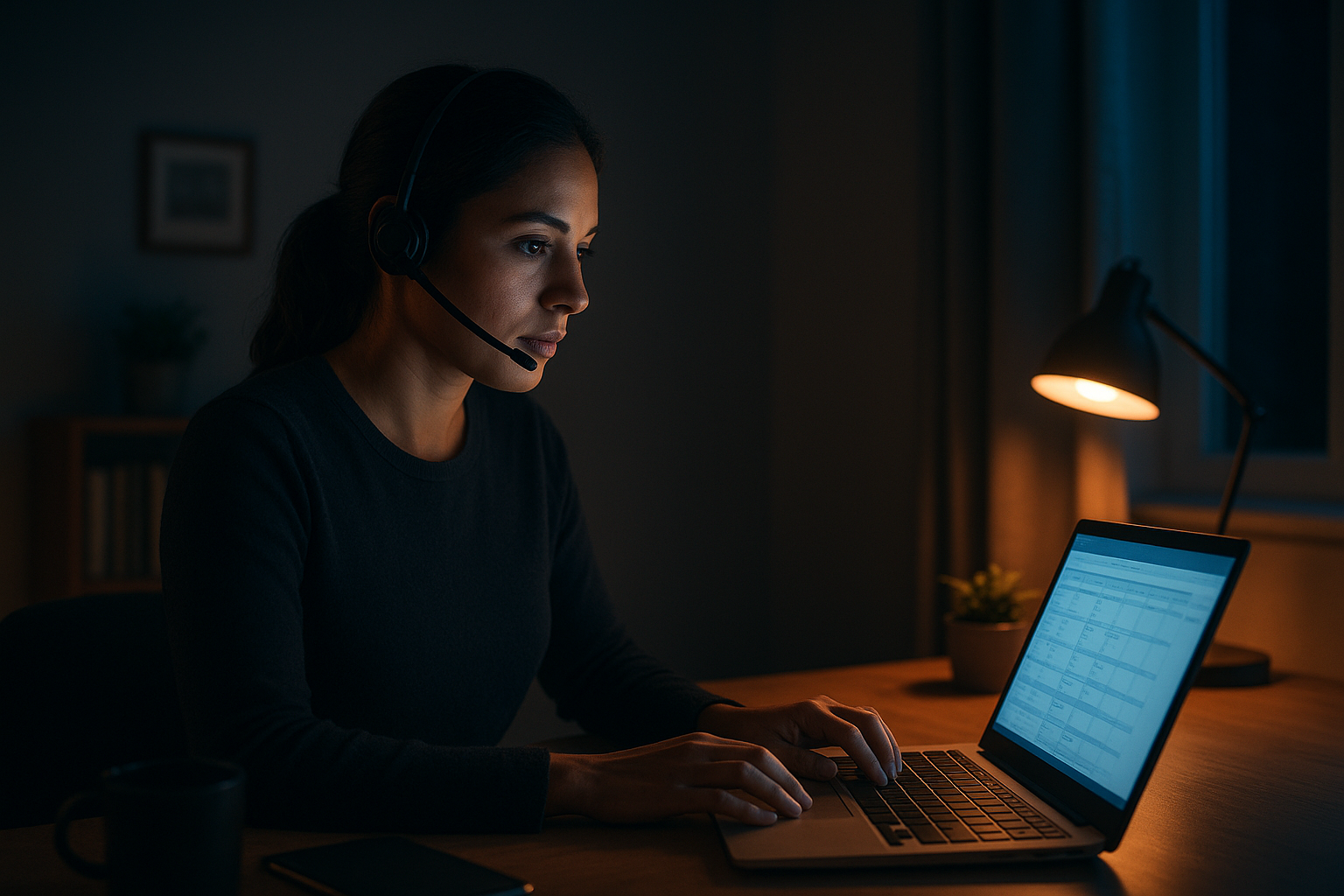
After hours answering for HVAC keeps a real response available even after the office closes.
Why HVAC Companies Lose Revenue Without After-Hours Coverage
Homeowners searching for emergency HVAC help rarely wait around. Instead, they call the first three or four businesses that show up in search results and book with whoever answers. Consequently, a company that lets calls roll to voicemail after 5 p.m. is not just missing a phone call, it is actively handing that job, and the referrals and reviews that would have followed it, to a competitor.
Research on lead response times, published by Harvard Business Review, found that companies contacting a prospect within an hour of first inquiry are far more likely to have a meaningful conversation than those that wait even a few hours longer. For HVAC companies, where the "prospect" is often standing in a hot or freezing house, that response window shrinks to minutes, not hours. A related breakdown of exactly how much a single missed call costs an HVAC business is available on the missed calls cost HVAC companies page.
How Many HVAC Calls Go Unanswered at Night?
Operational data gathered across home service businesses suggests that operators commonly lose 20 to 30 percent of potential revenue to handoff failures such as unanswered calls, stalled estimates, and late invoicing rather than to competitors outbidding them. Meanwhile, the U.S. Bureau of Labor Statistics projects demand for heating, ventilation, and air conditioning technicians to keep growing much faster than the average occupation, which means call volume, and the cost of missing it, will only increase.
How After-Hours Answering Services Work for HVAC Businesses
Traditionally, HVAC companies handled overflow and night calls through a shared human answering service, where an agent working from a script took a message and paged the on-call technician. That approach works, but it is expensive per minute, inconsistent in quality, and rarely integrates with scheduling software. Today, many HVAC companies are replacing that setup with an AI receptionist that answers instantly, follows conversation logic instead of a rigid script, and books directly into the calendar in real time.
Specifically, a well-built after-hours system checks the caller's ZIP code, confirms whether the issue is an emergency, and either books a next-available slot or escalates immediately to the on-call technician by text. A deeper look at how this kind of automation works across trades is covered in the AI receptionist for home service businesses guide.
Live Answering Services vs Voicemail vs AI Receptionists
| Option | Answers Instantly | Books Live Calendar | Typical Cost Model |
| Voicemail | No | No | Free, but costly in lost jobs |
| Live answering service | Usually | Rarely, without integration | Per minute or per call |
| AI receptionist | Yes, 24/7 | Yes, in real time | Flat monthly software fee |

Comparing after-hours answering options helps HVAC owners pick the right fit for call volume.
How to Set Up After-Hours Coverage for an HVAC Business
Setting up reliable after-hours coverage does not require a large investment or a full software migration. Instead, most HVAC companies can put a working system in place within a few days by following these steps.
- Audit current call handling. Pull call logs from your phone provider for the last three months and identify how many calls after 5 p.m. and on weekends went unanswered or straight to voicemail.
- Define emergency versus routine call rules. Write clear criteria for what counts as an emergency, such as no heat during freezing weather, so the system knows when to escalate immediately.
- Choose a live service or AI receptionist. Compare a traditional live answering service against an AI receptionist platform based on cost per call, integration ability, and booking speed.
- Connect the system to your calendar and CRM. Sync the chosen solution with your existing scheduling and customer management software so after-hours bookings show up automatically the next morning.
- Test and review conversion weekly. Run test calls after hours, confirm technicians receive escalations promptly, and review reports on how many after-hours calls turned into completed jobs.
How Kate Handles After-Hours Calls for HVAC Companies
JobOS Pro's AI receptionist, Kate, was built specifically to close the after-hours gap for HVAC, plumbing, and electrical contractors. Rather than sending night calls to voicemail or an expensive shared call center, Kate answers every call, qualifies the issue, checks live technician availability, and books the job before the caller hangs up, followed immediately by a confirmation text.
Because Kate runs inside the same operating system that handles scheduling, invoicing, and reviews, a job booked at midnight lands on the same dispatch board technicians see at 7 a.m., with no double entry required. Pricing stays flat at $199, $349, or $549 per month with unlimited technicians and office staff, which matters because per-technician answering fees tend to climb every time an HVAC company hires. Businesses that also serve plumbing customers can review the same approach on the plumbing software page, since the underlying call-handling logic works the same way across trades.
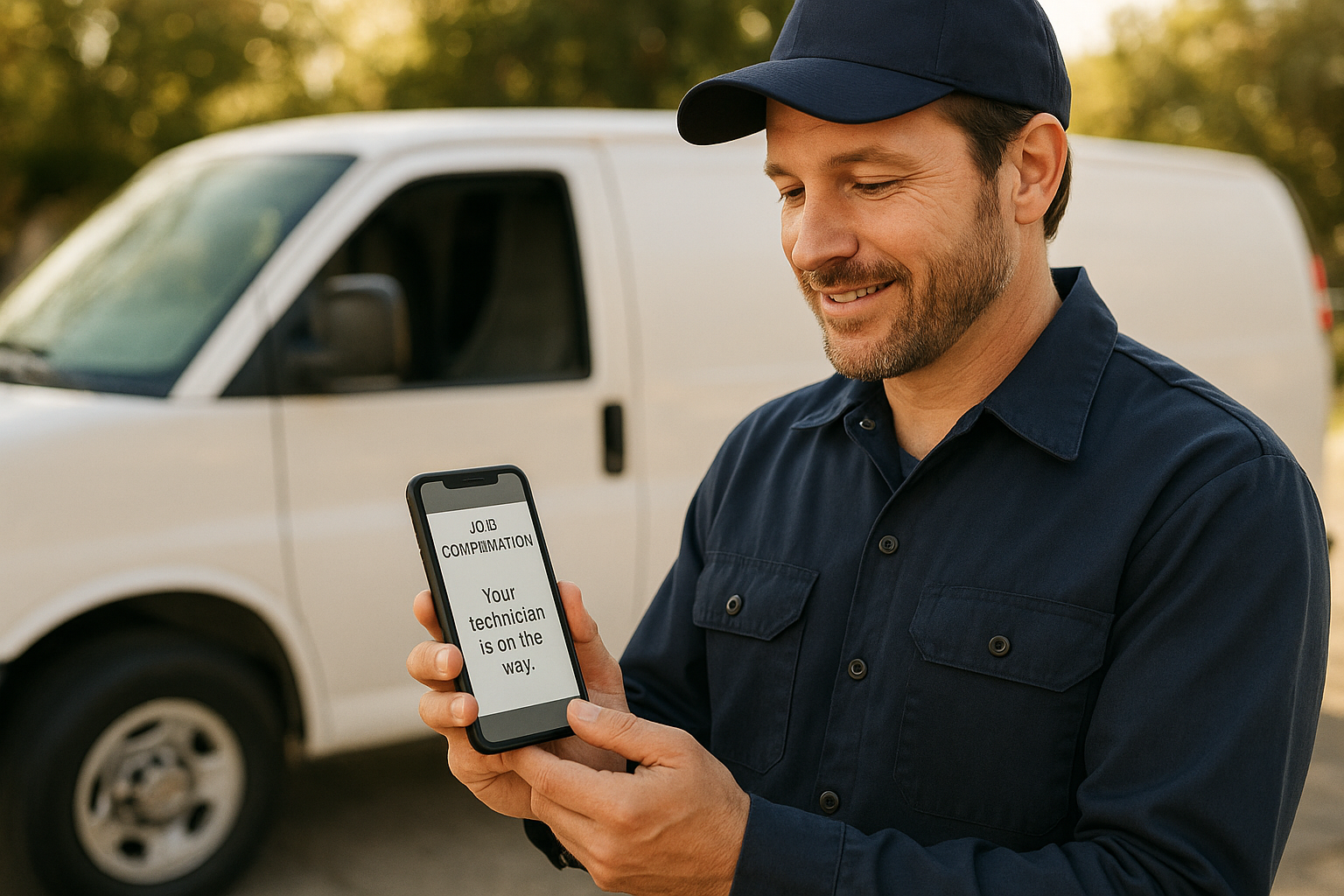
A booked job and confirmation text, sent automatically after hours, before the technician's shift even starts.
Choosing the Right After-Hours Answering Partner for HVAC
Above all, the right choice depends on call volume, current tools, and budget. A company fielding only a handful of after-hours calls a week might get by with a basic live service. In contrast, a growing operator running several trucks needs a system that scales without a rising per-call bill, integrates with existing scheduling software such as Jobber or QuickBooks, and reports on conversion so owners can see what after-hours coverage is actually worth.
Before committing to any provider, it helps to run a short trial period and track how many after-hours calls turn into booked and completed jobs. Owners comparing options can start with a free trial directly at jobospro.com, since it runs alongside existing tools with no migration required to get started.
Frequently Asked Questions About After Hours Answering for HVAC
What is after hours answering for HVAC?
After hours answering for HVAC is any system, human or automated, that answers, qualifies, and books inbound calls to a heating and cooling company outside normal business hours. It ensures homeowners with an emergency at night or on a weekend still reach a real response instead of a voicemail.
How does an after-hours answering service work for HVAC companies?
An after-hours answering service routes calls received outside business hours to a live agent or an AI receptionist, who gathers the caller's information and urgency level, then books an appointment or escalates emergencies to an on-call technician. The details are typically synced back into the company's scheduling software automatically.
Why do HVAC companies need after-hours call coverage?
HVAC emergencies do not follow a nine-to-five schedule, and homeowners facing a broken furnace or air conditioner tend to call whoever answers first. Without after-hours coverage, companies routinely lose that job, and the reviews and referrals attached to it, to a competitor who simply picked up the phone.
What's the difference between a live answering service and an AI receptionist for HVAC?
A live answering service uses human agents following a script, while an AI receptionist uses conversational software to answer, qualify, check real-time availability, and book the job directly into the calendar. AI options are generally faster to scale and cost less per call as volume grows.
How much does after hours answering for HVAC typically cost?
Traditional live answering services often charge per minute or per call, which can run several hundred to a few thousand dollars a month depending on volume. Flat-rate AI receptionist platforms bundle after hours answering for HVAC into a single monthly software fee that does not rise with call volume or headcount.
How long does it take to set up after-hours answering for an HVAC business?
Most modern platforms can be configured within a day or two, since they connect to existing phone numbers and scheduling tools rather than replacing them entirely. Live answering services can take longer to onboard because scripts and escalation rules must be written and tested manually.
What common mistakes do HVAC companies make with after-hours calls?
The most common mistake is relying on a generic voicemail greeting, which converts far fewer callers into booked jobs than a live or AI-driven response. Other mistakes include failing to sync after-hours bookings with the daytime schedule and not tracking which after-hours calls actually convert into revenue.
What are best practices for handling emergency HVAC calls at night?
Best practice is to qualify urgency immediately, confirm real-time technician availability before promising a time window, and send an automatic text confirmation so the customer feels certain help is coming. Escalation rules should route true emergencies to an on-call technician within minutes, not hours.
Can after-hours answering integrate with my existing HVAC scheduling software?
Yes, most modern after-hours answering tools are built to run alongside platforms like Jobber, ServiceTitan, or QuickBooks rather than replace them. This means calls booked at midnight appear on the same calendar dispatchers already use during the day.
Does after-hours answering work for multi-location or franchise HVAC businesses?
Yes, and it becomes even more valuable at scale because a single after-hours system can route calls to the correct location based on the caller's address. Franchise operators also gain visibility into which locations are losing after-hours leads and by how much.
How much revenue can HVAC companies recover with after-hours answering?
Home service operators commonly lose 20 to 30 percent of potential revenue to handoff failures like unanswered calls, stalled estimates, and late invoicing. Closing the after-hours gap alone can recover a meaningful share of that lost revenue by turning night calls into booked jobs instead of missed opportunities.
Is voicemail enough instead of after-hours answering for HVAC?
No, voicemail is generally not enough because most callers with an urgent HVAC issue simply hang up and call a competitor rather than leave a message. A live or AI-driven response converts significantly more of those calls into booked, revenue-generating jobs.
In summary, after hours answering for HVAC is no longer a nice-to-have; it is a direct line to revenue that would otherwise go to a competitor. Whether a company chooses a live service or an AI receptionist like Kate, the priority is the same: answer fast, qualify accurately, and book the job before the caller hangs up. Companies ready to see how flat-rate, unlimited-staff coverage compares to per-technician software can review the details at jobospro.com.
