An answering service for HVAC company owners is no longer a nice-to-have, it is the front line that decides whether a ringing phone turns into a booked job or a lost lead. Heating and cooling businesses that let calls roll to voicemail during a July heat wave or after 5 p.m. are handing revenue straight to the competitor who actually picks up. In this guide, you will learn what an HVAC answering service does, how it compares to AI call answering, what it costs, and how to pick one that books jobs instead of just taking messages.
Quick answer: An answering service for HVAC company teams is a system, human or AI-powered, that answers every inbound call, qualifies the caller's need, and books the job into the schedule. The strongest modern versions, like JobOS Pro's AI receptionist Kate, work around the clock, charge a flat monthly fee, and convert missed calls into booked revenue instead of silence.

An answering service for HVAC company teams captures every call before it becomes a lost job.
What Is an Answering Service for HVAC Company Use?
An answering service for HVAC company operations is, in simple terms, a dedicated system that answers calls on behalf of the business, gathers the information a dispatcher needs, and either books or routes the job. Historically, this meant a call center of live agents working from scripts. Today, it increasingly means an AI receptionist that answers instantly, every time.
Specifically, a complete HVAC answering service does more than pick up the phone. It identifies whether the caller needs a repair, a maintenance visit, or an emergency dispatch. In addition, it checks real technician availability instead of guessing, and it confirms the appointment in writing so the customer is not left wondering if the call actually went through.
Why Missed Calls Are Costing HVAC Businesses Real Money
Home service operators typically lose 20 to 30 percent of potential revenue not to competitors, but to internal handoffs, such as calls that ring through during peak hours and are never returned. As a result, a company doing even modest monthly revenue can quietly leave tens of thousands of dollars on the table every year.
This matters because response speed is directly tied to conversion. According to a frequently cited study published by Harvard Business Review, leads contacted within five minutes are far more likely to convert than those contacted even thirty minutes later. Furthermore, the U.S. Bureau of Labor Statistics projects continued growth in demand for HVAC technicians, which means call volume, and the cost of mishandling it, will only increase for busy shops.
Traditional Call Centers vs AI-Powered HVAC Phone Answering
Traditional answering services, often structured like a general call centre, rely on human agents working from a script and a notepad. They can take a message accurately, but they usually cannot see your live technician calendar, which means every call still needs a callback to actually get booked.
By contrast, an AI-powered HVAC phone answering solution integrates directly with scheduling software. It books the appointment during the call itself. Consequently, tools like Jobber and Housecall Pro work well for scheduling but typically still require a separate answering service add-on, while ServiceTitan bundles more automation at a cost that scales per technician. For a side-by-side breakdown, see this HVAC software comparison.
At a glance:
- Live call centers: accurate messages, but no real-time booking
- Basic scheduling apps: good calendars, but calls still go unanswered
- AI receptionist + software: instant answer, live booking, flat pricing
How an AI Receptionist for HVAC Companies Books a Job, Step by Step
To understand why this approach converts better, it helps to see exactly what happens between the first ring and the confirmation text. Kate, the AI receptionist built into JobOS Pro, follows the same five-step process for every inbound call.
- Call is answered instantly. The system picks up within one or two rings, any time of day or night, so the caller never hits voicemail.
- Caller is qualified. The AI asks about the issue, the urgency, and the property location before moving forward.
- Live availability is checked. The system cross-references the real technician calendar for the nearest matching slot.
- Job is booked. The appointment lands on the dispatch calendar automatically, assigned to the right technician.
- Confirmation text is sent. The customer gets an instant text confirming the window, which cuts down on no-shows.
Notably, this entire sequence happens during the original phone call. There is no second call to confirm details, and no dispatcher re-entering information by hand. To see how this plugs into a broader missed-call strategy, review how to make sure no customer call goes unanswered.
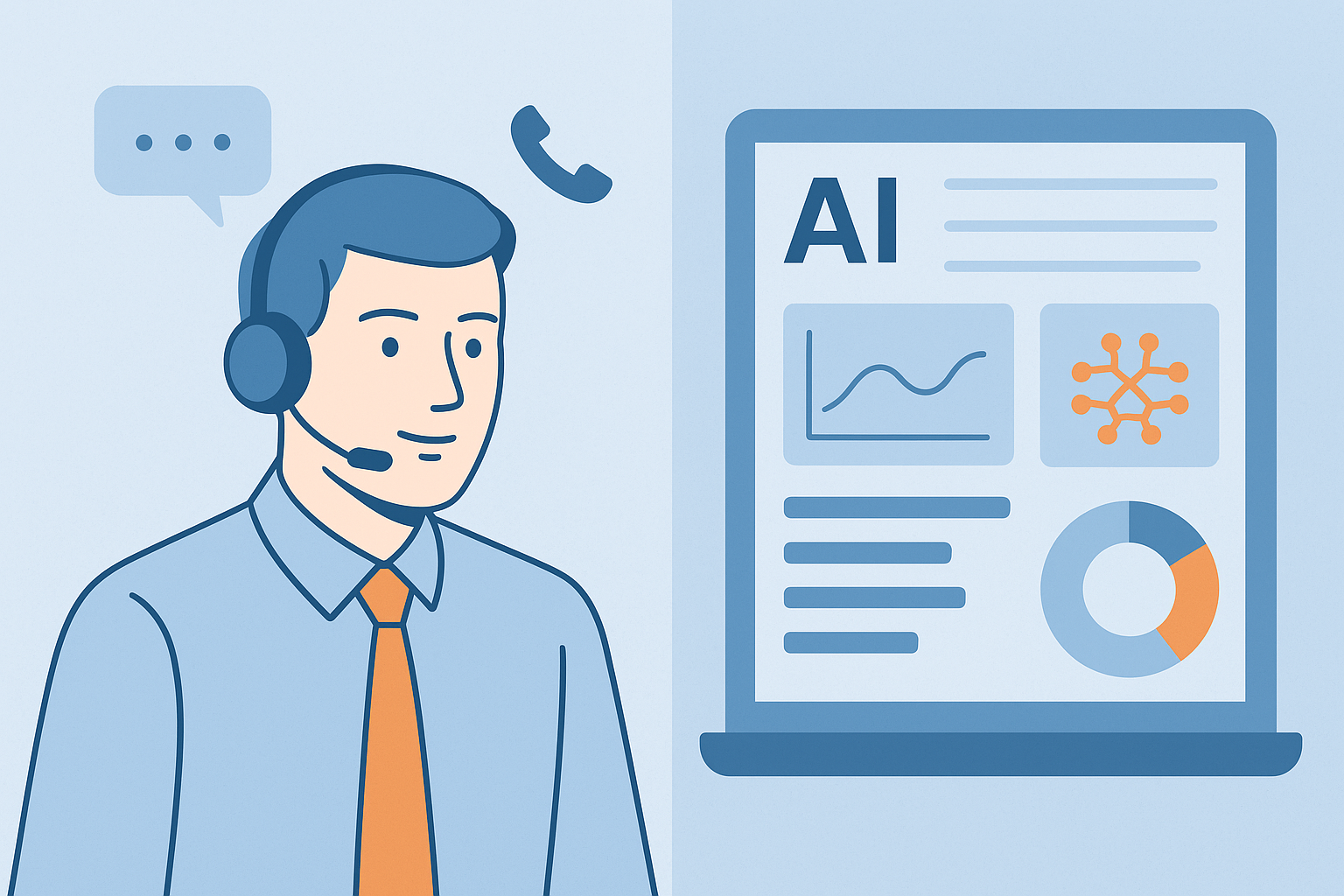
AI-powered call answering books the job instantly instead of taking a message.
HVAC Answering Service Pricing: What to Expect
Pricing for this category varies widely. Traditional live answering services often charge per minute or per call, which means costs climb as a business grows, sometimes reaching $300 to $1,500 a month for a busy shop. In contrast, flat-fee platforms that fold the answering service into the broader operations system avoid that scaling problem entirely.
For example, JobOS Pro publishes flat pricing at $199, $349, and $549 per month, with unlimited technicians, dispatchers, and office staff on every tier. Therefore, hiring a fourth or fifth technician does not trigger a higher software bill, which is a meaningful difference from platforms that charge per seat. A 30-day free trial with no credit card is available, and the platform runs alongside existing tools, so no migration is required to start. Learn more about the full platform on the HVAC software page.
How to Choose the Right HVAC Call Answering Solution
Choosing between options can feel overwhelming, especially with five to thirteen point solutions competing for attention in most shops. However, a few criteria consistently separate a good fit from a poor one.
- Confirm it books appointments live, rather than only forwarding a message for callback.
- Check whether pricing is flat or scales with call volume and headcount.
- Verify it covers after-hours and weekend emergency calls, not just business hours.
- Look for text confirmations that reduce no-shows automatically.
- Make sure it works alongside your current software, such as Jobber, ServiceTitan, or QuickBooks, without forcing an immediate migration.
A common mistake is picking the cheapest message-taking service and assuming the job is done. In reality, a message that still requires a callback leaves the door open for the customer to book with whoever answers first. For a deeper look at the operational side of this problem, see how to increase revenue per technician in an HVAC company, and explore related trades coverage on the industries page.
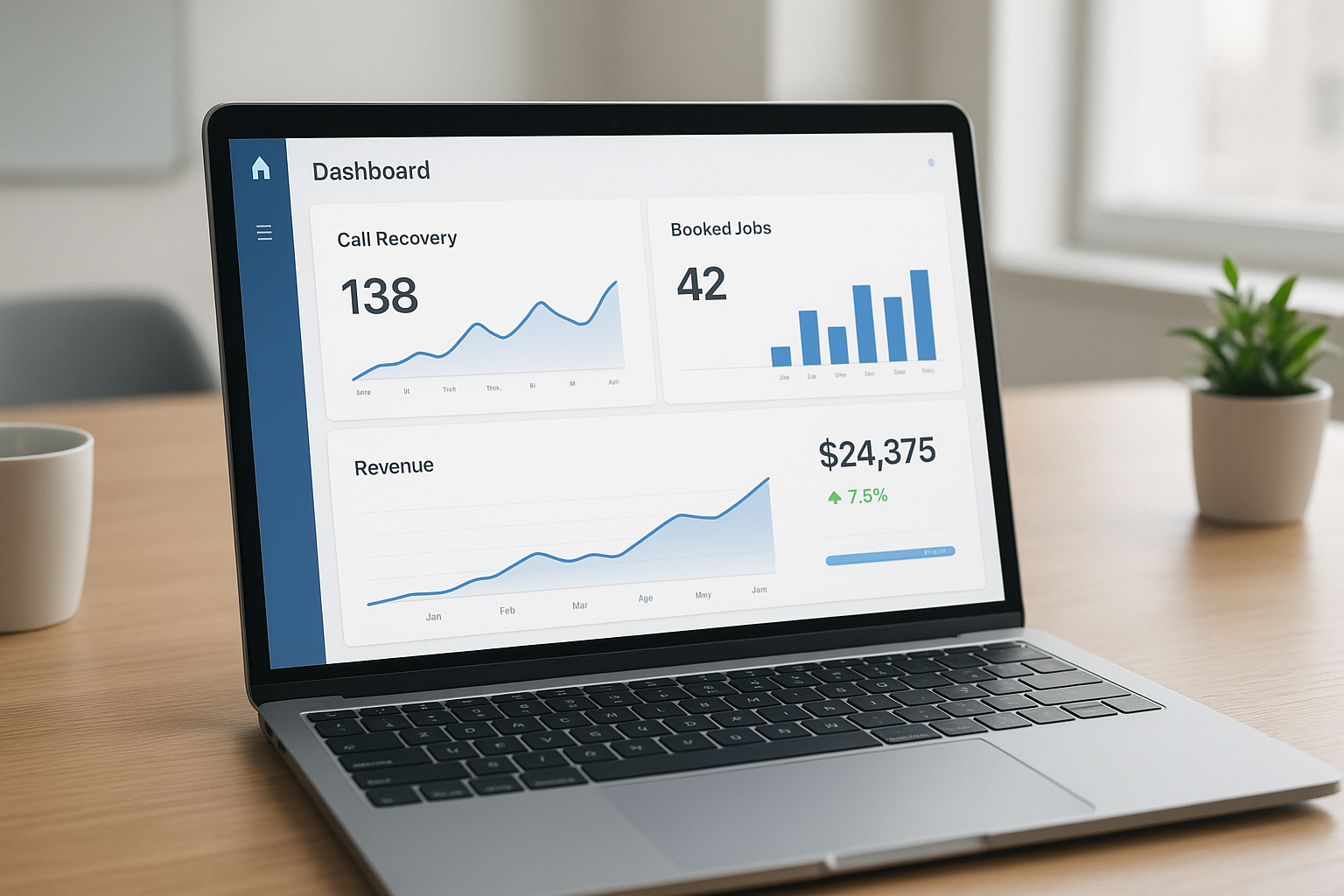
Tracking recovered calls shows the direct revenue impact of an answering service for HVAC company operations.
Frequently Asked Questions About Answering Service for HVAC Company
What is an answering service for HVAC company?
An answering service for HVAC company teams is a system, human or AI-powered, that answers every inbound call, qualifies the caller's need, and books jobs into the schedule. Modern versions work 24/7 and integrate directly with dispatch and CRM software.
How much does an HVAC answering service cost?
Traditional live answering services typically charge per minute or per call, which can run $300 to $1,500 a month depending on volume. Flat-fee platforms that bundle an AI receptionist with scheduling software, like JobOS Pro, start at $199 a month with unlimited calls and staff.
How does an AI answering service differ from a live human answering service?
A live answering service routes calls to a human agent working from a script, which can mean hold times and inconsistent booking accuracy. An AI answering service answers instantly, checks real-time technician availability, and books the job without transferring the call.
Why do HVAC companies need 24/7 call answering?
HVAC emergencies, like a failed furnace in winter or a dead AC during a heat wave, do not happen only during business hours. Companies without after-hours coverage lose those calls to the next competitor who answers the phone.
How quickly should an HVAC company answer a customer call?
Industry response-time research has long shown that leads contacted within five minutes convert dramatically better than those contacted later. Most answering services aim to pick up within two to three rings to avoid losing the caller to voicemail.
Can an answering service book jobs directly into my schedule?
Yes, integrated answering services check live technician availability and place the appointment directly on the calendar during the call. This removes the manual step of a dispatcher calling the customer back to confirm a time.
What happens to missed calls without an answering service?
Most missed calls to home service businesses never get returned, and the caller simply dials the next company on the search results page. Over a year, this leakage can represent a significant share of an HVAC company's potential revenue.
How long does it take to set up an answering service for an HVAC company?
Cloud-based and AI answering services can typically be configured within a day or two, since they only require call forwarding and calendar access. Legacy call centers with custom scripting can take one to two weeks to fully onboard.
What mistakes do HVAC owners make when choosing an answering service?
The most common mistake is choosing a service that only takes messages instead of booking jobs, which still requires a callback and risks losing the lead. Owners also overlook per-minute pricing that grows unpredictably as call volume increases.
Is an AI receptionist as effective as a human answering service for plumbing and HVAC?
For straightforward tasks like qualifying a caller, checking availability, and booking a job, AI receptionists now match or exceed human call centers in speed and consistency. Complex or highly emotional calls may still benefit from human escalation, which many AI systems support.
Does an HVAC answering service work with my existing software?
Most modern answering services are built to run alongside tools like Jobber, ServiceTitan, or QuickBooks without requiring a full migration. This lets an HVAC company test the service before committing to a larger platform switch.
What features should I look for in an HVAC answering service?
Look for 24/7 availability, live calendar integration, automatic text confirmations, and flat pricing that does not scale with technician headcount. Reporting on missed-call recovery and booking rate also helps measure real return on investment.
Can an answering service help with after-hours and emergency HVAC calls?
Yes, after-hours coverage is one of the biggest value drivers, since emergency HVAC calls often come in nights, weekends, and holidays. A well-configured service can triage emergencies and either book them immediately or alert an on-call technician.
How does JobOS Pro's Kate AI receptionist work for HVAC companies?
Kate answers inbound calls around the clock, qualifies the caller, checks live technician availability, books the job, and sends a confirmation text automatically. It runs inside the same platform as scheduling, invoicing, and the CEO dashboard, so no separate call center contract is needed.
Is a free trial available for HVAC answering services?
Some platforms, including JobOS Pro, offer a 30-day free trial with no credit card required and no migration needed to start. This allows an HVAC company to measure missed-call recovery before paying anything.
Final Thoughts
Ultimately, an answering service for HVAC company owners is not just a convenience, it is a direct lever on revenue. Every unanswered call is a job that likely closes with a competitor instead. By contrast, pairing 24/7 coverage with live calendar booking, like the system built into JobOS Pro, turns a historically leaky part of the business into a consistent source of booked work. Before signing a per-minute contract or adding another disconnected tool, it is worth testing a flat-fee, AI-powered option such as the one available at jobospro.com to see the difference in booked jobs firsthand.
