An answering service for plumbing company operations is the single biggest lever for stopping missed-call revenue loss, and most contractors never realize how much business quietly slips through that crack every week. A plumber on a roof or under a sink cannot also hold a phone, so calls get missed. Those missed calls, however, do not disappear. They go to the next plumber who picks up first.
What Is an Answering Service for Plumbing Company Calls?
An answering service for plumbing company teams is a dedicated call-handling system—human, AI, or a hybrid of both—that answers, qualifies, and books every inbound call a plumbing business receives. Specifically, it covers the gaps that normally go unmanaged: nights, weekends, lunch breaks, and the overflow that happens during a cold snap or a burst-pipe season.
Traditionally, this meant a call center reading a script and taking a message. Today, however, AI-driven versions go further. They check a live calendar, confirm a time slot, and text the customer a confirmation before the call even ends. According to Wikipedia's overview of answering services, the category has shifted substantially from simple message relay toward automated, integrated call handling over the past decade.
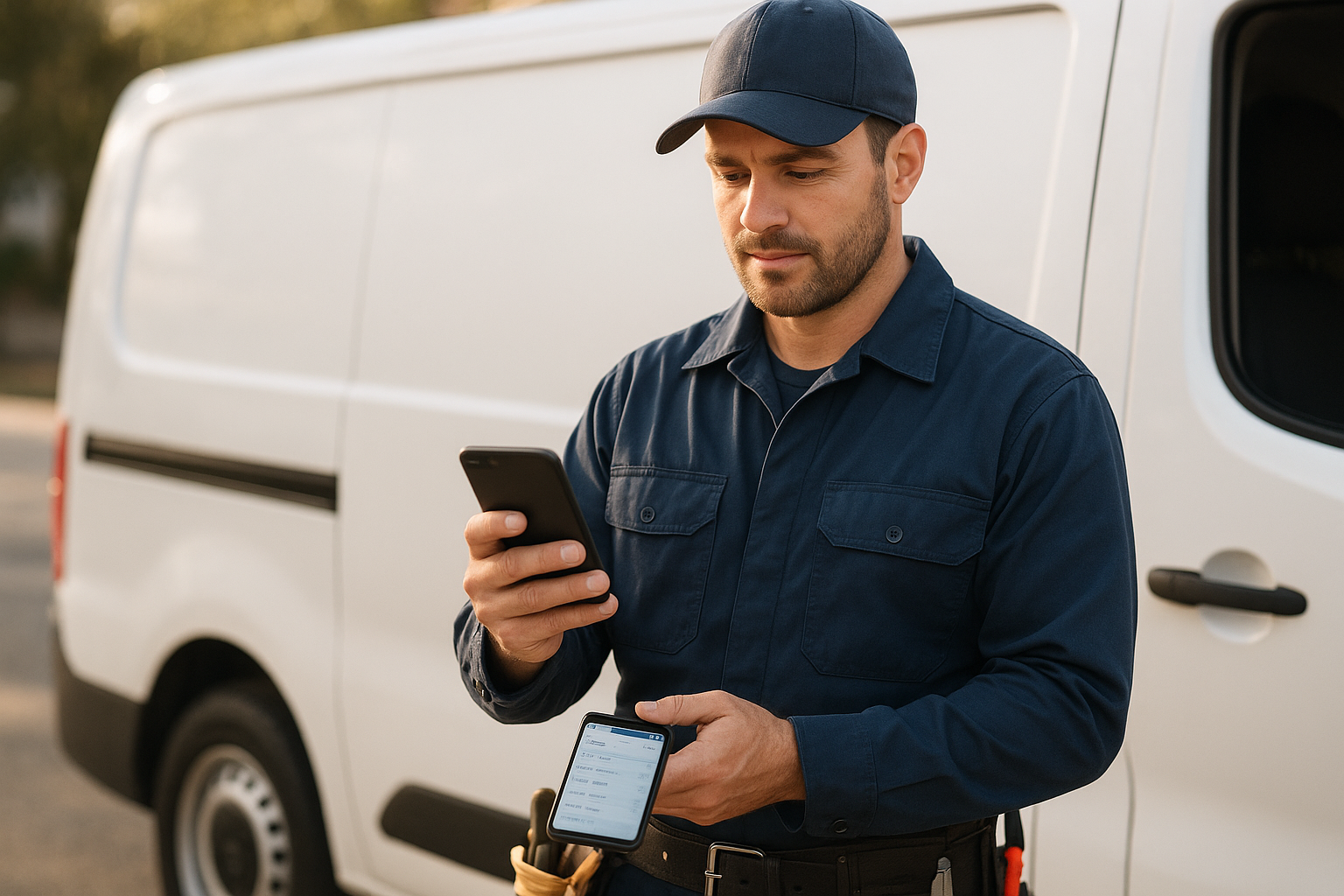
A reliable answering service for plumbing company calls keeps the schedule full without the owner lifting the phone.
Why Missed Calls Cost Plumbing Businesses So Much
Plumbing is a relationship-driven trade, yet most lost revenue has nothing to do with the competition. Instead, it comes from internal handoffs: calls that ring out, estimates that never get a follow-up, and jobs that finish without an invoice going out on time. Industry estimates suggest home service operators lose roughly 20 to 30 percent of potential revenue this way, not to rival companies, but to their own process gaps.
Speed compounds the problem. A widely cited Harvard Business Review analysis of sales lead response times found that companies contacting a lead within five minutes were far more likely to connect than those waiting thirty minutes or longer. For a plumbing emergency, that window is even tighter, because the caller is often already dialing the next name on the list.
To understand how this plays out across the full job lifecycle, see how JobOS Pro approaches the question of making sure no customer call goes unanswered, and how that connects to turning more of those calls into booked jobs instead of cold leads.
Traditional Answering Services vs. AI Receptionists for Plumbers
Traditional answering services use trained human agents who follow a script and pass a message along. This works reasonably well for simple call screening. In contrast, AI receptionists for plumbers go a step further by actually completing the booking, because they are wired directly into the scheduling system rather than operating as a separate, disconnected layer.
Kate, the AI receptionist built into JobOS Pro, answers every call, qualifies the caller, checks live technician availability, books the job, and sends a confirmation text automatically. As a result, the plumbing company owner wakes up to a full calendar rather than a stack of voicemails to return.
How Much Does a 24/7 Plumbing Answering Service Cost?
Human answering services typically bill per minute or per call, often landing between one and two dollars per minute. That cost rises with call volume, which is exactly when a plumbing company needs coverage the most. Flat-rate platforms take a different approach entirely.
JobOS Pro publishes three flat tiers at $199, $349, and $549 per month, each covering unlimited technicians, dispatchers, and office staff. In other words, hiring another plumber never raises the software bill. That stands in contrast to per-technician enterprise platforms, a difference explored further in this breakdown of why ServiceTitan pricing gets expensive fast.
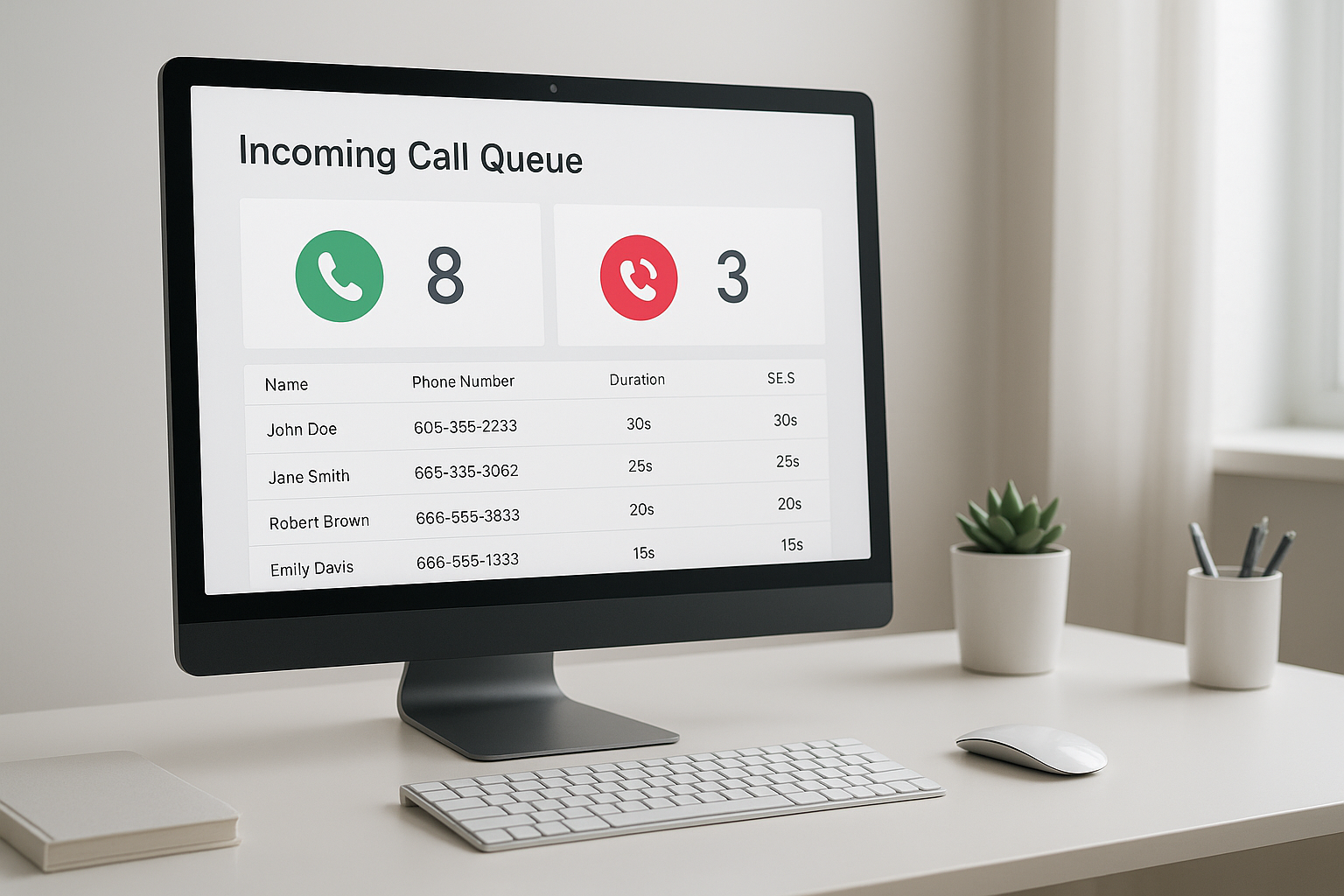
Tracking answered versus missed calls shows exactly where revenue leaks before an answering service plugs the gap.
How to Choose the Right Answering Service for a Plumbing Company
Choosing between options gets easier with a clear process. Follow these five steps before signing a contract:
- Audit your missed calls. Pull 30 days of call logs and count how many calls went unanswered during peak hours, lunch, or after five o'clock.
- Decide between human and AI coverage. Compare per-minute human services against flat-rate AI receptionists that book jobs instantly rather than only taking messages.
- Check scheduling integration. Confirm the service sees live technician availability and places confirmed appointments directly on the calendar.
- Review pricing as you grow. Ask whether cost rises per technician, since that changes the math significantly as the fleet expands.
- Run a trial before committing. Test real inbound calls for two to four weeks and compare the booked-job rate against your prior missed-call baseline.
Meet Kate: An AI Receptionist Built for Plumbing Companies
Kate is the AI receptionist inside JobOS Pro, an all-in-one operating system built for HVAC, plumbing, electrical, and adjacent trades across the United States and Canada. Rather than simply taking a message, Kate answers the call around the clock, qualifies the caller, checks real-time availability, books the job, and sends a confirmation text immediately.
This matters because plumbing is one of the trades most exposed to after-hours emergencies, a trend reflected in occupational data from the U.S. Bureau of Labor Statistics, which continues to project steady demand for plumbers nationwide. For a closer look at how this fits into trade-specific operations, visit the industries JobOS Pro serves or explore the dedicated plumbing software overview. The platform also runs alongside existing tools such as Jobber, ServiceTitan, or QuickBooks, so switching does not require a disruptive migration. A 30-day free trial is available directly at jobospro.com.

Whether human or AI-powered, consistent call handling keeps plumbing customers from calling the next name on the list.
Common Mistakes When Setting Up Plumbing Call Answering
The most frequent mistake is routing every call to one office line with no backup, so a single busy afternoon causes a wave of missed calls. Another common error is choosing a message-only service that never actually books the job, which simply moves the delay from voicemail to a callback queue.
Finally, many owners overlook pricing structure. A service that seems affordable with three trucks can become costly once the company grows to ten, particularly with per-technician billing. Consequently, checking how pricing scales before signing is just as important as checking the features themselves.
Frequently Asked Questions
What is an answering service for plumbing company calls?
An answering service for plumbing company teams is a live, AI, or hybrid system that answers every inbound call, qualifies the caller, and books the job directly onto the schedule. It covers business hours, after-hours, and overflow periods so no call reaches voicemail.
How does an AI receptionist differ from a traditional answering service?
A traditional answering service relies on human agents reading from a script and passing messages along later. An AI receptionist checks live technician availability, books the appointment instantly, and sends a confirmation text without delay.
How much does an answering service for plumbing company owners typically cost?
Standalone human answering services generally charge per minute or per call, often one to two dollars per minute. Flat-rate platforms bundle AI call answering with scheduling and CRM starting around $199 per month with no per-technician fees.
How quickly should a plumbing company answer phone calls?
Ideally within the first few rings, since response speed is tied directly to conversion. Research on lead response shows that contacting a prospect within five minutes dramatically increases booking odds compared to waiting thirty minutes.
Can an answering service book jobs directly onto my calendar?
Yes, modern AI-powered services sync with live scheduling software to check availability and place the appointment on the calendar in real time, removing the manual callback step entirely.
What happens to calls after business hours?
A 24/7 answering service continues answering, qualifying, and booking calls overnight and on weekends, which is when many plumbing emergencies happen. Without that coverage, those calls typically go to a competitor who answers first.
Is a 24/7 answering service worth it for a small plumbing company?
For most growing plumbing companies, yes, because missed calls represent lost revenue rather than lost competition. Even a two or three truck operation can lose several bookable jobs a week by letting calls go to voicemail.
What's the biggest mistake plumbers make with call answering?
The most common mistake is routing calls to a single office line with no backup. The second biggest mistake is using a message-taking service that never actually books the appointment.
Do I need to switch software to use an AI answering service?
Not necessarily. Platforms such as JobOS Pro are built to run alongside existing tools like Jobber, ServiceTitan, or QuickBooks, so a plumbing company can add AI call answering without a disruptive migration.
How does missed-call revenue loss affect plumbing companies?
Industry estimates suggest home service businesses lose roughly 20 to 30 percent of potential revenue to internal handoffs like unanswered calls, not to competitors. For a plumbing company billing six figures monthly, that gap can total tens of thousands of dollars a year.
What features should I look for in a plumbing answering service?
Look for live schedule integration, instant job booking, text confirmation, and reporting on answered versus missed calls. A system that also feeds into your CRM and invoicing avoids adding yet another disconnected tool.
How does JobOS Pro's Kate compare to a traditional call center?
Kate answers every call instantly at any hour, checks real-time availability, and books the job without a human relaying messages later. A traditional call center still depends on staffing levels and message hand-off, which adds delay.
How long does it take to set up an answering service for a plumbing company?
Most AI-based answering services can be configured within a day or two once call scripts, service areas, and scheduling rules are defined. There is typically no migration required since the service runs alongside existing scheduling software.
Final Takeaway
In the end, the right answering service for plumbing company operations is the one that does more than take a message. It should answer instantly, qualify the caller, and book the job onto a live calendar, day or night. Therefore, before signing any contract, audit missed calls, compare human versus AI coverage, and confirm pricing will not rise every time a new truck joins the fleet. Platforms like JobOS Pro combine that call-answering layer with scheduling, invoicing, and reputation tools in one flat-rate system, which means fewer leaks and a fuller calendar without adding another disconnected subscription.
