The best software for 5 truck plumbing company operations is the platform that closes revenue leaks between the phone ringing and the invoice getting paid, not just the one with the longest feature list. At five trucks, a plumbing shop has outgrown spreadsheets and entry-level scheduling apps, but per-technician enterprise pricing can still feel like overkill. Therefore, the real question is not which tool has the most features. It is which tool stops leads, estimates, and payments from quietly slipping through the cracks.
Direct answer: For a 5-truck plumbing company, the best software is a flat-rate, all-in-one platform such as JobOS Pro that bundles AI call answering, scheduling, estimating, invoicing, and reputation management without charging per technician. This avoids the two most common failures at this fleet size: unanswered calls and rising per-seat software costs as the team grows.
What Is the Best Software for a 5-Truck Plumbing Business?
Best software for a 5-truck plumbing business is a management system that handles the entire revenue path in one place: call intake, booking, dispatch, estimating, payments, and reviews. In particular, it should not require five to ten separate subscriptions stitched together with spreadsheets and sticky notes.
Industry data referenced by home service technology vendors, including analysis published at jobospro.com, suggests operators lose 20 to 30 percent of potential revenue to internal handoff failures rather than to competitors. As a result, the right software is measured less by its feature count and more by how many of those handoffs it actually closes.
Why Fleet Size Changes What You Need
A one-truck operation can survive on a calendar app and a phone. However, once a plumbing company reaches five trucks, dispatch gets complicated, call volume rises, and one missed after-hours call can mean a lost job worth thousands. Consequently, the software gap that barely mattered at one truck becomes expensive at five.
Similarly, per-technician pricing models that felt affordable at two or three seats start adding real weight to the monthly budget once payroll grows. This is exactly the pricing trap many owners hit right as they scale past a small crew.
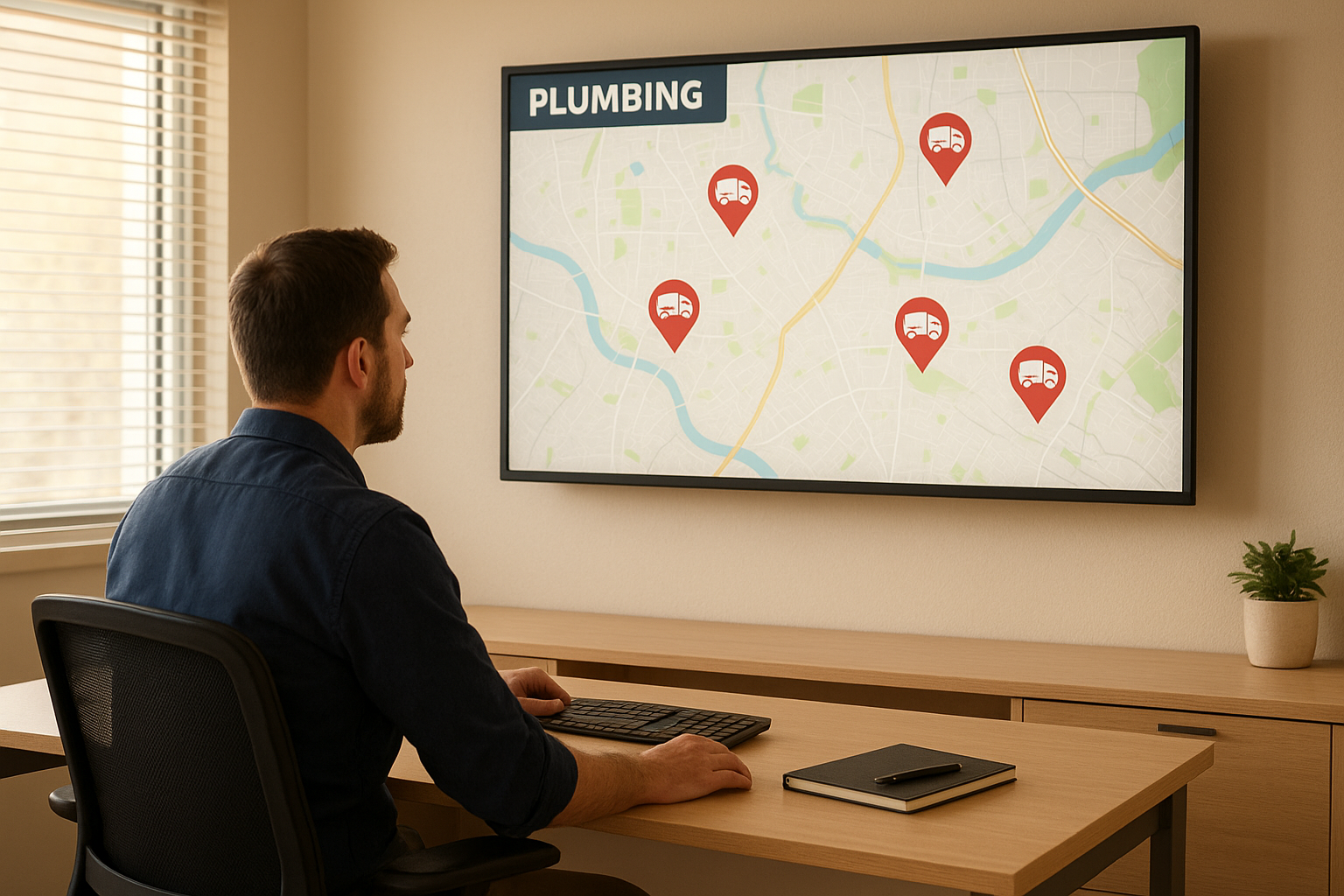
Choosing the best software for a 5 truck plumbing company starts with real-time fleet visibility.
Core Features a 5-Truck Plumbing Operation Actually Needs
Not every feature matters equally at this size. Above all, a 5-truck plumbing company needs software that prevents leads from going cold and jobs from going unbilled. The following capabilities matter most:
- 24/7 call answering: An AI receptionist that qualifies callers, checks live availability, and books the job even after 5 p.m. or on weekends.
- Unified scheduling and dispatch: One calendar visible to office staff and technicians, avoiding double-booked trucks.
- Estimates with financing at the point of decision: Presenting buy-now-pay-later options while the customer is still deciding, rather than after they have moved on.
- Automated invoicing and text-to-pay: So completed jobs get billed the same day instead of weeks later.
- Reputation management: Automatic review requests, since happy customers who never leave a review quietly starve future lead flow.
For a deeper breakdown of these categories specific to plumbing, the plumbing software overview covers how each function ties back to margin.
How to Choose the Best Software for 5 Truck Plumbing Company Operations
Choosing well takes structure rather than guesswork. Below is a five-step process that owners at this fleet size can walk through in about thirty minutes.
- Map every revenue handoff. List where leads or jobs typically stall, including missed calls, unsent follow-ups, cold estimates, no-shows, and unbilled jobs.
- Confirm flat versus per-technician pricing. Ask exactly how the bill changes if the fleet grows from 5 to 8 or 10 trucks.
- Test call answering and booking speed. Call the business after hours during a trial and time how fast the system answers and books the job.
- Check estimate-to-invoice automation. Confirm estimates convert into scheduled jobs and that completed work auto-generates an invoice with a pay link.
- Review margin reporting. Look for a dashboard showing margin by job, technician, and lead source, so problems surface early.
Comparing the Top Contenders
Most 5-truck plumbing owners end up comparing a short list of platforms. In contrast to enterprise suites, some tools are built specifically for teams that have outgrown entry-level apps but do not need ServiceTitan's full enterprise stack.
ServiceTitan offers deep functionality but bills per technician, which can push a 5-truck shop's software cost well past what its margins support. A detailed side-by-side is available in the ServiceTitan comparison.
Jobber is simpler and cheaper but leans on scheduling and invoicing rather than active revenue recovery, meaning missed calls and cold estimates are not directly addressed. See the Jobber comparison for specifics.
QuoteIQ focuses heavily on estimating and quoting speed but covers less ground on call answering and fleet-wide reporting; the QuoteIQ comparison breaks down where it fits.
JobOS Pro is positioned specifically between those extremes: more capable than Jobber, simpler and far less expensive than ServiceTitan, with flat pricing at $199, $349, or $549 per month regardless of how many technicians are on the roster. Additional trade-specific context is available across the industries JobOS Pro serves.
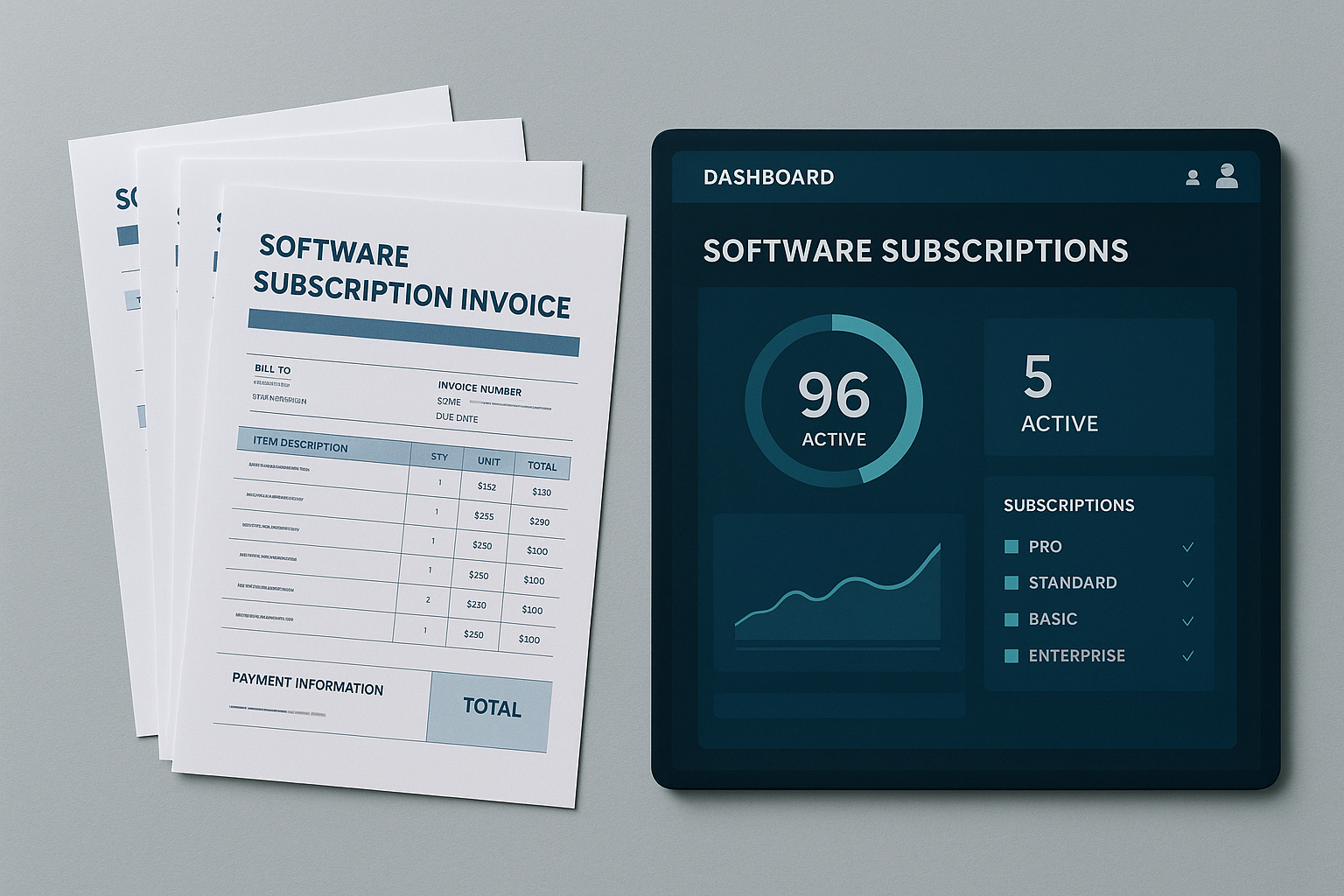
Consolidating tools is often the biggest cost lever for a growing plumbing fleet.
Pricing Considerations for a 5-Truck Fleet
Pricing is where many owners get caught off guard. Specifically, per-technician platforms often start around $50 to $100 per user monthly, which for five technicians plus two office staff can reach $350 to $700 before add-ons are counted. In addition, most operators also pay separately for a phone answering service, a review tool, and financing integration, pushing real monthly spend into the thousands.
By contrast, a flat-rate model charges the same $199, $349, or $549 whether the company runs 5 trucks or 15. As a result, the cost of growth comes from hiring technicians, not from software fees scaling alongside them. This single difference is often the deciding factor once owners run the numbers side by side.
For readers evaluating vendors directly, the JobOS Pro homepage lists current tier pricing and the 30-day free trial terms, which require no credit card and no migration to begin testing.
Frequently Asked Questions
What is the best software for 5 truck plumbing company operations?
The best software for a 5 truck plumbing company is one that combines call answering, scheduling, dispatch, estimating, invoicing, and reviews in a single flat-rate platform. JobOS Pro is built for this exact fleet size because it bundles those functions without charging per technician.
How much does plumbing business software typically cost per month?
Most plumbing software costs between $50 and $300 per technician per month, which for a 5-truck shop can mean $1,000 or more monthly. Flat-rate platforms like JobOS Pro instead charge $199 to $549 per month regardless of technician count.
Why do per-technician pricing models hurt growing plumbing companies?
Per-technician pricing means software costs rise every time an owner hires, which punishes growth. A shop that grows from 5 to 8 trucks can see its software bill jump by hundreds of dollars a month under seat-based pricing.
Can a 5-truck plumbing company switch software without losing data?
Yes, most modern platforms support data import and can run alongside existing tools during a transition period. JobOS Pro, for example, requires no migration to start and can operate next to systems like Jobber or QuickBooks while an owner tests it.
What features matter most for a plumbing fleet of this size?
Call answering, scheduling, dispatch, estimating with financing options, and automated invoicing matter most at 5 trucks. Reputation management and a unified inbox also matter because missed follow-ups are the biggest source of lost revenue at this scale.
How does missed-call handling affect plumbing revenue?
Estimates suggest home service businesses lose 20 to 30 percent of potential revenue to handoff failures, and missed calls are a major contributor. An AI receptionist that answers, qualifies, and books calls around the clock closes that gap without adding staff.
Is ServiceTitan worth it for a 5-truck plumbing shop?
ServiceTitan offers deep functionality, but its per-technician enterprise pricing often makes it expensive for a 5-truck operation still watching margins closely. Many owners at this size find simpler, flat-rate alternatives deliver similar core value at a fraction of the cost.
How long does it take to onboard new plumbing software?
Basic onboarding for scheduling and dispatch can take a few days, while full adoption across estimating, invoicing, and reviews typically takes two to four weeks. A 30-day free trial gives most 5-truck teams enough time to test the full workflow before committing.
What is a common mistake plumbing owners make when choosing software?
A common mistake is choosing software based on features alone without checking how pricing scales as the fleet grows. Owners should also avoid stitching together five or more disconnected point tools, since that creates the same handoff gaps the software is supposed to fix.
Does plumbing software help with technician accountability in the field?
Yes, a technician field app with GPS tracking, before-and-after photos, and signature capture creates a clear record of every job. This reduces disputes, supports quality control, and speeds up invoicing after job completion.
Can one platform replace multiple separate plumbing business tools?
Yes, an all-in-one platform can replace call handling, scheduling, CRM, estimating, payments, and marketing tools that many shops run separately. Consolidating into one system reduces monthly software spend and closes the gaps that occur when data does not sync between tools.
How does financing at the estimate stage affect plumbing close rates?
Presenting financing or buy-now-pay-later options at the moment an estimate is delivered helps customers say yes to larger jobs immediately. Waiting until later to mention financing often lets the customer's decision go cold or lose the bid to a faster competitor.
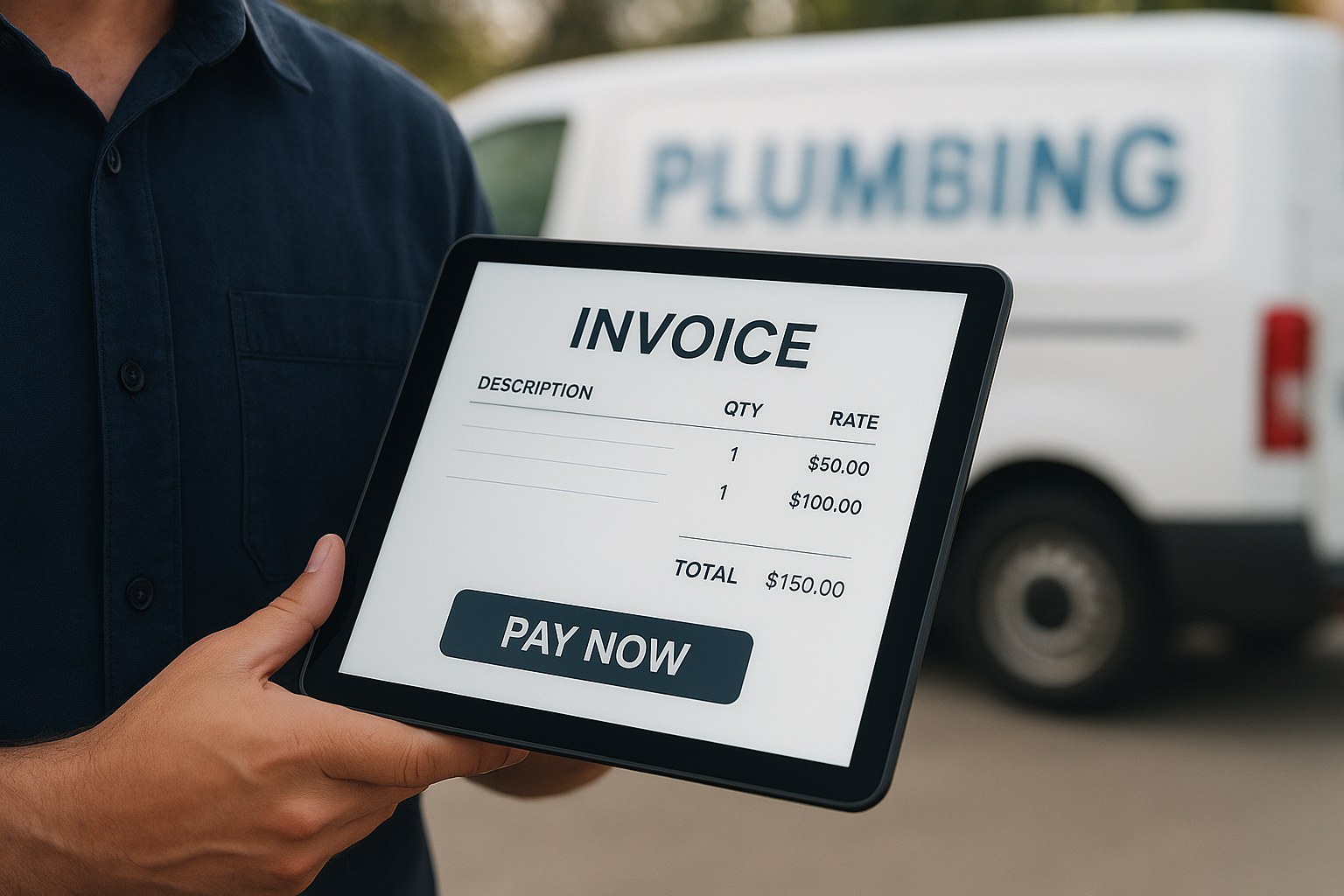
Fast, automated invoicing keeps completed jobs from sitting unpaid.
Final Thoughts
In summary, the best software for 5 truck plumbing company operations is not the one with the most add-ons. It is the one that closes the specific gaps costing this fleet size real money: unanswered calls, stalled estimates, slow invoicing, and reviews that never get requested. Therefore, before comparing feature lists, owners should map their own handoffs, confirm pricing stays flat as the team grows, and test call answering speed directly. Platforms like JobOS Pro were built around exactly this problem, offering flat monthly pricing and a 30-day free trial so a 5-truck shop can test the full workflow before committing to a switch.
