A cheaper alternative to ServiceTitan is exactly what thousands of HVAC, plumbing and electrical contractors started searching for the moment their software bill jumped after adding a few trucks. ServiceTitan charges per technician, so every new hire quietly raises the software cost, too. For a growing contractor, that pricing model turns growth into a penalty rather than a reward. This guide breaks down why the per-seat model hurts, what a genuine flat-rate option looks like, and how JobOS Pro fits into the picture without forcing a painful migration.
Quick answer: A cheaper alternative to ServiceTitan is any field service platform that delivers comparable scheduling, dispatch, estimating and invoicing tools at flat, predictable pricing instead of per-technician fees. Platforms like JobOS Pro, Jobber, Housecall Pro and Service Fusion all compete in this space, each with different strengths. For operators running 3 to 15 trucks, JobOS Pro's flat $199 to $549 monthly tiers with unlimited technicians are often the most direct replacement for ServiceTitan's enterprise pricing.
What Is a Cheaper Alternative to ServiceTitan?
A cheaper alternative to ServiceTitan is a field service management platform built for home service trades that costs less overall, usually because it does not multiply its price by headcount. Specifically, these alternatives bundle scheduling, dispatching, invoicing, customer relationship management (CRM, software that tracks every customer interaction) and marketing tools into one flat fee. As a result, a ten-truck operation pays the same software bill as a four-truck one, which keeps margins predictable as the business scales.
According to Wikipedia's overview of field service management, the category covers scheduling, dispatch, inventory and mobile workforce tools used by trades businesses. However, how each vendor prices access to those tools is where ServiceTitan and its flat-rate competitors diverge sharply.
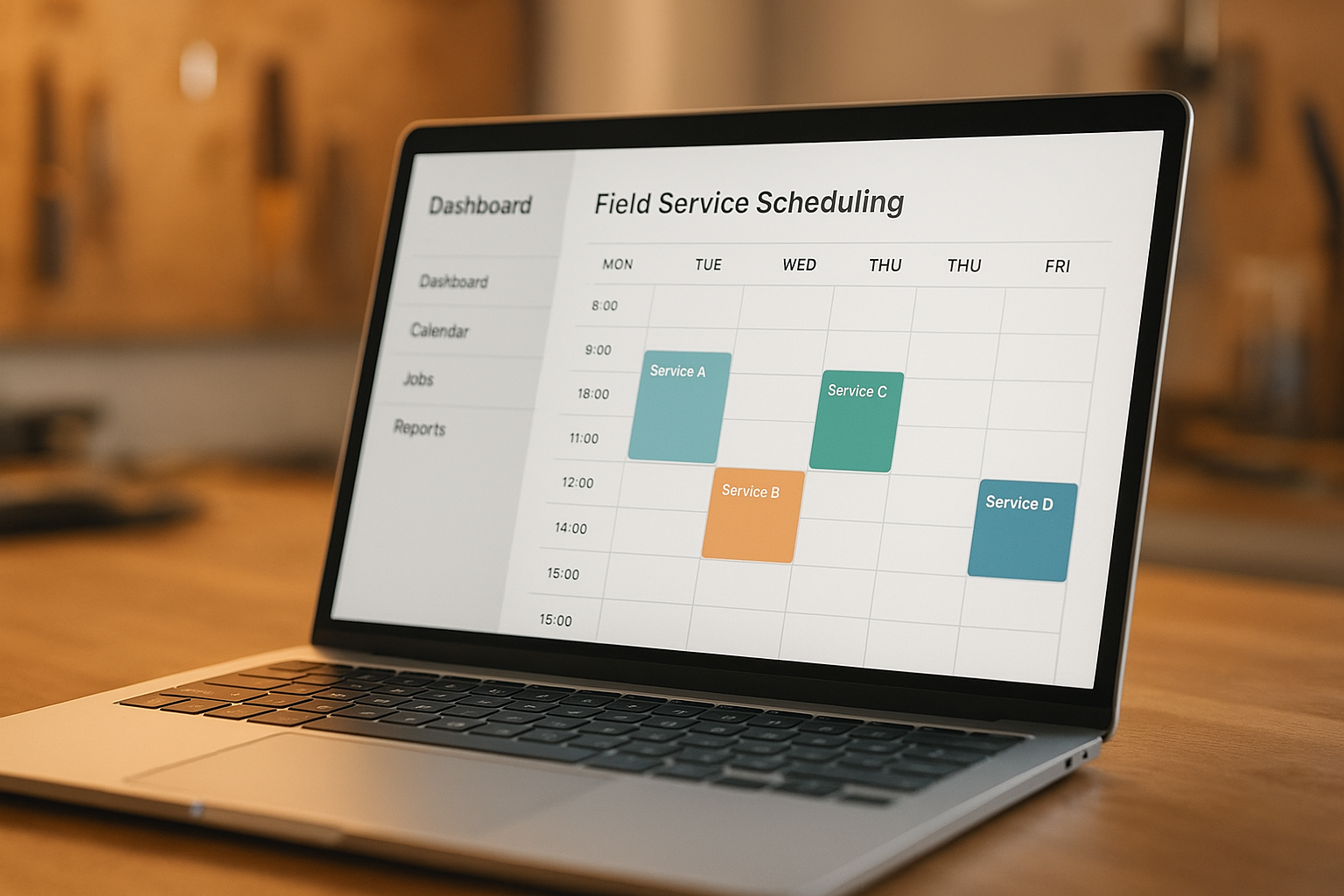
Reviewing dashboard options is often the first step toward finding a cheaper alternative to ServiceTitan.
Why the Per-Technician Pricing Model Backfires
ServiceTitan's pricing scales with crew size, which sounds fair on paper. In practice, however, it punishes exactly the growth a contractor is trying to achieve. Hiring a fifth or sixth technician should improve margins, not erode them with a bigger software invoice.
Meanwhile, the real revenue problem for most home service businesses is not software cost at all. Industry benchmark data cited across the field service software category suggests operators commonly lose 20 to 30 percent of potential revenue to operational gaps such as unanswered calls during peak hours, leads that never get a follow-up, and completed jobs that go uninvoiced. Consequently, paying more for software that does not plug those leaks is doubly costly. For a closer breakdown of this specific complaint, see this analysis of why ServiceTitan feels too expensive to many growing operators.
How Much Does ServiceTitan Cost in 2026?
ServiceTitan does not publish flat public pricing. Instead, it quotes custom, per-technician rates plus onboarding and implementation fees that vary by business size. In contrast, publicly listed flat-rate tools make budgeting far simpler because the number does not move when the roster grows.
For context on broader labor trends shaping these decisions, the U.S. Bureau of Labor Statistics projects steady demand growth for HVAC technicians this decade, meaning crew sizes are likely to keep expanding. Therefore, a pricing model that penalizes hiring becomes a bigger liability every year the business adds trucks.
Top Features to Expect From an Affordable ServiceTitan Alternative
Not every low-cost tool covers the full job. Specifically, look for these capabilities before switching:
- Missed-call capture and AI-based lead qualification
- Scheduling, dispatch and a live technician calendar
- Estimates with dynamic pricing and financing at the point of decision
- Payments, invoicing and text-to-pay
- Review and reputation automation
- Reporting that shows margin by job, technician and lead source
According to Investopedia's explanation of software-as-a-service (SaaS) pricing, flat subscription models are generally easier for small and mid-size businesses to forecast than usage-based or per-seat billing. That predictability is precisely what draws growing trades businesses toward flat-rate platforms.

Field apps with GPS and photo capture are standard in most flat-rate field service platforms today.
JobOS Pro: A Flat-Rate Alternative to ServiceTitan
JobOS Pro is an AI-native operating system built specifically for HVAC, plumbing, electrical and adjacent trades across the United States and Canada. Rather than billing per seat, it charges $199, $349 or $549 per month with unlimited technicians, dispatchers and office staff on every tier. For a full side-by-side breakdown, see this JobOS Pro vs ServiceTitan comparison.
The platform includes Kate, an AI receptionist that answers calls around the clock, qualifies callers and books jobs directly onto the live calendar. In addition, it covers estimates with financing options, payments, a unified inbox, a technician field app with offline mode, and a CEO dashboard showing an Operational Health Score by job, technician and lead source. Because it runs alongside existing tools such as Jobber, ServiceTitan or QuickBooks during a 30-day free trial, no migration is required before testing it. For specific positioning details, the ServiceTitan alternatives page outlines how the feature set lines up tier by tier.
How to Switch From ServiceTitan to a Flat-Rate Platform
Switching software does not have to mean downtime. Follow these five steps for a controlled transition:
- Audit your current software costs and usage. Review your last three ServiceTitan invoices, count active technician seats and list every add-on module you are paying for so you understand your real monthly spend.
- Export historical data and customer records. Request a full export of customer records, job history, estimates and invoices from ServiceTitan before starting any trial with a new platform to avoid losing information.
- Run the new platform alongside ServiceTitan. Start a free trial of the alternative platform and use it for new leads and jobs for two to four weeks while ServiceTitan continues handling existing work.
- Migrate active jobs and train your team. Move active jobs, scheduling and pricebook data into the new system, then walk dispatchers and technicians through the booking, invoicing and field app workflows.
- Cancel ServiceTitan once the cutover is confirmed. Confirm that invoicing, payments, reviews and reporting all work correctly in the new platform for at least one full billing cycle before canceling ServiceTitan entirely.
ServiceTitan vs Flat-Rate Alternatives: A Side-by-Side Look
Pricing structure is the clearest dividing line between these platforms. The table below compares the pricing approach of four commonly researched options.
| Platform | Pricing Model | Best For |
|---|---|---|
| ServiceTitan | Custom, per-technician | Large enterprise operations |
| JobOS Pro | Flat, $199–$549/month, unlimited users | 3–15 truck operators and franchises |
| Jobber | Tiered, partly per-user | Solo operators and small crews |
| Service Fusion | Flat tiers, fewer AI features | Budget-focused small shops |
For a deeper breakdown of how these platforms stack up on individual features, review this HVAC software comparison or the dedicated Service Fusion comparison page.
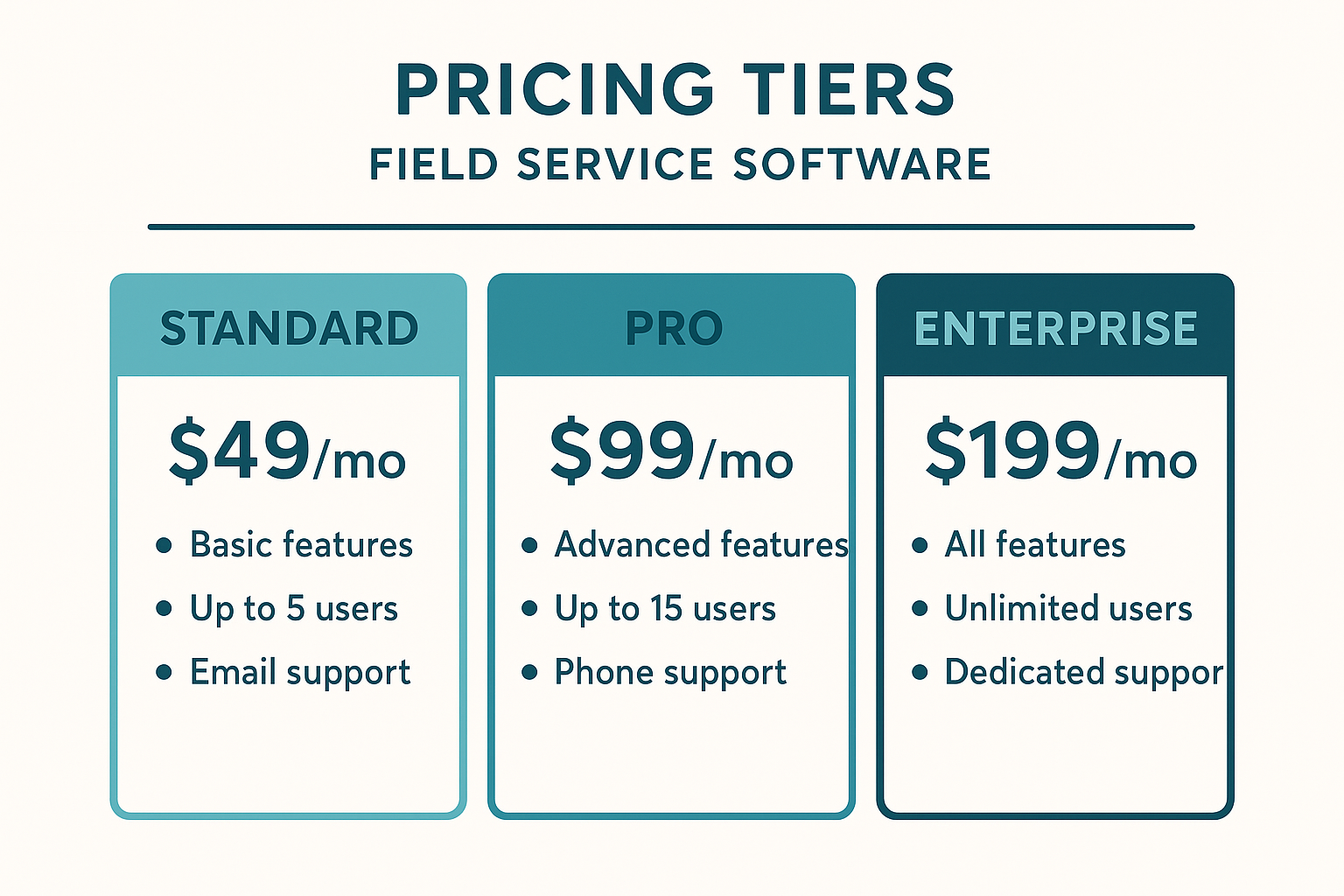
Flat monthly tiers make it easier to forecast costs than per-technician billing.
Frequently Asked Questions
What is a cheaper alternative to ServiceTitan?
A cheaper alternative to ServiceTitan is a field service management platform that offers comparable scheduling, dispatch and invoicing tools without charging per technician. Options such as JobOS Pro, Jobber and Housecall Pro all compete in this lower-cost category.
Why does ServiceTitan cost so much for growing businesses?
ServiceTitan prices its software per technician, so every new hire increases the monthly bill. As a result, a contractor who doubles their crew size can end up paying several times more for the same core features.
Is JobOS Pro cheaper than ServiceTitan?
Yes, JobOS Pro uses flat monthly pricing at $199, $349 or $549 with unlimited technicians, dispatchers and office staff on every tier. For a 10-truck operation, that is typically far less than ServiceTitan's per-seat enterprise pricing.
How much does ServiceTitan cost per month?
ServiceTitan does not publish flat public pricing; instead, it quotes custom per-technician rates that scale with headcount, onboarding fees and add-on modules. Most mid-size operators report costs climbing well beyond $1,000 to $2,000 per month once several technicians and add-ons are included.
What features should I look for in an affordable field service platform?
Look for scheduling, dispatch, estimating, invoicing, payments and a built-in CRM at minimum. In addition, missed-call capture, review automation and reporting dashboards help close revenue gaps that per-seat platforms often leave unaddressed.
Can I switch from ServiceTitan without losing my data?
Most alternatives, including JobOS Pro, support running alongside ServiceTitan during a trial period so historical jobs, customer records and invoices can be exported safely. Therefore, a phased cutover protects existing data while the new system is tested.
Is Jobber cheaper than ServiceTitan?
Jobber is generally less expensive than ServiceTitan, though it still prices some plans per user and lacks several enterprise features like franchise royalty tracking. Consequently, larger multi-crew operators sometimes outgrow Jobber's scheduling and reporting depth.
How long does it take to migrate to a new field service platform?
Most contractors complete a full migration within two to four weeks when they run the new platform in parallel with their existing software. Training staff and importing historical records typically take the longest.
Does a cheaper alternative to ServiceTitan mean fewer features?
Not necessarily. Many flat-rate platforms bundle lead capture, AI call answering, estimating with financing options, payments and marketing tools into one system, matching or exceeding ServiceTitan's feature set at a lower total cost.
What is the biggest hidden cost of ServiceTitan?
Beyond per-technician fees, onboarding and implementation charges are frequently cited as the biggest hidden cost. Add-on modules for marketing, pricebook management and advanced reporting can also push the total bill higher.
Who should consider switching away from ServiceTitan?
Owner-operators running roughly 3 to 15 trucks who feel penalized for growing their team are the clearest candidates. Similarly, multi-location or franchise operators needing simpler royalty tracking and cross-unit benchmarking often benefit from switching.
Is there a free trial for ServiceTitan alternatives?
Yes, several alternatives, including JobOS Pro, offer a 30-day free trial with no credit card required. This allows an operator to test scheduling, estimating and payments before committing.
How does flat-rate pricing compare to per-technician pricing long term?
Over several years, flat-rate pricing tends to save growing businesses the most money because the bill stays fixed regardless of headcount. In contrast, per-technician pricing compounds with every hire, which can quietly erase the margin gained from adding crews.
Final Thoughts
Choosing a cheaper alternative to ServiceTitan ultimately comes down to matching pricing predictability with the features your crew actually uses daily. ServiceTitan remains a capable platform for large enterprise operations, but its per-technician billing can quietly outpace the value it delivers as a business grows. Flat-rate platforms, by contrast, let an owner-operator add trucks without rewriting the software budget every quarter.
For a 3-to-15-truck HVAC, plumbing or electrical business, JobOS Pro offers one clear path: flat monthly pricing, unlimited users, and a 30-day free trial that runs alongside your current tools at jobospro.com with no migration required to get started.
