How to get paid faster contractor searches spike every time cash flow gets tight, and that makes sense given how much revenue quietly leaks out of the average trades business. Specifically, many home service operators lose 20 to 30 percent of potential revenue not to competitors, but to their own handoffs: estimates that go cold, invoices that never get sent, and completed jobs that sit unpaid for weeks. Fortunately, this leakage is fixable. This guide walks through the exact steps contractors in HVAC, plumbing, electrical, and related trades can take to shrink the gap between finishing a job and getting paid for it.
What Is the Fastest Way for Contractors to Get Paid Faster?
The fastest way for contractors to get paid faster is to combine upfront deposits, same-day digital invoicing, and automated payment reminders so no completed job ever sits unbilled. Contractors who pair those three habits with online payment options such as text-to-pay typically collect within days instead of weeks.
Every unpaid invoice technically counts as accounts receivable, money that's owed but not yet collected, and it behaves like an interest-free loan a contractor unintentionally hands to a customer. As a result, the longer that gap stays open, the more it strains payroll, parts orders, and fuel costs. In addition, that strain compounds when several jobs are stuck in the same limbo at once, which is exactly why the collection process deserves the same attention as the sales process.
20–30%
of potential revenue is lost by home service businesses to internal handoff breakdowns like slow invoicing and missed follow-up, not to competitors, according to industry data.
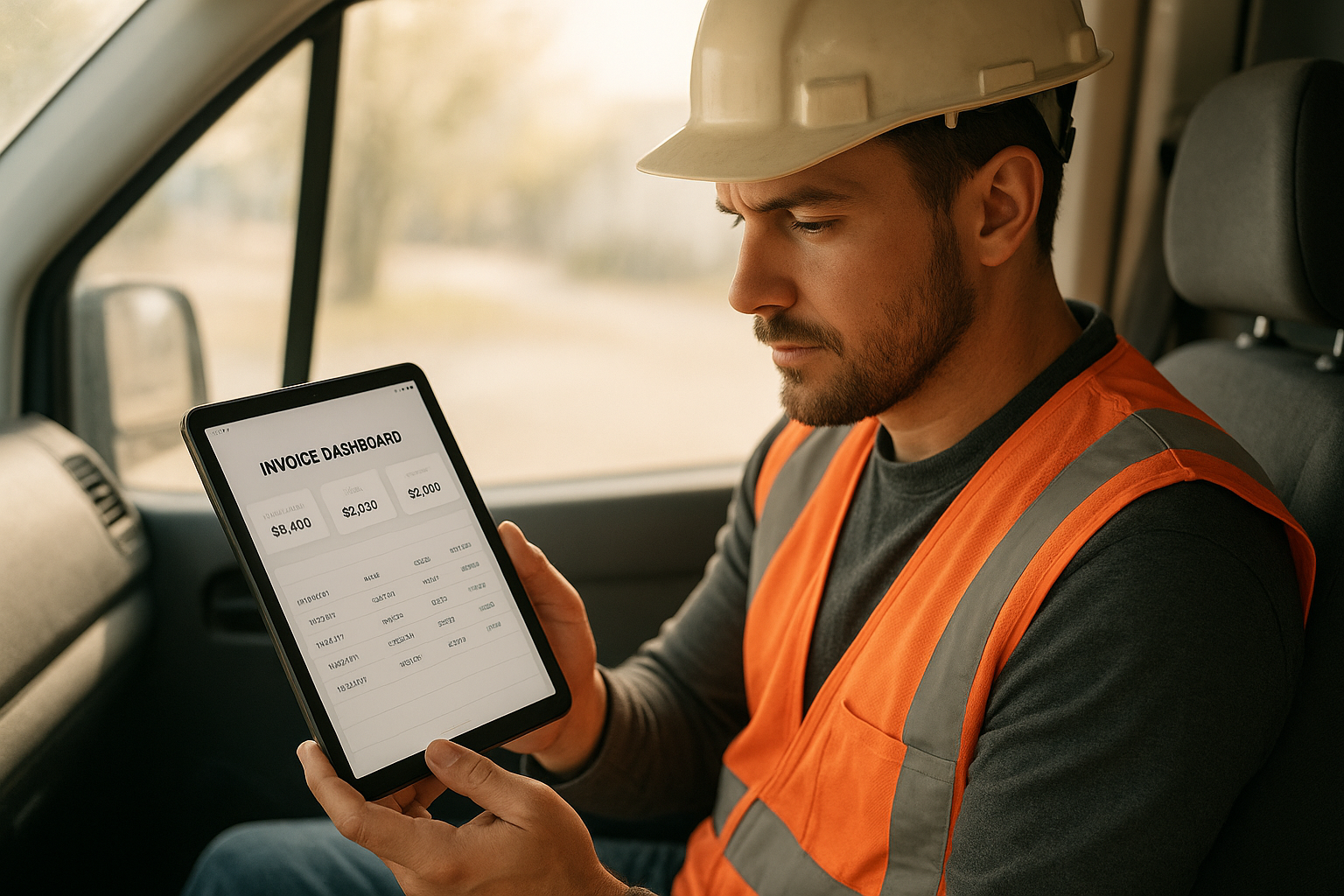
A clear dashboard view is one of the fastest ways to learn how to get paid faster as a contractor.
How to Get Paid Faster Contractor Checklist: 7 Steps That Work
Below is a practical, sequential checklist. Each step is small on its own, but together they close most of the gaps that slow contractors down.
- Collect a deposit upfront. Collect a deposit before work begins so that a portion of the job is already paid regardless of what happens afterward, protecting cash flow immediately.
- Invoice the same day. Send the invoice the same day the job wraps up instead of waiting until end of week, since delayed invoicing is one of the biggest causes of delayed payment.
- Offer multiple payment methods. Offer text-to-pay links, credit cards and ACH transfers, because customers pay faster when the payment method matches their preference.
- Automate follow-up reminders. Automate reminder sequences that follow up on unpaid invoices at set intervals, removing the need for staff to manually track every account.
- Present financing at the estimate. Present financing and buy-now-pay-later options at the point of the estimate, so customers who cannot pay in full still commit and pay on time.
- Track invoices in one dashboard. Track every outstanding invoice inside a single dashboard rather than across scattered spreadsheets and separate apps that make follow-up easy to miss.
- Call on invoices older than 7 days. Call personally on any invoice older than seven days, since a short, friendly phone call often resolves delays faster than another automated email.
Why Contractors Get Paid Late in the First Place
Slow payment rarely comes from dishonest customers. More often, it traces back to internal breakdowns, such as missed callbacks that push scheduling back, estimates that go cold before a customer signs, or technicians whose schedules are so inefficient that invoicing gets delayed by days.
For example, a business that focuses on reducing costly callbacks ends up with fewer jobs delayed or redone, which means invoices go out closer to the original completion date. Similarly, operators working on improving technician utilization tend to finish more jobs per week, giving the office a steadier invoicing cycle instead of end-of-month backlogs. And when sales teams don't manage the estimate follow-up gap properly, quotes go cold, jobs slip to competitors, and cash that should have arrived weeks earlier never shows up at all.
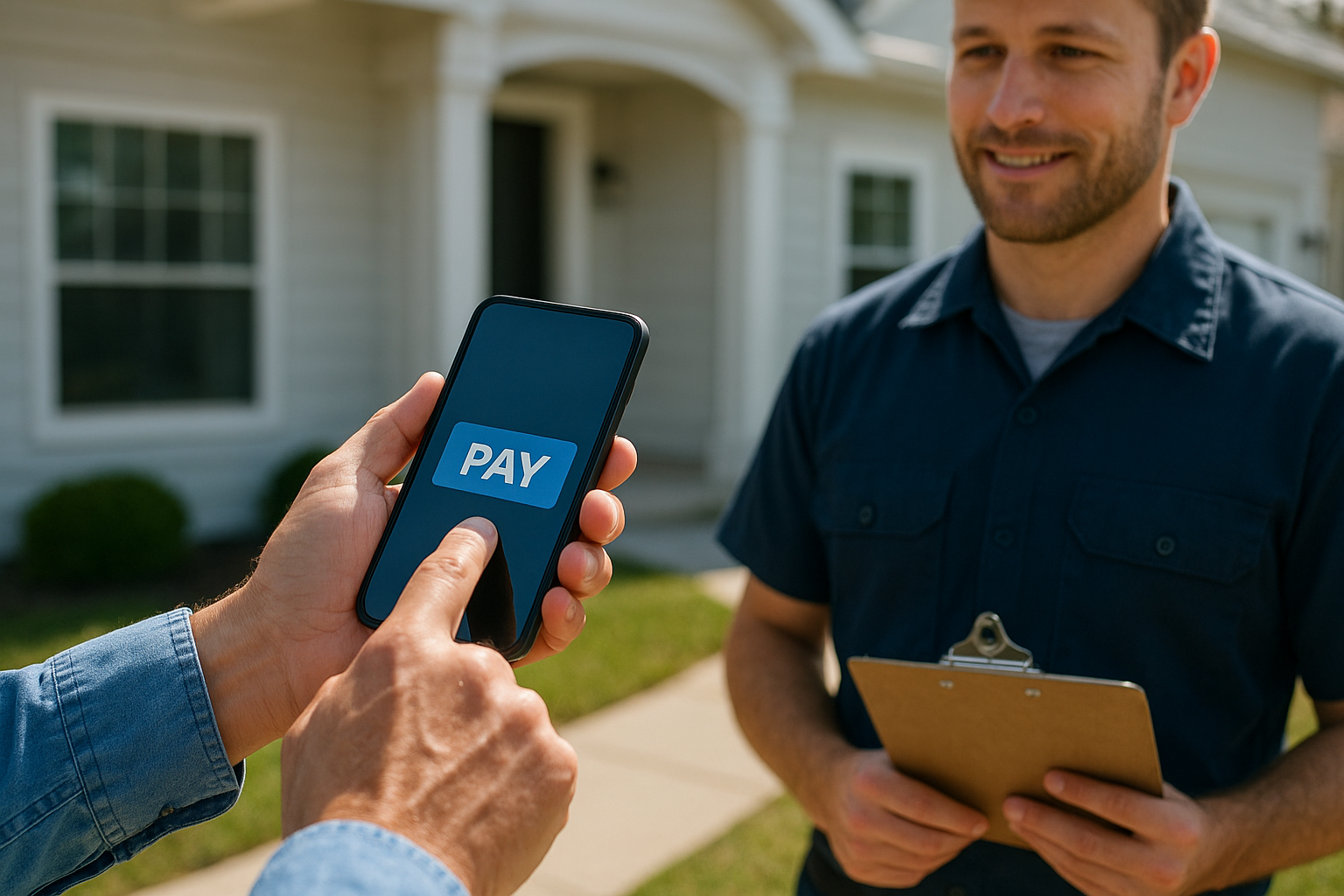
Text-to-pay lets a customer settle a bill before the truck even leaves the driveway.
Faster Invoice Collection Methods That Cut Days Off Payment Time
An invoice is only useful if it actually gets paid, and speed depends heavily on how easy it is for a customer to act on it. Text-to-pay links let customers settle a bill in under a minute from a phone, often before they've left the job site. Recurring billing works well for maintenance plans and subscription-style agreements, pulling payment automatically instead of waiting on a mailed check.
Therefore, for contractors already sitting on stacks of aging invoices, a dedicated process for recovering unpaid invoices can bring back cash that looked lost months ago. In particular, combining reminders with a direct pay link inside the same text message removes almost every excuse for further delay.
How Contractor Payment Software Speeds Up Collections
Manually chasing payments across five to thirteen disconnected tools is exhausting, and it's exactly the gap an all-in-one system is built to close. JobOS Pro bundles estimates, dynamic pricing, financing, invoicing, and text-to-pay into one platform built for HVAC, plumbing, and electrical contractors.
Unlike ServiceTitan, which bills per technician, or entry-level tools such as Jobber and Housecall Pro, JobOS Pro charges a flat rate at $199, $349, or $549 a month, with unlimited technicians and office staff on every tier. Electrical contractors, in particular, can review dedicated electrical contractor software features built around license tracking, permit workflows, and code-specific estimating. Because the platform includes a 30-day free trial with no credit card required, contractors can test faster payment workflows without disrupting whatever system, including QuickBooks, they already run.

Reviewing outstanding invoices weekly helps catch slow payers before they become write-offs.
Common Mistakes That Slow Down Contractor Payments
Even well-run contracting businesses fall into a few repeatable traps. Sending invoices weekly instead of daily is one of the most common, since it adds days of float before a customer even sees the bill. Failing to state clear payment terms upfront is another, because ambiguity gives customers an easy excuse to delay.
Consequently, requiring signatures on estimates that include payment terms, due dates, and accepted methods removes that excuse before the job even starts. Finally, many contractors avoid following up on old invoices out of politeness, which is understandable but costly. According to the U.S. Small Business Administration, consistent cash flow monitoring is one of the strongest predictors of small business survival.
Frequently Asked Questions About How to Get Paid Faster as a Contractor
What does it mean to get paid faster as a contractor?
Getting paid faster means shrinking the time between finishing a job and having the money in the bank. It usually involves deposits, same-day invoicing, and automated follow-up rather than waiting on manual steps.
How to get paid faster contractor: does requiring a deposit really help?
Yes, requiring a deposit is one of the most effective how to get paid faster contractor strategies because it guarantees partial payment before labor or materials go out the door. It also filters out customers who aren't serious about the job.
How long should a contractor wait before following up on an unpaid invoice?
Most contractors should send a reminder within 3 to 7 days of an invoice going unpaid, then follow up again at 14 and 30 days. Waiting longer than a month significantly reduces the odds of full collection.
What payment methods help contractors collect money fastest?
Text-to-pay links, credit card processing, and ACH bank transfers tend to collect fastest since customers can pay in under a minute from a phone. Mailed checks are typically the slowest option available.
Why do contractors get paid late even when the work is done well?
Late payment is usually an internal process problem, not a customer problem. Delayed invoicing, missed follow-up, and disorganized tracking across multiple tools are the most common causes.
How much revenue do contractors lose to slow payment collection?
Industry estimates suggest home service businesses lose 20 to 30 percent of potential revenue to internal breakdowns like slow invoicing and missed follow-up, rather than to competitors winning the bid.
Is it normal to ask for a deposit before starting a job?
Yes, deposits are standard practice across HVAC, plumbing, and electrical trades, especially for larger jobs involving custom materials. Most customers already expect to pay something upfront.
What is the difference between an estimate and an invoice?
An estimate is a proposed price sent before work begins, while an invoice is a bill sent for work already completed. Estimates that include clear payment terms tend to convert into faster-paid invoices.
Can software really speed up contractor payments?
Yes, software that automates invoicing, reminders, and text-to-pay removes the manual delays that cause invoices to sit unpaid. Automated systems typically collect payment days faster than manual processes.
How much does contractor payment software cost?
Pricing varies widely, though flat-rate platforms like JobOS Pro charge $199, $349, or $549 per month with unlimited technicians, compared to per-technician platforms that get more expensive as a team grows.
What is the most common mistake contractors make with invoicing?
The most common mistake is batching invoices weekly instead of sending them the same day a job finishes. That delay alone can add several days to the total collection timeline.
Do financing options help contractors get paid faster?
Yes, presenting financing or buy-now-pay-later options at the point of the estimate helps customers commit to larger jobs immediately, which speeds up the entire payment cycle.
How does technician utilization affect how fast a contractor gets paid?
When technicians complete more jobs on schedule, invoices go out on a predictable cycle instead of piling up. Poor scheduling and low utilization create backlogs that delay billing by days or weeks.
Final Takeaways
Ultimately, every how to get paid faster contractor strategy comes down to removing friction at each handoff, from the first estimate to the final invoice. Deposits, same-day invoicing, multiple payment options, and consistent follow-up will shorten collection time on their own. However, contractors who pair those habits with a connected system like JobOS Pro tend to see the fastest, most consistent results, because nothing slips through the cracks between departments. Whether a business runs three trucks or fifteen, the fastest path to steady cash flow starts with treating collections as seriously as sales.
