How to stop losing money on missed calls starts with a hard truth: every unanswered ring is a job that just called your competitor instead. Home service businesses in HVAC, plumbing, and electrical trades lose between 20 and 30 percent of potential revenue not to better competitors, but to their own broken handoffs. This guide breaks down exactly why missed calls cost so much money, and it walks through the practical, step-by-step fixes that stop the bleeding for good.
Quick answer: How to stop losing money on missed calls is a matter of combining 24/7 call answering, instant follow-up, and clear revenue tracking so no lead, estimate, or invoice slips through the cracks. Businesses that add an AI receptionist and automated follow-up typically recover a large share of the 20 to 30 percent revenue that missed calls and slow handoffs quietly drain each month.
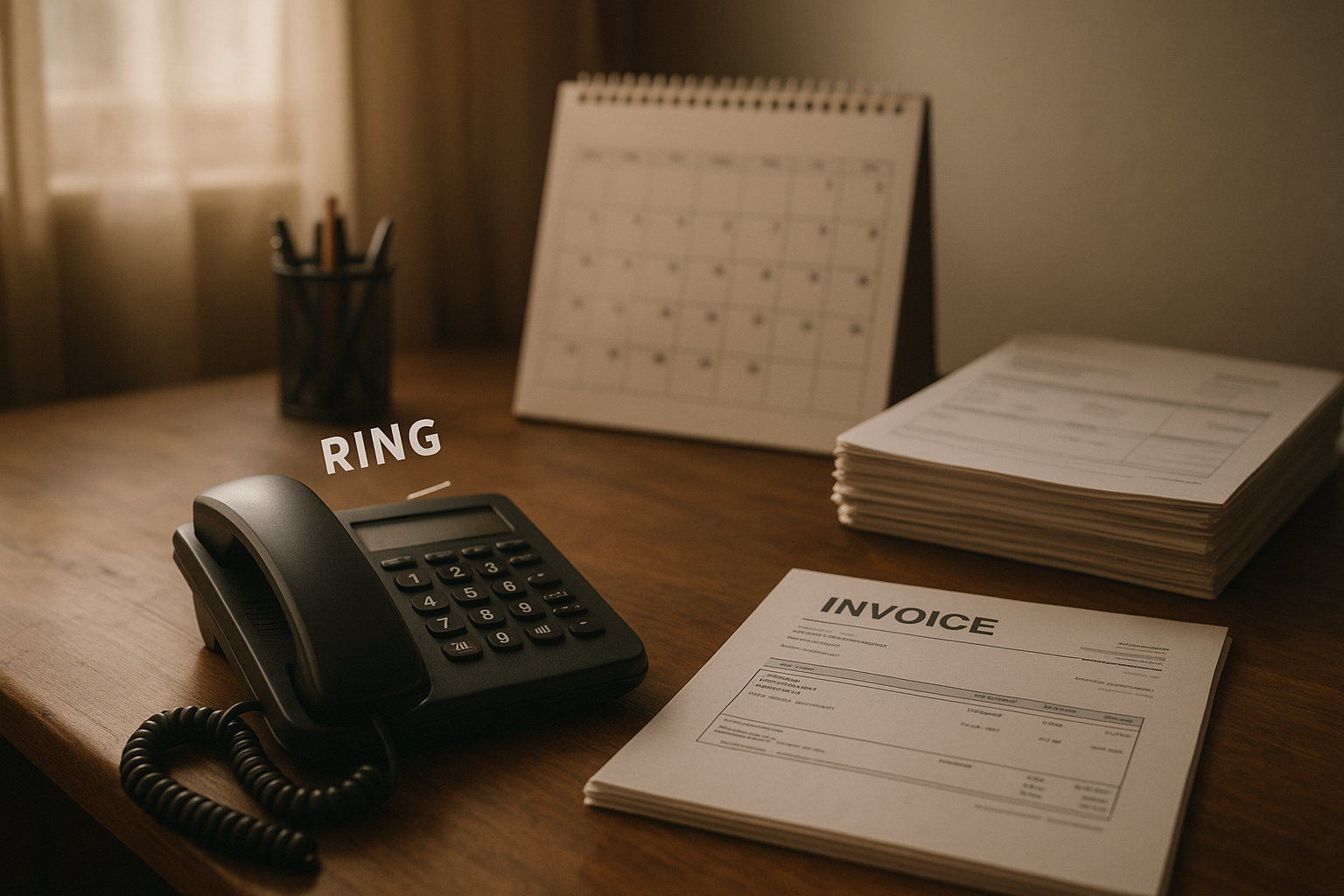
Every unanswered call at a busy dispatch desk is a job at risk of walking to a competitor.
What Is Revenue Leakage From Missed Calls?
Revenue leakage from missed calls is the steady loss of jobs, estimates, and repeat business that happens when inbound calls go unanswered, unreturned, or unqualified. It is not caused by weak marketing or tough competition; instead, it happens after the phone rings, when no one is ready to answer, book, and confirm the job.
For home service businesses, this leak shows up in five common places: after-hours calls, calls during peak dispatch hours, calls that go to voicemail, callbacks that never happen, and estimates that never get a follow-up. According to research detailed in JobOS Pro's revenue leak report, home service operators lose 20 to 30 percent of potential revenue to these internal handoff gaps rather than to competitors. Over a few years, that gap is often the difference between a three-truck operation and a ten-truck operation.
How to Stop Losing Money on Missed Calls: 5 Proven Fixes
Fixing this problem does not require a total overhaul overnight. Instead, it requires closing five specific gaps in the order below, since each one compounds the leak that comes before it.
1. Answer every call, day and night. Set up around-the-clock call answering, either through live staff rotation or an AI receptionist, so calls during peak hours, evenings, and weekends never ring out to voicemail.
2. Qualify and book on the first call. Check live technician availability and lock in the appointment during that same call, since customers forced to wait for a callback often book with whoever answers first.
3. Follow up on every estimate within hours. Send an automated text or email reminder for open estimates within a few hours of sending them, because quotes left untouched for days rarely convert into booked jobs.
4. Automate invoicing right after job completion. Trigger an invoice and text-to-pay link the moment a technician marks a job complete instead of waiting for office staff to process the paperwork later.
5. Request reviews from every satisfied customer. Send an automated review request as soon as payment clears, since consistent reviews keep future lead flow and local search visibility from quietly drying up.
Why Missed Calls Cost Home Service Businesses So Much
Missed calls cost more than most owners assume because the lead has already found and trusted the business enough to pick up the phone. In other words, the marketing dollars were already spent. Losing that call means paying for the same lead twice: once for the ad or search ranking, and again in lost revenue to the competitor who answered first.
Traditional call center models were built for large enterprises with dedicated staff, which is why smaller trade businesses have historically struggled to keep pace. As a result, a plumbing or HVAC company running three to fifteen trucks often has no one free to answer a call while a technician is mid-job. Furthermore, industry surveys on customer experience, including reporting from Zendesk's customer experience research, consistently find that response speed is one of the top factors customers use to choose a service provider. Consequently, the business that answers first usually wins the job, regardless of price or reputation.
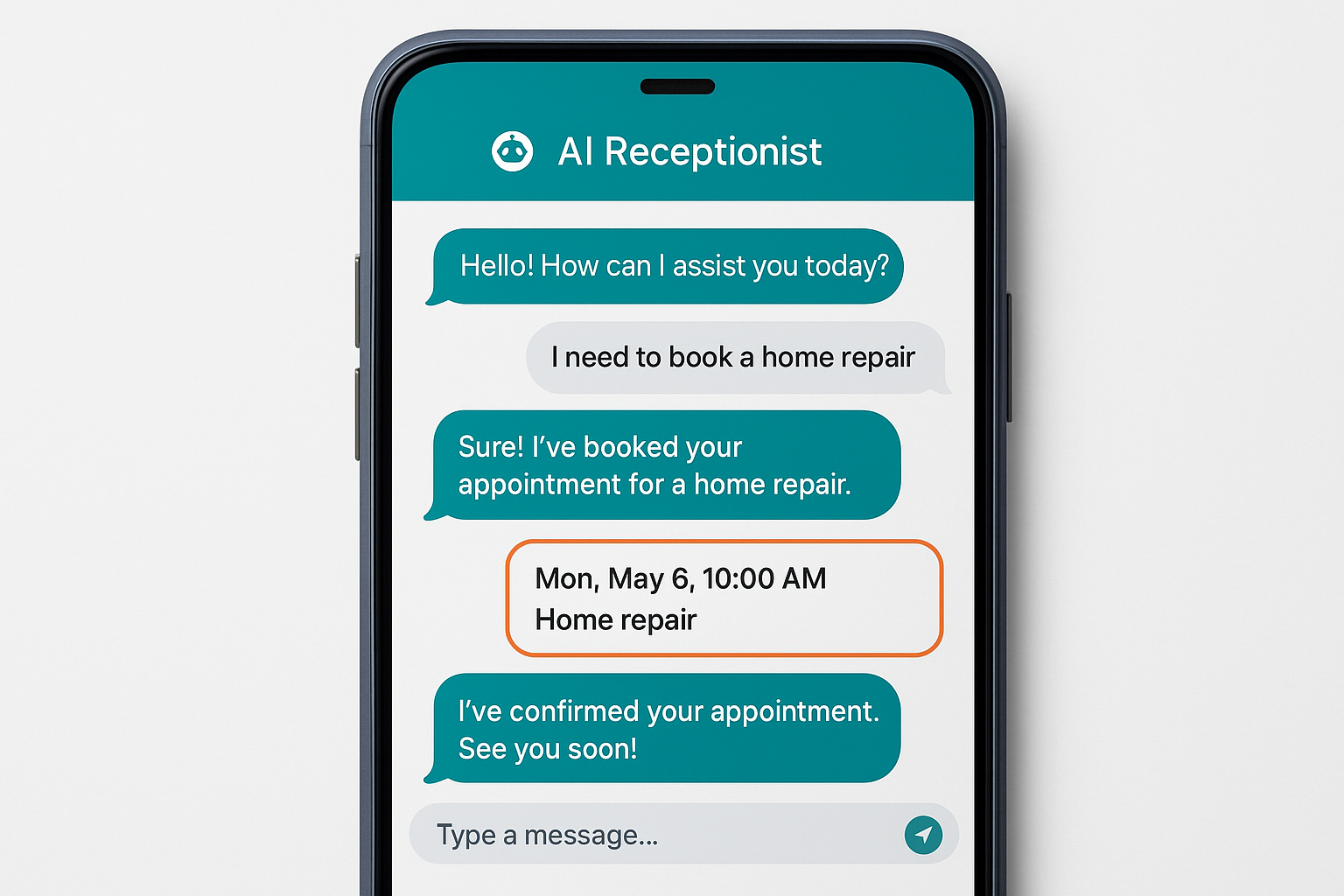
An AI receptionist can confirm bookings instantly, closing the gap between a missed call and a lost job.
How an AI Receptionist Stops Missed-Call Revenue Loss
An AI receptionist stops missed-call revenue loss by answering every inbound call instantly, qualifying the caller, and booking the job without waiting for a human to be free. For example, Kate, the AI receptionist built into JobOS Pro, answers calls around the clock, checks live technician availability, books the appointment, and sends a confirmation text before the caller has a chance to dial the next business on the list.
This approach directly targets the pattern explored in how missed calls quietly cost HVAC businesses thousands of dollars a month, since after-hours and peak-hour calls often include the most urgent, highest-ticket jobs. Similarly, because JobOS Pro combines call answering with scheduling, estimates, and a unified inbox across call, text, and email, no lead has to pass through five separate tools before it turns into a booked job. Above all, the goal is not just recording the call, but recovering the revenue attached to it.
Choosing the Right System to Fix Missed-Call Revenue Leaks
Not every platform is built to solve this specific problem. Entry-level scheduling tools log calls but rarely act on them, while enterprise platforms such as ServiceTitan offer deep functionality but bill per technician, which raises software costs every time a business hires. In contrast, JobOS Pro is priced flat at 199, 349, or 549 dollars a month with unlimited technicians, dispatchers, and office staff on every tier, and it runs alongside existing tools like Jobber, ServiceTitan, or QuickBooks during a 30-day free trial with no credit card required.
For multi-location and franchise operators, the stakes are higher still, since missed calls at one site can distort royalty tracking and cross-unit benchmarking. The franchise operations intelligence layer addresses this by tracking a network leakage funnel across every location. For a deeper breakdown of the numbers behind this problem, the missed calls ebook is a useful next resource.

Tracking revenue by job, technician, and lead source makes it easier to spot where missed calls are still costing money.
Frequently Asked Questions About How to Stop Losing Money on Missed Calls
What does it mean to lose money on missed calls?
Losing money on missed calls means a customer called to book a job, but no one answered, so they hired a competitor instead. For home service businesses, each missed call can represent hundreds or thousands of dollars in lost work.
How to stop losing money on missed calls without hiring more staff?
The most direct way to stop losing money on missed calls without adding headcount is to use an AI receptionist that answers, qualifies, and books calls around the clock. This removes the need for extra front-desk staff during peak hours or after 5 p.m.
How much revenue do home service businesses lose to missed calls?
Research cited by JobOS Pro suggests home service operators lose roughly 20 to 30 percent of potential revenue to internal handoff gaps, including missed calls, slow follow-up, and uncollected invoices. That is often more damaging than losing jobs to competitors.
Why do missed calls cost more than lost marketing spend?
Missed calls cost more because the lead already found and trusted the business enough to call, so the marketing dollars were already spent. Losing that call means paying for the lead twice: once for the ad, and again for the competitor who answered.
What is the difference between a missed call and a cold estimate?
A missed call happens before a conversation even starts, while a cold estimate happens after a quote is sent but never followed up on. Both create the same result: a customer who hired someone else because no one closed the loop.
How long does it take to fix missed-call revenue leaks?
Most businesses see a measurable drop in missed calls within the first week of turning on 24/7 call answering. Full recovery of lost revenue, including estimate follow-up and review generation, typically shows up within 60 to 90 days.
Is an AI receptionist better than voicemail for missed calls?
Yes, an AI receptionist is significantly better than voicemail because it books the job in real time instead of asking the caller to wait for a callback. Most callers who reach voicemail simply call the next business on the list.
What is a common mistake businesses make with missed calls?
A common mistake is assuming missed calls are rare or low-value, when in fact after-hours and peak-hour calls often include the most urgent, highest-ticket jobs. Ignoring this pattern quietly drains thousands of dollars in monthly revenue.
How does missed-call tracking compare across software platforms?
Entry-level scheduling tools log calls but rarely act on them, while platforms like JobOS Pro combine call answering, booking, and follow-up in one system. Enterprise tools such as ServiceTitan offer similar depth but charge per technician, raising costs as a team grows.
What does it cost to stop losing money on missed calls?
Flat-rate platforms built for this problem start around 199 dollars a month with unlimited technicians and staff, which is often less than the revenue lost from a single missed emergency call. Per-seat platforms can cost far more as a company adds crews.
Can missed-call fixes work alongside existing tools like Jobber or QuickBooks?
Yes, many missed-call and revenue-recovery platforms are designed to run alongside existing scheduling or accounting software without a full migration. This lets a business start recovering lost revenue immediately while transitioning tools at its own pace.
What is the first step to stop losing money on missed calls?
The first step is turning on always-on call answering so no inbound call ever goes to voicemail or rings out. From there, businesses should add automated follow-up for estimates and faster invoicing to close every remaining leak.
Final Takeaway
In the end, how to stop losing money on missed calls comes down to closing the gaps that happen after the phone rings: slow answering, slow follow-up, and slow invoicing. Therefore, the fastest path forward is to combine 24/7 call answering, instant booking, and automated follow-up into one system rather than juggling several disconnected tools. Home service businesses that close these leaks tend to keep more of the revenue they already earned, without spending another dollar on new leads.
