
The decision to offer financing on estimates contractor businesses present to homeowners can turn a maybe into a signed job before the customer has time to call three other companies. Homeowners facing a $9,000 HVAC replacement or a $6,500 water heater failure rarely have that cash sitting in a checking account. As a result, when a contractor shows a monthly payment number next to the total price, the estimate stops feeling like a bill and starts feeling like a decision the homeowner can say yes to today.
Quick answer: To offer financing on estimates, contractors need a platform that presents pre-qualified payment plans the moment the estimate is sent or signed, not days later. Financed estimates typically close at a noticeably higher rate than cash-only quotes, because the homeowner reacts to a monthly payment instead of a total that feels out of reach.
What Does It Mean to Offer Financing on Estimates Contractor Businesses Send?
Offer financing on estimates contractor is the practice of presenting installment payment plans, rather than just a lump-sum price, directly inside the estimate a contractor sends to a homeowner. Instead of a single dollar figure, the customer sees a total price alongside a monthly payment option, often with an instant approval built right into the same screen.
In practice, this usually happens one of two ways. Either the contractor's field app pulls in a lending partner automatically, or the office manually sends a financing link after the visit. The first approach converts far better, because it removes the delay between the pitch and the payment decision.
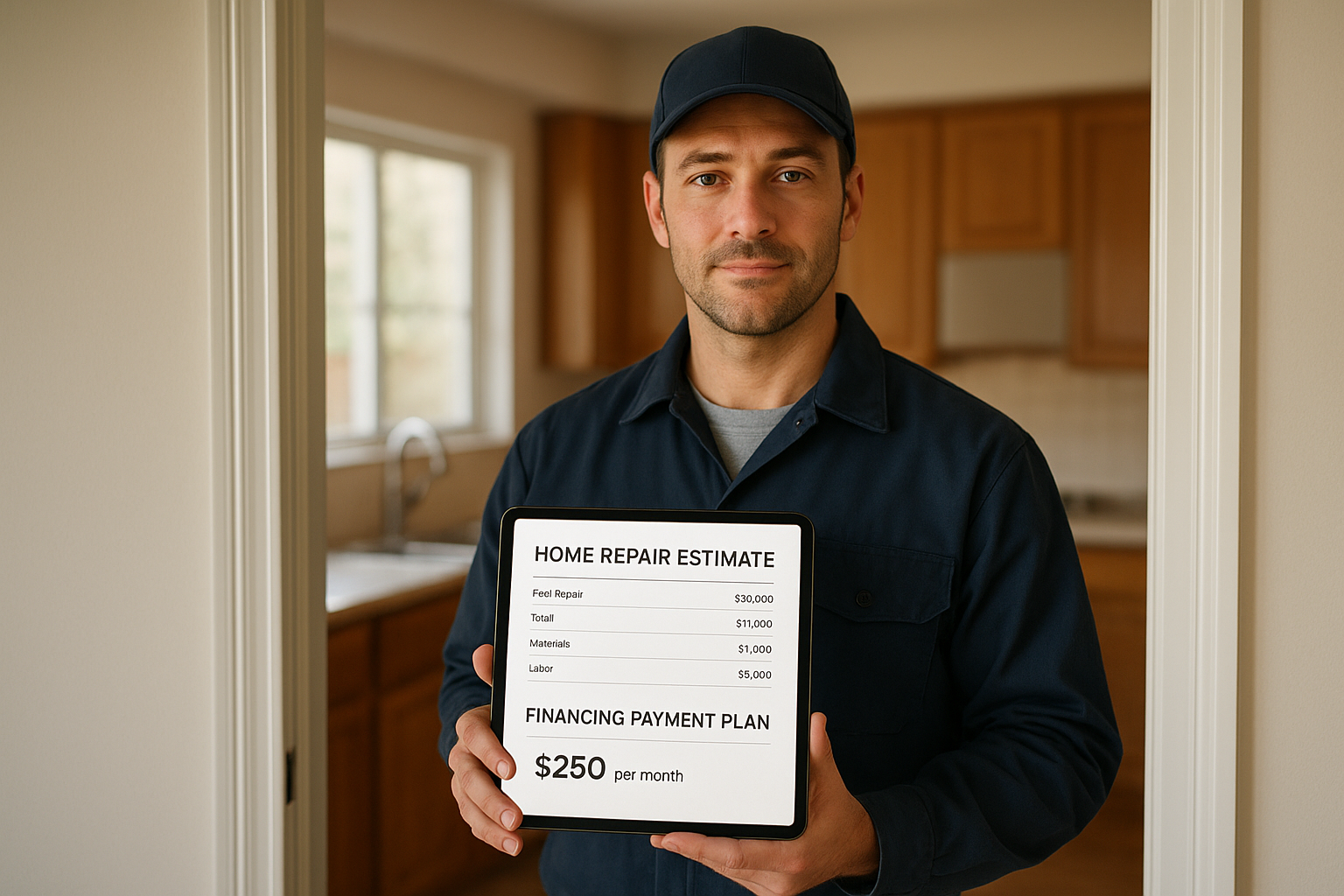
Presenting financing at the moment the estimate is written helps contractors offer financing on estimates before the customer has time to shop around.
Why Contractors Lose Bids Without Financing Options
Homeowners rarely accept the first quote on the spot. Instead, they collect two or three estimates and decide over the next few days, which means price alone rarely wins the job. In particular, the contractor who removes friction from the payment decision usually wins, even when their total price is not the lowest.
Without financing options on the table, many estimates simply go cold while the homeowner "thinks about it." That gap between sending a quote and getting a signed job is one of the most common ways contractors quietly lose revenue, as explored in this breakdown of the estimate follow-up gap. Similarly, unresolved financing questions leave the door open for a competitor to step in with a payment plan before the original contractor follows up again.
Consequently, automating that follow-up matters just as much as offering financing in the first place. A structured process for chasing outstanding estimates, such as the one outlined at this estimate follow-up resource, helps recover jobs that would otherwise disappear after the initial visit.
How to Offer Financing on Estimates Contractor Teams Can Use Today
Getting financing in front of a customer is not complicated, but the order of operations matters. Below is the process most successful contractors follow, from the first walk-through to the signed job.
- Confirm job scope and total price. Document the repair or installation accurately before presenting any payment option, since financing on an incorrect estimate creates rework later.
- Present financing at the point of decision. Show the monthly payment next to the total price on the same screen, rather than waiting for the customer to ask.
- Run instant approval on-site. Let the homeowner complete a soft-credit-check application on a tablet during the same visit so a decision arrives before the technician leaves.
- Send the signed estimate with financing terms attached. One document should show scope, price, and payment plan together, so there is no confusion later.
- Automate follow-up on pending approvals. Text and email reminders for unfinished applications recover jobs that would otherwise quietly disappear.
Best Financing Options for HVAC, Plumbing, and Electrical Contractors
Not every job needs the same payment structure. Above all, contractors get the best results by offering more than one plan instead of a single take-it-or-leave-it option.
Buy-now-pay-later plans work well for smaller repairs, typically splitting an invoice into a handful of low-interest payments over a few weeks. Longer installment loans, on the other hand, fit large replacements such as full HVAC systems or panel upgrades, where the total price can run into the thousands. According to guidance from the Consumer Financial Protection Bureau, borrowers should always see the full cost of financing clearly disclosed before agreeing to terms, which is worth confirming with any lending partner a contractor chooses.
For a deeper look at how point-of-sale lending works across industries, this overview of point-of-sale financing explains the mechanics behind instant approvals that contractors rely on at the estimate stage.
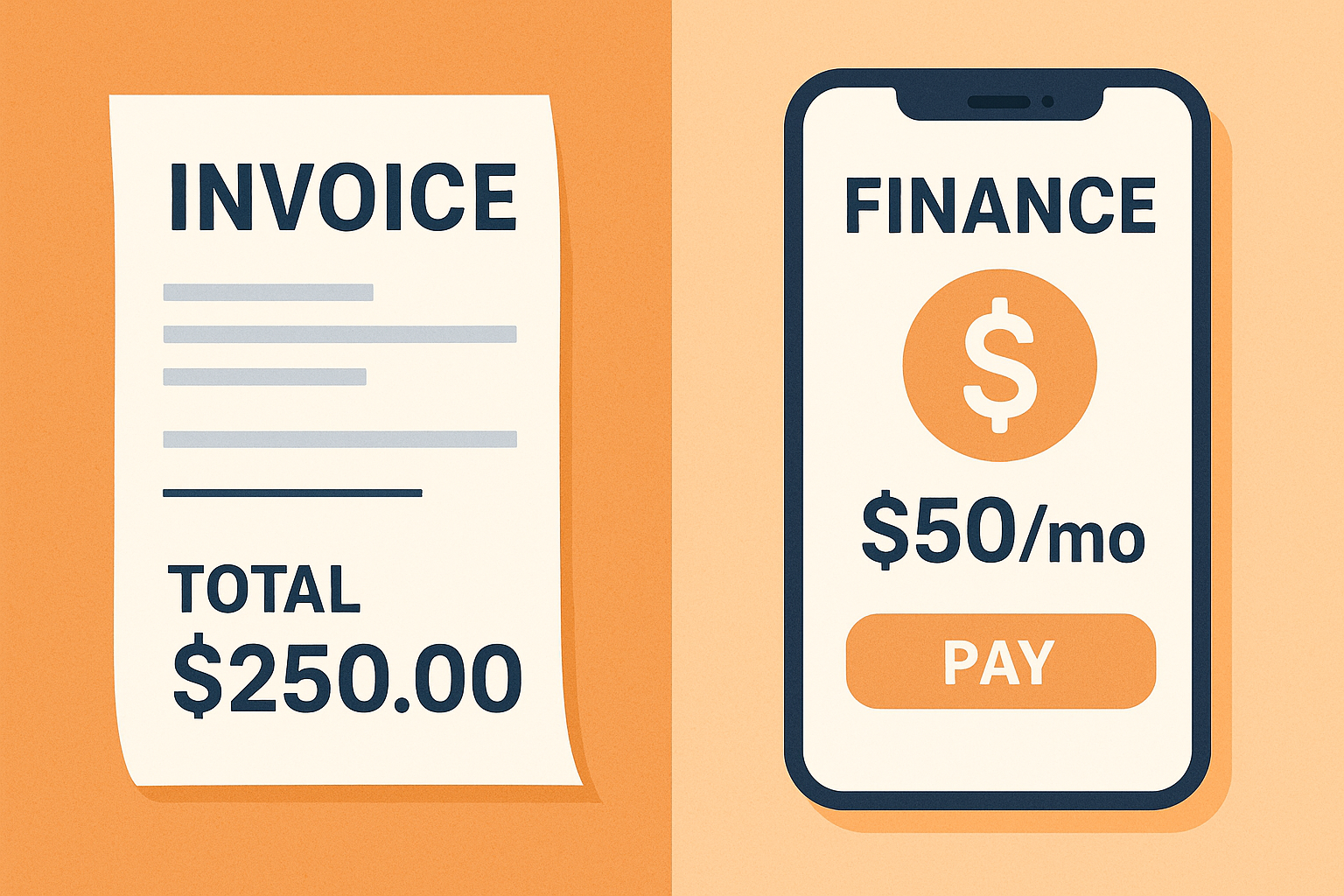
Splitting a large invoice into a manageable monthly payment often changes a homeowner's answer from no to yes.
How Point-of-Estimate Financing Increases Average Ticket Size
When financing is available, customers stop shopping strictly by price. Instead, they compare monthly payments across a good, better, and best option, and many choose the higher-tier system once the payment feels affordable.
Therefore, financing does more than close a job that might otherwise be lost. It also lifts the average ticket, because customers who felt priced out of the premium option suddenly qualify for it. For a closer look at pricing tactics that raise ticket size beyond financing alone, see this guide to increasing average ticket.
Platforms built for this exact moment matter here. JobOS Pro, for example, presents dynamic pricing tiers along with financing and buy-now-pay-later options directly inside the estimate screen, so the technician never has to leave the app to check approval status. You can review how that flow works at jobospro.com.
Common Mistakes Contractors Make When Adding Financing to Quotes
Even contractors who already offer financing often leave money on the table because of a few repeatable mistakes. The first is only mentioning financing when the customer pushes back on price, instead of showing it by default on every estimate. This treats financing as a discount instead of a standard payment option, and it means many customers never even hear about it.
The second mistake is failing to follow up on applications that were started but never finished. Not every customer completes the process on the first try, and without a reminder, that job simply goes cold. In addition, contractors who skip follow-up on financed jobs often see the same pattern show up later as unpaid invoices, which is why a clear process for collecting unpaid invoices matters just as much as offering financing in the first place.
Finally, some contractors treat financing as separate from the rest of their operation, which creates blind spots elsewhere. For instance, jobs that come back for warranty work or a callback rarely get flagged, and that pattern connects directly to the kind of margin loss covered in this resource on reducing callbacks. A single system that tracks financing, invoicing, and job history together closes these gaps far more reliably than juggling separate tools.
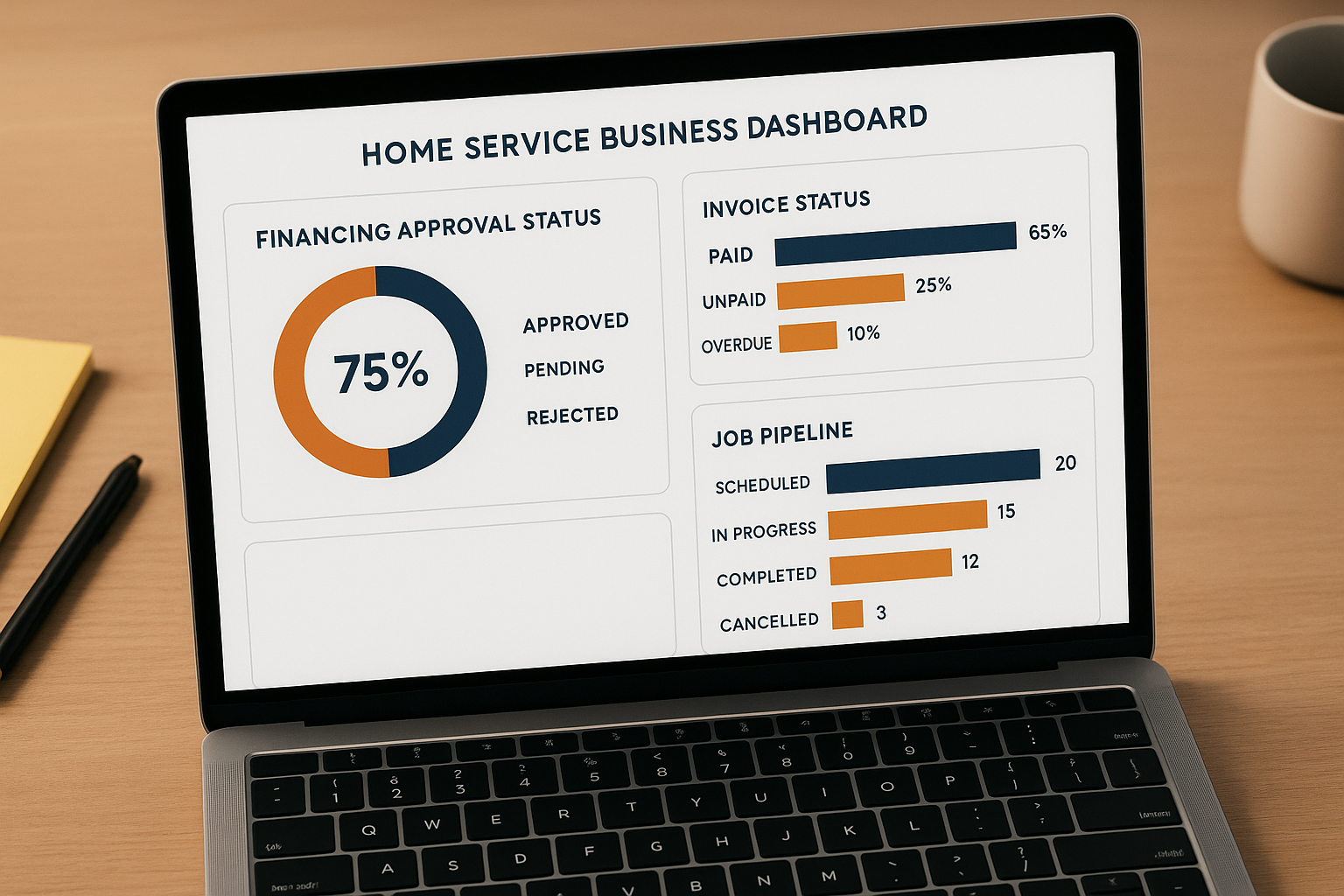
Tracking financing status alongside invoicing helps contractors catch jobs that would otherwise stall.
What the Data Says About Financing and Close Rates
Small business lending research from the U.S. Small Business Administration consistently shows that access to flexible payment options changes buying behavior for services priced above a few thousand dollars. Home service categories, where emergency repairs often exceed a household's available cash, are a clear example of this pattern.
Contractors who consistently present financing at the estimate stage, rather than only when asked, report meaningfully higher close rates on estimates over $3,000. Above all, the businesses that win are the ones that make financing feel like a normal part of every quote rather than a special favor reserved for hesitant customers.
Frequently Asked Questions About Offer Financing on Estimates Contractor Topics
What does it mean to offer financing on estimates contractor teams rely on?
It means presenting installment payment plans directly inside the estimate, so the homeowner sees a monthly payment next to the total price instead of just one large number. Contractors who offer financing on estimates typically show this option before the customer leaves the appointment.
How do contractors actually add financing to an estimate?
Most contractors connect a lending partner to their estimating or field service software so a financing button appears automatically on every quote. The customer applies on a tablet or phone and often gets a decision in under a minute.
Why should HVAC, plumbing, and electrical contractors offer financing?
Because unexpected repairs rarely fit inside a household's checking account, and homeowners who cannot pay in full often delay the decision or call a competitor. Financing removes that hesitation and keeps the job on the calendar.
What financing options work best for home service contractors?
Buy-now-pay-later plans for smaller repairs and longer installment loans for large replacements, such as HVAC systems, tend to perform best. Offering both at the point of estimate covers the widest range of customer budgets.
Does offering financing actually increase average ticket size?
Yes, because customers approved for financing are more willing to choose a premium option instead of the cheapest fix. Many contractors see average ticket size rise once financing is presented consistently on every estimate.
How much does it cost a contractor to offer financing?
Contractors typically pay a small merchant fee, often a percentage of the financed amount, and this is usually built into pricing rather than billed separately. There is rarely an upfront cost to the contractor to make financing available.
How long does it take to set up financing on estimates?
Basic integrations with a lending partner can go live within a few days once the paperwork is approved. Platforms that already include financing built into the estimate screen, rather than as a bolt-on, can be active the same week.
What is the difference between financing and buy-now-pay-later for contractors?
Financing usually refers to longer-term installment loans with interest, often used for large jobs like full system replacements. Buy-now-pay-later splits smaller invoices into a handful of interest-free or low-interest payments over weeks rather than years.
Do customers with lower credit scores still qualify for contractor financing?
Many lending partners offer tiered approval levels, so a portion of applicants with lower credit scores still get approved, sometimes at a higher rate. Presenting financing to every customer, not just ones who ask, captures approvals contractors would otherwise miss.
What mistakes do contractors make when adding financing to estimates?
The most common mistake is mentioning financing only when a customer objects to price, instead of showing it on every estimate by default. Another is failing to follow up on approved-but-unsigned financing offers, which lets the deal go cold.
Can financing be added to software contractors already use?
In many cases yes, through a third-party lending integration, though the experience can feel bolted on if the estimate tool was not built with financing in mind. All-in-one platforms that build financing into the estimate screen tend to convert better.
How does financing at the estimate stage reduce lost bids?
Homeowners often gather two or three quotes before deciding, and the first contractor to make the payment feel manageable frequently wins the job. Presenting financing during the estimate visit, rather than after, shortens the decision window competitors rely on.
Conclusion: Make Financing Part of Every Estimate
In the end, contractors who offer financing on estimates contractor customers respond well to are the ones who present it early, present it clearly, and follow up on it automatically. Financing alone will not fix every revenue leak, but it removes one of the most common reasons a good estimate never turns into a signed job. Consequently, pairing financing with automated follow-up and a single view of every job's payment status, invoicing, and history closes far more of the gaps that quietly cost contractors revenue every month. Businesses ready to see this built directly into their estimate and payment workflow can explore the approach at jobospro.com.
