One system instead of five tools hvac is quickly becoming the standard growth-minded operators reach for once they realize how much revenue quietly disappears between separate apps. Most HVAC, plumbing and electrical businesses run somewhere between five and thirteen different platforms — one for scheduling, another for invoicing, a third for reviews, a fourth for marketing, and a spreadsheet holding it all together. Each handoff between those tools is a place where a lead, a quote or a payment can fall through the cracks. This guide explains what a unified operating system actually replaces, how the switch works in practice, and why owners running three to fifteen trucks are consolidating their stack around a single platform such as JobOS Pro.
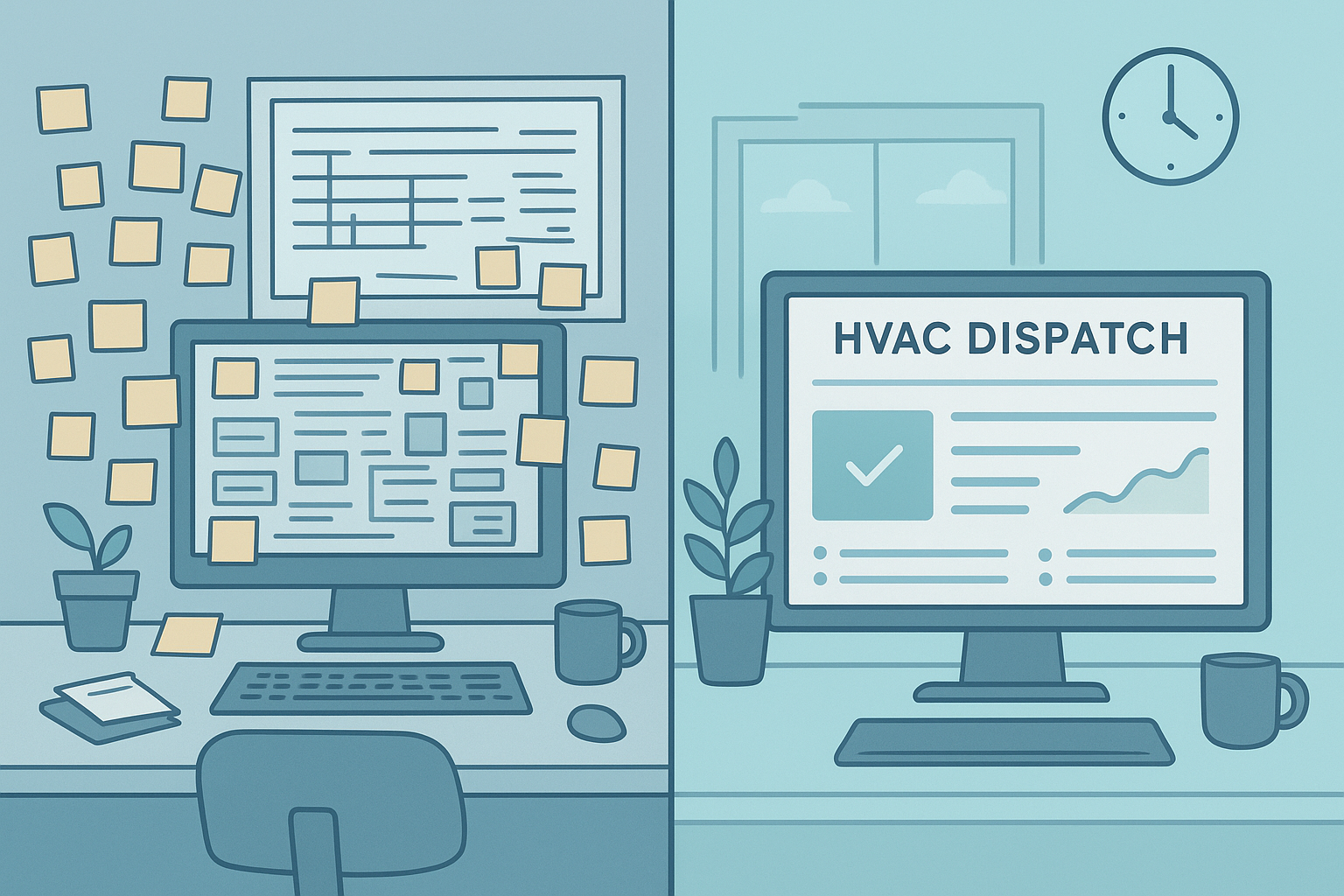
Moving to one system instead of five tools hvac shops rely on removes the gaps between separate apps.
What Is "One System Instead of Five Tools" for HVAC Businesses?
One system instead of five tools hvac means running lead capture, scheduling, estimates, payments, reviews and reporting inside a single connected platform instead of stitching together separate apps for each function. In practice, this replaces a typical stack with one login, one calendar and one customer record.
For example, when a technician marks a job complete in the field, the invoice, the payment request and the review request can fire automatically from the same record. As a result, nothing waits on someone remembering to open three other apps, and information never needs to be re-typed between systems.
Why HVAC Shops End Up Juggling Five to Thirteen Tools
Most home service businesses do not choose tool sprawl on purpose. Instead, it happens gradually: a scheduling app gets adopted first, then a separate invoicing tool, then a review platform, and so on. Within a few years, the average shop is paying for anywhere from five to thirteen disconnected subscriptions that do not share data.
This matters because every handoff between systems is a leak point. According to JobOS Pro's data on home service operators, businesses typically lose 20 to 30 percent of potential revenue not to competitors, but to missed calls, unfollowed leads, cold estimates, unbilled jobs and customers who are never asked for a review. Similarly, the U.S. Bureau of Labor Statistics projects continued strong demand for HVAC technicians, meaning call volume — and the risk of manual handoffs breaking down — will only keep climbing.
One System Instead of Five Tools HVAC Owners Are Switching To
When HVAC owners consolidate, they are usually not looking for more features — they are looking for fewer places where things can go wrong. Consequently, a genuine all-in-one operating system needs to cover the entire revenue path, not just scheduling or just invoicing.
Lead Intake and Missed-Call Recovery
Every unanswered call after five o'clock or during a lunch rush is a lead handed to a competitor. Kate, JobOS Pro's AI receptionist, answers inbound calls around the clock, qualifies the caller, checks live technician availability, books the job and sends a confirmation text without a human ever picking up the phone.
Scheduling, Dispatch and Job Management
Once a job is booked, dispatch, technician GPS tracking and the field app all pull from the same record. As a result, the office never has to re-type an address or equipment history into a second system before a truck leaves the shop.
Estimates, Payments and Recurring Revenue
Estimates sent from a disconnected quoting tool tend to go cold within days. Presenting dynamic pricing plus financing and buy-now-pay-later options while the technician is still on-site measurably improves close rates, and once a job is complete, text-to-pay and recurring billing can fire automatically.
Reviews, Reputation and the CEO Dashboard
Satisfied customers who are never asked for a review quietly dry up future lead flow. A single system can trigger a review request the moment a job closes, and roll margin by job, by technician and by lead source into one daily briefing for the owner.
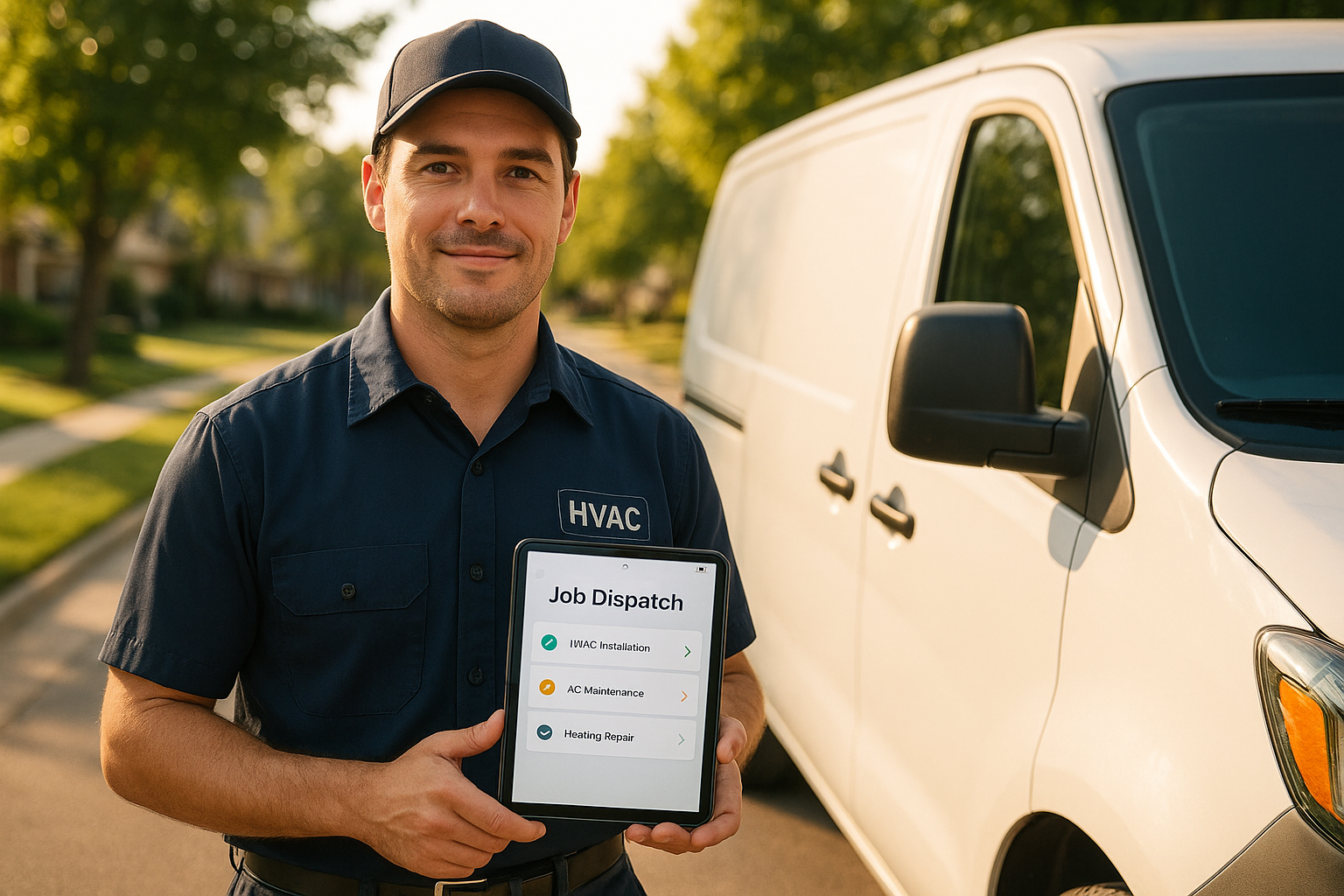
Field technicians work from the same records the office uses, closing the gap tools alone can't fix.
How to Consolidate Your HVAC Tech Stack in 5 Steps
Switching tools does not need to happen overnight. In fact, the safest approach is a phased migration that keeps operations running while the new system takes over piece by piece.
- Audit every tool you currently pay for. List every app your office and field team use today, including scheduling, invoicing, payments, reviews and marketing tools, along with what each one costs per month.
- Map where leads and jobs fall through the gaps. Track a sample of recent calls, quotes and completed jobs to find where handoffs between tools cause missed calls, cold estimates or invoices that never get sent.
- Choose a platform built for the full revenue path. Compare vendors on whether they cover lead intake, scheduling, estimates, payments and reviews in one system, rather than only handling a single piece of the workflow.
- Run the new system alongside your existing tools. Start a free trial and operate the new platform in parallel with your current tools for two to four weeks before canceling any existing subscriptions.
- Migrate data and retrain staff in phases. Import customer records and job history first, then train office staff on the calendar and CRM, followed by field technicians on the mobile app and payment tools.
One Platform vs Five Tools: What It Actually Costs an HVAC Shop
Per-seat software pricing punishes growth. ServiceTitan and similar enterprise platforms charge per technician, so the software bill rises every time an owner hires — which is backwards, since hiring is usually a sign the business is doing well. In contrast, running one system instead of five tools hvac businesses use, such as JobOS Pro, is priced flat at $199, $349 or $549 a month with unlimited technicians, dispatchers and office staff on every tier.
For a shop paying separately for a scheduling app, a phone answering service, a review platform, a payments processor's software fee and a marketing tool, five subscriptions can easily add up to $600 to $1,200 a month before headcount growth even factors in. For a deeper breakdown of where that spending typically goes, see this HVAC software comparison, and for owners weighing whether ServiceTitan's pricing model still makes sense at their size, this analysis of ServiceTitan pricing concerns is worth a look.
JobOS Pro Compared to ServiceTitan, Jobber and Housecall Pro
Jobber and Housecall Pro are easy to start with, but as an operator scales past three or four trucks, gaps appear — particularly around missed-call recovery, financing at the point of sale, and multi-location reporting. ServiceTitan fills many of those gaps but at enterprise per-technician pricing that can price out a 3-to-15-truck shop long before it reaches enterprise scale. See this side-by-side ServiceTitan comparison for specifics.
JobOS Pro sits deliberately in between: more capable than entry-level tools, without ServiceTitan's per-seat cost structure. Shops evaluating point-solution competitors like QuoteIQ specifically for estimating can review this QuoteIQ comparison, and owners researching the broader category can browse this HVAC software overview before deciding what to consolidate around.
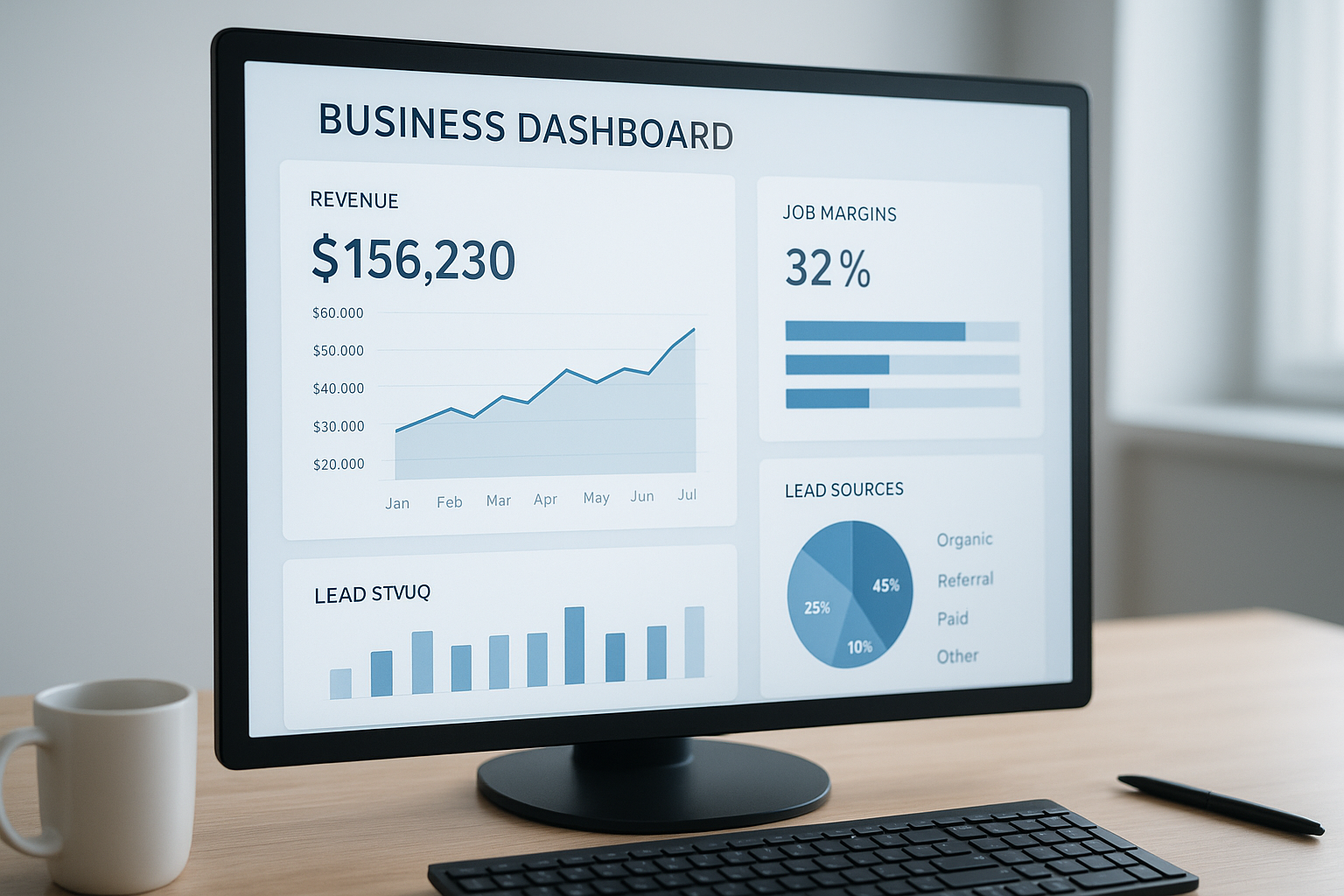
A single dashboard replaces the reports owners once pulled from five separate logins.
Frequently Asked Questions About One System Instead of Five Tools HVAC
What does "one system instead of five tools" mean for an HVAC business?
It means running lead capture, scheduling, estimates, payments and reviews inside a single connected platform instead of five or more separate apps. For an HVAC business, one system instead of five tools hvac operators choose typically means one login, one customer record and one calendar.
How long does it take to switch from multiple tools to one HVAC platform?
Most shops complete a basic migration in one to three weeks, since core customer and job data can usually be imported without shutting down daily operations. Full adoption across office and field staff often takes a full billing cycle.
Is switching to one all-in-one system more expensive than using several cheap tools?
Not usually. Five to ten separate subscriptions can add up to $600 to $1,200 a month before per-seat pricing increases with every new hire, while a flat-priced platform keeps the bill the same regardless of headcount.
What is the biggest mistake HVAC owners make when consolidating software?
The most common mistake is trying to migrate every tool at once instead of running the new system alongside existing tools first. A phased switch, starting with lead intake and scheduling, reduces disruption significantly.
Can I keep using QuickBooks or Jobber while trying a new all-in-one system?
Yes. Reputable platforms are designed to run alongside existing tools such as QuickBooks or Jobber during a trial period, so there is no need to cancel anything before confirming the new system works.
How is an all-in-one platform different from ServiceTitan specifically?
The core difference is pricing structure rather than features. ServiceTitan bills per technician, so costs climb with every hire, whereas flat-rate alternatives charge the same fee with unlimited technicians and staff.
Does consolidating tools make sense for a small HVAC shop with only three trucks?
Yes, particularly because smaller shops feel the cost of missed calls and unfollowed leads more acutely as a share of total revenue. A single system can recover that lost revenue without adding office headcount.
What happens to my existing customer and job data during migration?
Customer records, job history and contact details are typically imported into the new platform rather than re-entered manually. Most reputable vendors offer migration support during onboarding at no extra charge.
How does an AI receptionist handle after-hours calls for HVAC businesses?
An AI receptionist answers the call directly, asks qualifying questions, checks live technician availability, and books the appointment without transferring the caller to voicemail. It then sends the customer a text confirmation automatically.
Why do satisfied customers still hurt future lead flow if no one asks for a review?
Search visibility and referral trust depend heavily on a steady stream of recent reviews, so a completed job that never generates one is a missed marketing opportunity. Over time, this quietly reduces inbound lead flow even when service quality stays high.
What is an Operational Health Score in HVAC software?
It is a rolled-up view of margin by job, by technician and by lead source, usually shown on a single owner-facing dashboard. It replaces pulling separate reports from several disconnected tools.
Is there a free trial before committing to one system instead of five tools?
Many platforms in this category, including JobOS Pro, offer a 30-day free trial with no credit card required, letting an owner test the system against existing tools before switching fully.
What size HVAC company benefits most from switching to one platform?
Growth-stage shops running roughly three to fifteen trucks tend to see the clearest benefit, since they have outgrown entry-level scheduling apps but are not yet large enough to justify enterprise per-technician pricing.
The Bottom Line for HVAC Owners
Ultimately, the case for one system instead of five tools hvac owners have been patching together for years comes down to simple math: every handoff between disconnected apps is a place where revenue quietly leaks out. Consolidating lead intake, scheduling, estimates, payments and reviews into a single platform closes those gaps without adding office headcount. For a 3-to-15-truck shop weighing the switch, a flat-priced, feature-complete option such as JobOS Pro offers a way to test the difference with a 30-day free trial before committing to anything long-term.
