Software for HVAC company with 10 trucks needs to do far more than a spreadsheet or an entry-level booking app ever could. At that fleet size, a single missed call or a forgotten invoice can quietly cost thousands of dollars a month. This guide explains what a growing HVAC operation should look for, how flat-rate pricing stacks up against per-technician fees, and how to switch systems without disrupting a single job.

Choosing the right software for HVAC company with 10 trucks starts with visibility into every job and crew.
What Is the Best Software for HVAC Company With 10 Trucks?
Software for HVAC company with 10 trucks is a business operating system that handles call answering, dispatch, estimates, invoicing, and reviews in one platform instead of across five to ten disconnected tools. The best options use flat-rate pricing so the monthly bill does not increase every time a new technician is hired.
At this stage, most operators have outgrown entry-level tools built for one or two trucks but are not ready to pay enterprise, per-seat prices. As a result, the right platform needs to balance power with simplicity. It should cover lead intake, scheduling, financing at the point of estimate, and reporting that shows margin by job and by crew.
Why a 10-Truck Fleet Breaks Spreadsheets and Entry-Level Tools
A single truck can run on a shared calendar and a notebook. However, once a shop reaches ten trucks, the number of daily handoffs multiplies fast: calls, bookings, estimates, dispatch, invoicing, and follow-up all happen simultaneously across multiple crews. In contrast, entry-level apps built for solo operators were never designed to track margin by technician or reconcile dozens of jobs a day.
Consequently, owners end up stitching together five to thirteen separate tools just to keep the business running. Each handoff between those tools is a place where a lead, an estimate, or an invoice can quietly disappear. Specifically, calls that go unanswered during peak hours or after 5 p.m. are among the most common and most expensive leaks in a growing HVAC business.
How Much Revenue a Growing HVAC Shop Loses to Its Own Gaps
Industry estimates suggest home service operators lose roughly 20 to 30 percent of potential revenue not to competitors, but to internal handoff failures: missed calls, cold estimates, unbilled jobs, and no-shows. For a 10-truck HVAC company billing hundreds of thousands of dollars a month, that gap can represent a significant amount of lost income every single year.
According to the U.S. Bureau of Labor Statistics, demand for HVAC technicians continues to outpace supply, which means every missed lead is harder to replace than it used to be. In addition, satisfied customers who never get asked for a review quietly dry up the lead flow a business depends on for future growth.

A technician field app keeps every job, photo, and signature synced in real time.
Key Features to Look For in HVAC Fleet Management Software
Not every feature matters equally at 10 trucks. Above all, the system should close the specific gaps that cost money at this scale. The following capabilities matter most:
- AI call answering: Captures after-hours and peak-time calls instead of sending them to voicemail.
- Real-time dispatch and scheduling: Shows live crew availability across all ten trucks at once.
- Dynamic estimates with financing: Presents payment options at the moment of decision, which raises close rates.
- Text-to-pay invoicing: Shrinks the gap between a completed job and a collected payment.
- Margin reporting by job and technician: Flags which crews or lead sources are actually profitable.
For a deeper look at feature sets built specifically for this trade, the HVAC software overview breaks down how each capability maps to a growing fleet's daily operations.
How to Choose Software for an HVAC Company With 10 Trucks
Evaluating a new platform does not have to be guesswork. Instead, follow a structured process so the comparison is based on real numbers rather than sales pitches.
- Audit where revenue is leaking. Track missed calls, unanswered leads, stale estimates, and late invoices for 30 days so you know exactly which gaps the new platform must close.
- List every tool you currently pay for. Write down every app your dispatchers, technicians, and office staff touch daily, then total the monthly cost across all of them.
- Compare flat-rate vs per-technician pricing. Request pricing at your current headcount plus five more technicians, since per-seat platforms get dramatically more expensive exactly when the business grows.
- Test the AI call answering and booking flow. Call the demo line after hours and on a weekend to see whether the system actually books a job or just takes a message.
- Run a parallel trial before fully switching. Keep the existing software active while running the new platform alongside it for two to four weeks so nothing falls through the cracks.
JobOS Pro vs ServiceTitan vs Jobber for a 10-Truck Shop
ServiceTitan is built for large enterprise operations, and its per-technician pricing can climb quickly as a fleet grows past ten trucks. A detailed breakdown of this tradeoff is available in the article on why ServiceTitan gets too expensive for mid-sized operators.
Jobber and Housecall Pro, on the other hand, are simpler and more affordable at the entry level but generally lack AI call answering, dynamic financing at the estimate stage, and detailed margin reporting. JobOS Pro is positioned between these two extremes: more powerful than entry-level tools, yet far simpler and less expensive than enterprise platforms. Side-by-side comparisons, including the one against QuoteIQ and the one against ServiceTitan, go deeper into specific feature and pricing differences.
Pricing: Flat-Rate Software vs Per-Technician Fees
Flat-rate pricing is the single biggest differentiator for a 10-truck operation. JobOS Pro, for example, publishes three flat tiers at $199, $349, and $549 per month, each with unlimited technicians, dispatchers, and office staff. In contrast, per-technician platforms multiply the bill by every seat added, which means hiring a new tech raises the software cost as well as payroll.
According to guidance from the U.S. Small Business Administration, controlling fixed operating costs is one of the clearest ways a growing business protects margin while scaling headcount. A flat monthly bill that does not move with crew size directly supports that goal. Operators exploring this category in more depth can review the full industries page for trade-specific details, or visit JobOS Pro directly to start a 30-day free trial with no credit card required.
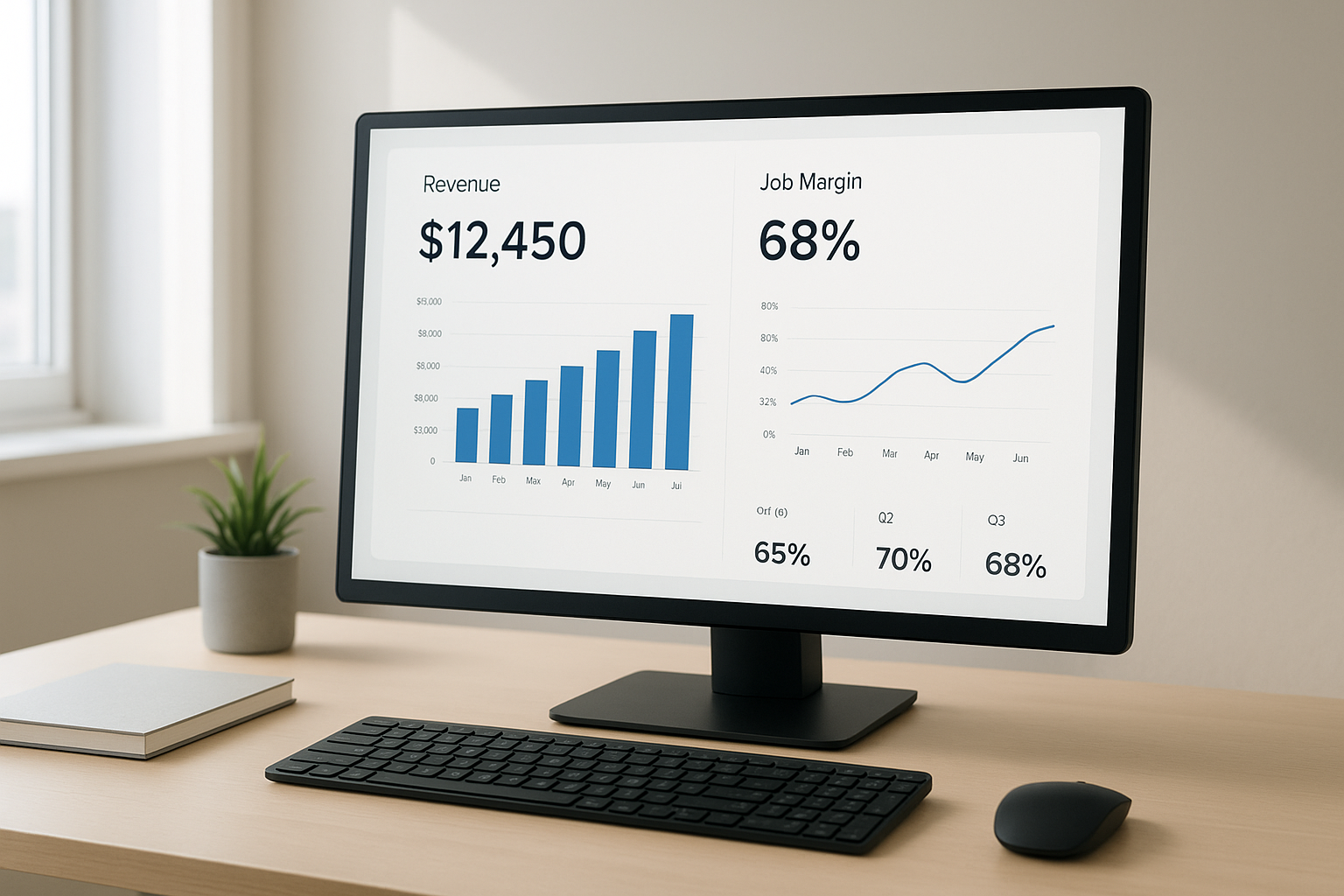
A daily dashboard helps a 10-truck shop spot leaks before they become permanent losses.
Frequently Asked Questions About Software for HVAC Company With 10 Trucks
What is the best software for HVAC company with 10 trucks?
The best software for HVAC company with 10 trucks is a unified platform that handles call answering, dispatch, estimates, invoicing, and reviews without charging extra per technician. Flat-rate platforms typically cost less overall than per-seat tools once staff count is factored in.
How much does HVAC business management software cost for a 10-truck fleet?
Flat-rate platforms for a 10-truck shop usually run between $199 and $549 per month regardless of headcount. Per-technician platforms, however, can charge $150 to $400 per seat, pushing monthly costs well past $1,500 to $4,000.
How long does it take to switch HVAC software without disrupting operations?
Most 10-truck operations complete a safe switch in two to four weeks by running the new platform alongside the old one during a parallel trial. This prevents dropped jobs or missed invoices during the transition.
What's the difference between flat-rate and per-technician HVAC software pricing?
Flat-rate pricing charges one monthly fee no matter how many staff use the system. Per-technician pricing, in contrast, multiplies the bill by every seat added, which favors software providers over growing businesses.
Can HVAC software reduce missed calls and no-shows?
Yes. AI-powered call answering and automated booking confirmations directly cut missed calls and no-show rates by capturing leads that would otherwise go to a competitor the moment a caller gets voicemail.
What mistakes do growing HVAC companies make when choosing software?
The most common mistake is picking a tool sized for a one or two-truck operation and outgrowing it within a year. Skipping a parallel trial before fully switching is another frequent and costly error.
Is ServiceTitan worth it for a 10-truck HVAC company?
ServiceTitan offers deep enterprise features, but its per-technician pricing often makes it disproportionately expensive for a 10-truck operation compared to flat-rate alternatives. Many operators find the feature set exceeds what a mid-sized fleet actually needs.
How does JobOS Pro compare to Jobber and Housecall Pro?
JobOS Pro adds AI call answering, dynamic estimate pricing, and operational finance tools that Jobber and Housecall Pro generally lack, while keeping flat-rate pricing instead of per-seat fees. It sits between entry-level simplicity and enterprise complexity.
What features matter most for HVAC fleet management software?
Call answering, real-time dispatch, dynamic estimates, text-to-pay invoicing, and a technician field app matter most. Margin reporting by job and technician is also critical for spotting leaks before they grow.
Does HVAC software require a long-term contract?
Not always. Several platforms, including JobOS Pro, offer month-to-month terms with a free trial period so operators can validate fit before committing to a longer agreement.
Can HVAC software integrate with QuickBooks and existing tools?
Most modern HVAC platforms sync with QuickBooks for accounting and can run alongside existing tools during onboarding. As a result, no migration is required on day one.
How do I know when my HVAC business has outgrown its current software?
Common signs include dispatchers juggling five or more disconnected tools and estimates that go cold without follow-up. If software cost keeps climbing with every new hire, that is a strong signal it is time to switch.
Final Thoughts on Choosing HVAC Software at 10 Trucks
Ultimately, software for HVAC company with 10 trucks should close the specific gaps that cost real money: missed calls, cold estimates, slow invoicing, and no-shows. Furthermore, the pricing model matters as much as the feature list, since per-technician fees quietly punish growth while flat-rate pricing rewards it. By auditing current leaks, testing the call-answering flow, and running a parallel trial before switching, a 10-truck operation can move to a better system without risking a single job. In the end, the right platform should feel less like another expense and more like the tool that finally stops revenue from slipping through the cracks.
