
Fix Technician Timesheet Accuracy in 30 Days, Field Service Managers
Fix Technician Timesheet Accuracy in 30 Days, Field Service Managers
Ensure accurate technician timesheets by combining low-friction mobile capture with required job codes, technician attestation, and a manager approval audit trail that feeds directly into payroll. The formula that works in practice pairs simple entry tools (timers, GPS confirmation) with enforceable review steps, so no single point of failure decides what actually gets paid or billed.
TL;DR:
- Using mobile time tracking with enforced job codes and manager approval can significantly reduce errors caused by missed punches, duplicate entries, and manual rounding.
- Enforcing policies such as technician attestation, weekly exception reports, and documented edits helps maintain data integrity and prevents intentional manipulation.
- Integration of payroll, scheduling, and invoicing systems minimizes manual re-entry and ensures approved time aligns with billable and paid hours.
- Running regular reconciliation reports and variance dashboards identifies recurring coding errors or unpaid hours before payroll closes.
- Implementing an AI-native platform that automates validation, exception detection, and multi-location consistency enhances overall accuracy and revenue recovery.
Table of Contents
- Why technician timesheets become inaccurate
- Mobile time-tracking features that materially improve accuracy
- Operational controls and workflows to lock down accuracy
- How to ensure time captured becomes accurate payroll and billable hours
- How an AI-native operations platform applies these controls in practice
- Practical priorities for a field service manager
- How JobOS Pro helps reduce timesheet errors and recover revenue
- Sources
- FAQ
Why technician timesheets become inaccurate
Most timesheet errors are not dramatic. They are small, repeated gaps that add up fast. A vendor-neutral review of common timesheet errors points to missed punches, rounding habits, and duplicate entries as the most frequent culprits, and each one has a specific, fixable cause.
- Missed or late punches force technicians to reconstruct hours from memory at the end of the day, which almost always skews the numbers.
- Free-text entries and unclear job codes create records that look complete but cannot be matched to real work or billed correctly.
- Duplicate records happen when a technician logs time twice across separate systems that do not talk to each other.
- Manual math and rounding introduce small errors that compound across a crew and a pay period.
- Weak verification opens the door to intentional manipulation, since no one is checking totals against reality until payroll is already running.
Disconnected systems make all of this worse. When time tracking, scheduling, and invoicing live in separate tools, nobody has one clean version of what happened on a job.
Mobile time-tracking features that materially improve accuracy
The right mobile tools close specific gaps, not just digitize a paper process. Each feature below solves one identifiable failure mode.
- Timers with mandatory start and stop entries remove the guesswork of end-of-day estimates by capturing hours as they happen.
- Job-linked entries with required coding at punch force technicians to tie time to a specific job before they can move on, which eliminates the free-text problem at the source.
- GPS and geofencing, with optional photo or biometric verification, confirm a technician was on-site without relying on trust alone.
- Automated overtime and rounding calculations with neutral rules apply the same math every time, removing manual error and any appearance of favoritism.
- In-app verification with discrepancy flags before submission catches mismatches while the technician can still explain them, not after payroll has closed.
- Integration endpoints for payroll, scheduling, and invoicing stop double entry and keep every downstream system working from one record.
Employers covered by the Fair Labor Standards Act must record hours worked each day and total hours worked each workweek for non-exempt employees, according to the Department of Labor’s recordkeeping fact sheet. No specific timekeeping format is required, which means mobile capture satisfies the rule as long as the records stay complete and accurate. Tools built around GPS punch clocks and geofencing, such as those detailed by Clock-Me, show how this kind of location-based verification works in a field setting.
Operational controls and workflows to lock down accuracy
Features alone do not fix accuracy. They need policy behind them, enforced consistently.
- Write a clear policy covering travel time, breaks, rounding rules, and which job codes are mandatory before a shift starts.
- Require two-step submission: the technician attests to their own entries first, then a manager approves before payroll closes.
- Run a weekly exception report that flags missed punches, unusual overtime, and any edits made after approval.
- Preserve original entries on every edit, and require a documented reason and a named approver for the change.
- Train technicians on the workflow itself, not just the app, and reinforce it with short nudges during the first few pay periods.
This mirrors the pattern in Salesforce’s guidance on timesheet verification: automated entry, technician review, manager approval, then a locked export to payroll. Government contracting offers a useful benchmark here too. DCAA-style timekeeping controls require daily entries tied to actual work, with supervisor approvals based on real knowledge of the job rather than a rubber stamp.
Pro Tip: Run a 30-day pilot with one crew before rolling out a new approval workflow company-wide. It surfaces friction points while the stakes are still low.
How to ensure time captured becomes accurate payroll and billable hours
Accurate capture only matters if it survives the trip to payroll and invoicing. That trip has its own failure points, and each one needs its own check.
- Lock job codes once approved and automate the export to payroll and invoicing so nobody retypes hours by hand.
- Run reconciliation reports that match approved time against what was actually invoiced or paid, catching gaps before the pay period closes.
- Surface “approved but not invoiced” hours on a regular basis. This is where billable time quietly disappears, often because a job code was wrong or a ticket never got updated.
- Use variance dashboards to spot recurring misallocation, such as one crew consistently under-coding travel time.
Treat this step as a standing weekly habit, not a month-end scramble. A short, repeatable check catches small errors while they are still cheap to fix.
How an AI-native operations platform applies these controls in practice
JobOS Pro combines low-friction mobile capture with automated reconciliation and exception detection, built to recover the revenue that slips through gaps like unbilled hours and mismatched job codes. It integrates directly with payroll and accounting systems, which removes the manual export step that introduces errors in the first place and keeps labor time tied to the correct customer job. For operators managing more than one location, multi-location intelligence standardizes the same approval workflow and weekly audit discipline across every site, so one location’s habits do not become a corporate-wide blind spot.

Practical priorities for a field service manager
If you only fix one thing, fix capture and review together. A feature-rich app with no attestation step or manager approval will not close the gaps that cost you money. Start with one crew for 30 days, track missed-punch rates and how often entries get edited after approval, then scale what worked. Weekly coaching built on your own exception reports, not a generic training deck, is what actually changes behavior.
— Tarun
How JobOS Pro helps reduce timesheet errors and recover revenue
Most managers lose billable hours not because their crews are dishonest, but because the systems between the field and the invoice have gaps. JobOS Pro is built AI-native from the ground up, so it connects mobile time capture, payroll, scheduling, and accounting without forcing you to abandon tools like Jobber or QuickBooks.
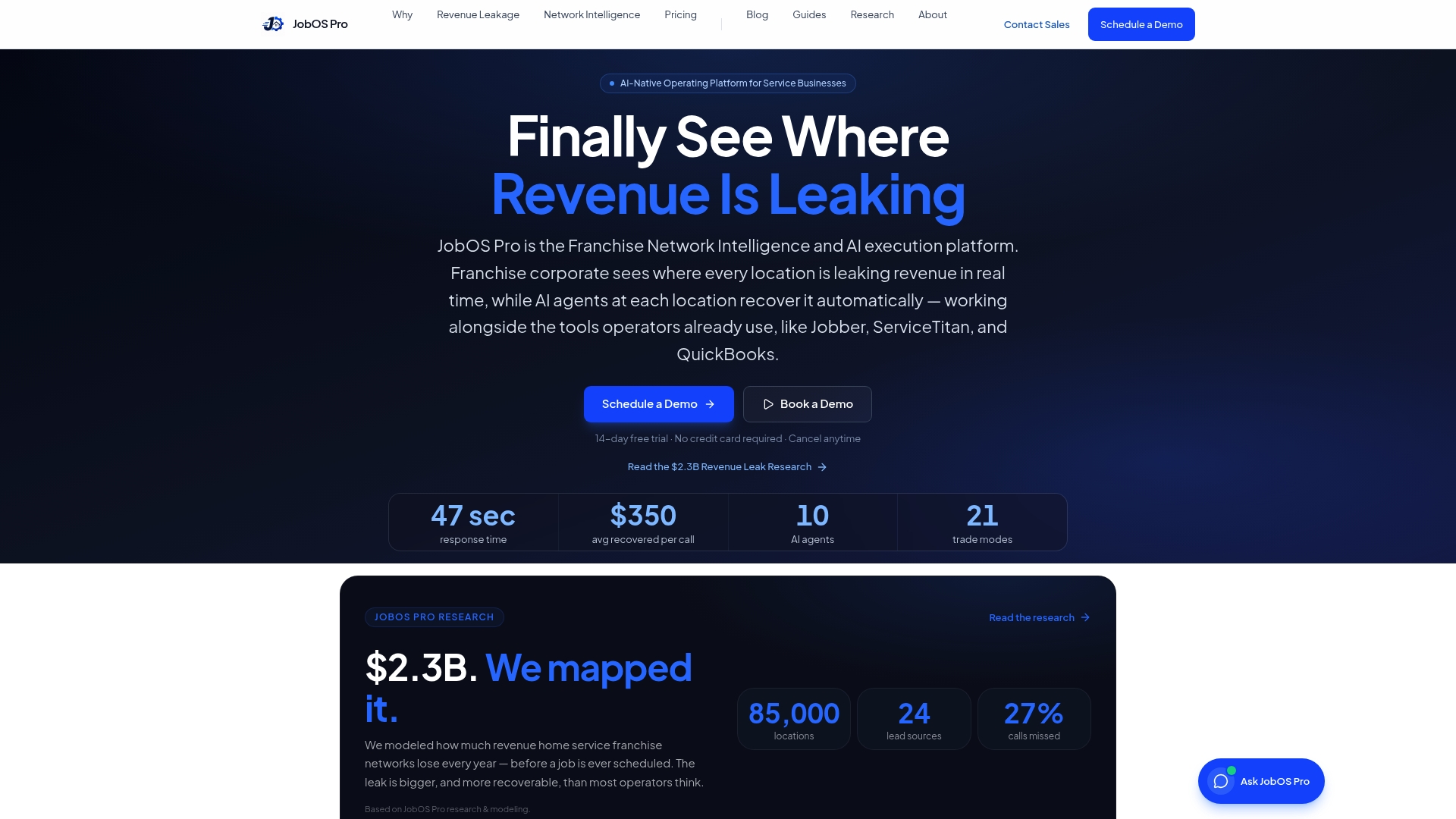
The platform automates reconciliation and flags exceptions before they reach payroll, but the judgment calls stay with you: approving edge cases, setting policy, and deciding what counts as billable. Plans start with Starter at $199 per month, scaling up through Growth and Pro for larger crews and multi-location operators. Book a demo to see the reconciliation and exception-detection workflows applied to your own job codes and pay periods.
Sources
Recordkeeping requirements come from the Department of Labor’s FLSA fact sheet. Verification workflow guidance draws on Salesforce’s help documentation and DCAA-style controls described by CBH.
- Fact Sheet #21: Recordkeeping Requirements under the Fair Labor Standards Act (FLSA) | U.S. Department of Labor
- Verify Automation Before Submitting the Timesheets | Salesforce Help
- 13 Common Timesheet Errors and Their Fixes | TCP Software
FAQ
Can I sue my employer for falsifying my timesheet?
Whether legal action is available depends on the specifics of the falsification and your jurisdiction, so this is a question for an employment attorney rather than a general answer. The Department of Labor’s recordkeeping requirements do require accurate records of hours worked, and a pattern of falsification can raise wage and hour concerns worth discussing with a professional.
What is timesheet manipulation?
Timesheet manipulation is any deliberate alteration of recorded hours to misrepresent time actually worked, such as rounding up arrival times or logging hours never performed. Weak verification and the absence of an audit trail make manipulation easier to get away with and harder to catch.
What are some common timesheet mistakes to avoid?
Common mistakes include missed punches that get reconstructed from memory later, unclear job codes, duplicate entries across disconnected systems, and manual rounding errors, according to industry error tracking. Requiring job-linked entries at the point of punch and locking totals after approval fixes most of these at the source.
What are the legal requirements for time sheets?
Employers covered by the FLSA must keep accurate records of hours worked each day and total hours worked each workweek for non-exempt employees, per the Department of Labor. No specific format is mandated, so a digital mobile system satisfies the rule as long as the records are complete and retained for the required period.