
Too Many Software Subscriptions Contractor Fix Guide
Too many software subscriptions contractor owners juggle every day are quietly draining profit from otherwise healthy businesses. Between scheduling apps, invoicing tools, review platforms, and a separate CRM, many home service companies now pay for five to thirteen disconnected systems that do not talk to each other. As a result, leads slip through the cracks, invoices go uncollected, and technicians waste time re-entering the same job details twice. This article explains why the sprawl happens, what it actually costs a growing HVAC, plumbing, or electrical business, and how a single flat-rate platform like JobOS Pro can replace the stack without raising costs every time you hire.
What Is the Too Many Software Subscriptions Contractor Problem?
Too many software subscriptions contractor problem describes a business paying for more standalone apps than its team can manage well. It typically appears once a company grows past a few trucks and starts stacking point solutions for scheduling, invoicing, marketing, and reviews instead of using one connected system.
Software as a service, commonly called SaaS, made it easy for a solo owner-operator to add a new tool with a credit card and a few clicks. However, that same ease of adoption becomes a liability once a business hires an office manager, adds a second crew, and needs every tool to share the same customer record. In particular, the problem is not that any single app is bad; it is that none of them were built to talk to each other.
Juggling too many software subscriptions contractor tools often means more logins than actual customers served.
How Many Tools Does the Average Contractor Actually Use?
According to BetterCloud's State of SaaSOps report, the average small to midsize business now runs well over one hundred SaaS applications company-wide, and while a home service business rarely reaches that number, it is common for a 3-to-15-truck operator to end up paying for five to thirteen separate tools. That count typically includes a scheduling app, an invoicing tool, a review platform, a marketing dashboard, a phone system, and a spreadsheet holding everything the other tools cannot handle.
Each additional login also means another password, another training session, and another monthly invoice buried in the accounting software. Consequently, office staff spend hours every week copying information from one system into another instead of following up on leads or collecting payment. The U.S. Small Business Administration notes that operational efficiency is one of the strongest predictors of small business survival, which makes disconnected software a direct risk to the bottom line rather than a minor inconvenience.
The Hidden Cost of Juggling Multiple Contractor Software Subscriptions
The direct subscription fees are usually the smallest part of the cost. The bigger issue is what falls between the tools. Home service operators can lose 20 to 30 percent of potential revenue not to competitors, but to their own handoffs: calls that go unanswered after five, estimates that go cold, and completed jobs that never get invoiced on time.
For example, an unpaid invoice sitting in one system while the CRM shows the job as closed creates a silent cash flow gap. Similarly, a satisfied customer who never gets a review request because the reputation tool was never connected to the job-completion event quietly dries up future lead flow. If unpaid work is a recurring issue, a dedicated process for collecting unpaid invoices faster closes that specific leak before it compounds month over month.
Signs You Have Too Many Software Subscriptions as a Contractor
A few warning signs tend to show up before an owner even opens the credit card statement:
- The office manager keeps a spreadsheet to track information the software cannot.
- New technicians need training on three or four different apps before their first solo job.
- Estimates get approved verbally but never make it into the invoicing tool.
- Nobody can say, without checking five dashboards, which lead source is actually profitable.
- Adding one new technician triggers a price increase on three separate software bills.
If two or more of these sound familiar, the business is likely paying a real price for a stack that grew one tool at a time. In that case, a full review of the software consolidation process is usually the fastest path to recovering margin.
How to Consolidate Contractor Software Subscriptions in 6 Steps
Consolidation does not require a risky, all-at-once switch. Instead, most contractors follow a predictable sequence:
- Audit every active subscription. Pull the company card statement and list every recurring software charge, noting who on the team actually uses it each week.
- Map each tool to a revenue stage. Assign every subscription to lead intake, scheduling, estimating, invoicing, or reviews so overlaps become obvious at a glance.
- Identify redundant tools. Flag any two apps performing the same job, such as separate invoicing and payment platforms, since these are the easiest to cut first.
- Choose one connected platform. Select a system covering the full revenue path rather than another single-purpose point solution that will need replacing again soon.
- Run the new system in parallel. Import customer and job data while keeping legacy tools active for two to four weeks so the office team can verify accuracy.
- Cancel redundant subscriptions. Once the team trusts the new platform, cancel overlapping tools and redirect the monthly savings toward marketing or technician pay.
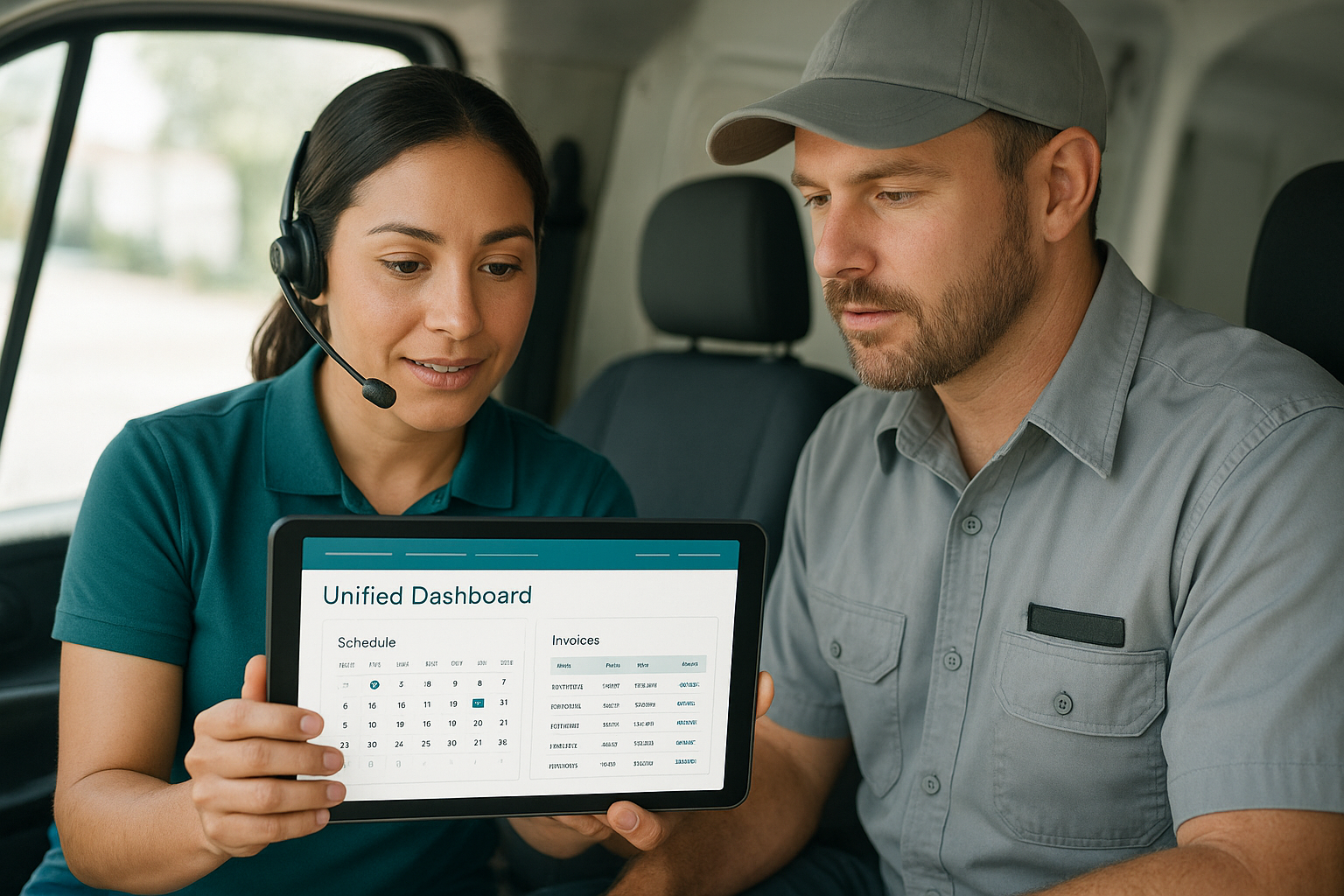
Replacing scattered apps with one dashboard is the practical answer to the too many software subscriptions contractor problem.
What to Look for in an All-in-One Contractor Platform
Not every "all-in-one" claim holds up once you dig into it. Therefore, it helps to check a platform against the actual revenue path rather than a feature list alone. Coverage should span missed-call capture, booking, estimating, payments, and reputation management, since those are the exact stages where leaks usually start.
Pricing structure matters just as much as feature coverage. Per-technician pricing models, common among enterprise platforms such as ServiceTitan, mean the software bill grows every time the business hires. A flat, published rate removes that penalty on growth entirely. Additionally, look for the ability to raise average ticket size through financing and dynamic pricing at the point of decision; guidance on how to increase average ticket value is a good sign the platform was built around revenue outcomes, not just task management.
How JobOS Pro Solves Subscription Overload for Contractors
JobOS Pro was built specifically to plug the too many software subscriptions contractor gap for HVAC, plumbing, electrical, and adjacent trades across the United States and Canada. Kate, its AI receptionist, answers inbound calls around the clock, qualifies the caller, checks live availability, and books the job automatically, which alone removes the need for a separate answering service and a separate booking tool.
Beyond lead capture, the platform covers scheduling, dispatch, estimating with financing options, payments and text-to-pay, reviews, a unified CRM, and a technician field app with GPS and offline mode. As a result, an operator running three to fifteen trucks can replace five to ten separate tools with one flat bill of $199, $349, or $549 per month, with unlimited technicians and office staff on every tier. For multi-location and franchise operators specifically, the platform adds cross-unit benchmarking and royalty tracking through its franchise royalty automation layer, while larger operations can review the enterprise-level plan for expanded reporting needs. A 30-day free trial with no credit card and no required migration means the current stack can keep running until the new one proves itself.
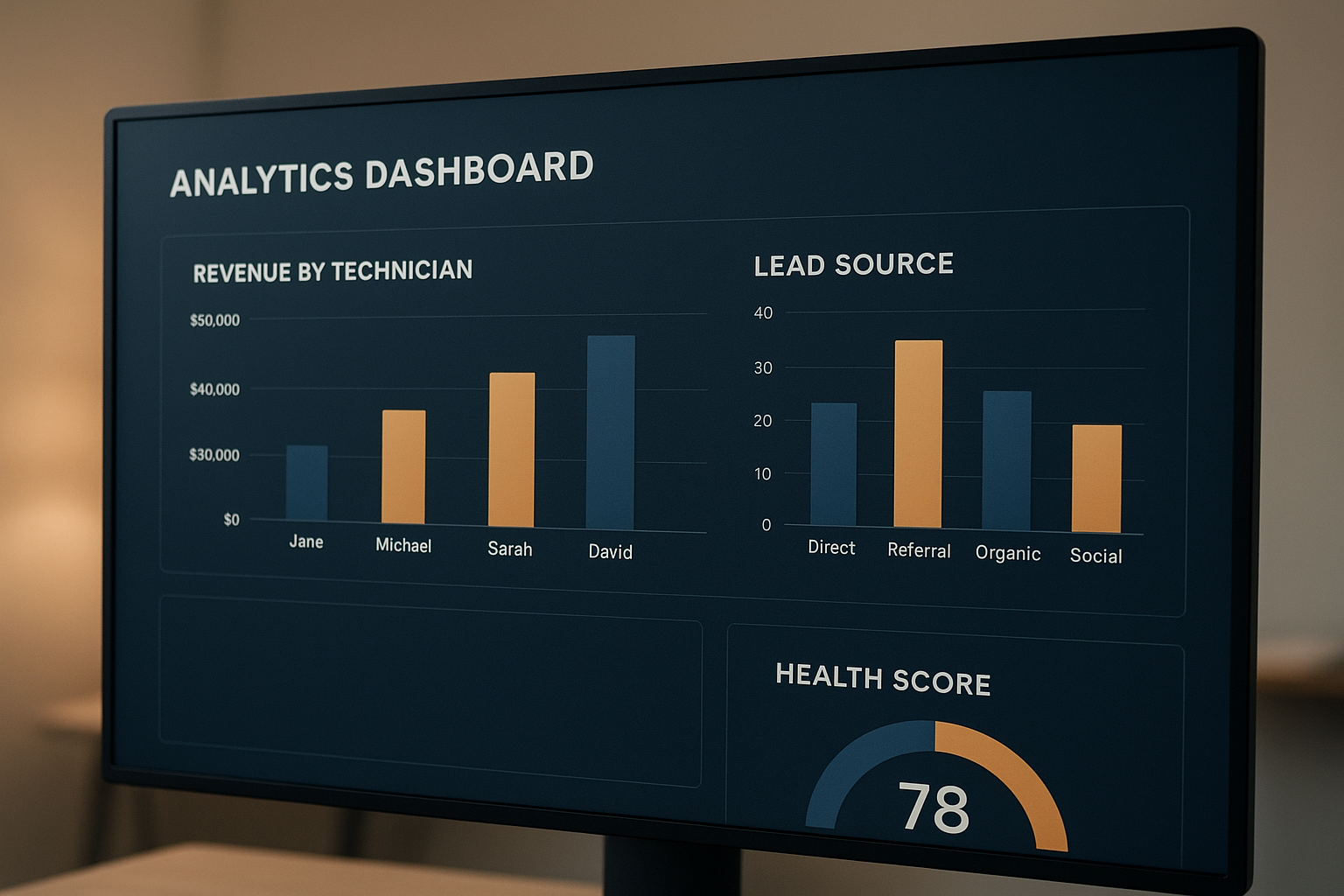
Visibility into margin by job and by technician replaces guesswork once subscriptions are consolidated.
Frequently Asked Questions About Too Many Software Subscriptions Contractor Challenges
What does it mean when a contractor has too many software subscriptions?
The too many software subscriptions contractor problem describes a business paying for more disconnected apps than it can manage effectively, which causes duplicate data entry, missed handoffs, and lost revenue. It usually shows up once a company grows past two or three trucks.
How many software tools does the average home service contractor use?
Many home service businesses run between five and thirteen separate tools covering scheduling, invoicing, marketing, and communication. Each additional tool adds another login, another bill, and another place data can fall through the cracks.
Why do contractors end up with too many software subscriptions?
Contractors typically add one point solution at a time to solve an immediate pain, such as a scheduling app, then a separate invoicing tool, then a review platform. Over several years, those individual decisions stack into an expensive, disconnected system.
How much does software subscription sprawl cost a contracting business?
Beyond the direct subscription fees, sprawl contributes to the 20 to 30 percent of potential revenue that many home service operators lose to missed calls, cold estimates, and uncollected invoices. The software cost is often smaller than the operational cost of the gaps between tools.
What is the difference between per-technician pricing and flat-rate pricing?
Per-technician pricing charges more every time a contractor hires, so software costs rise with growth. Flat-rate pricing keeps the bill fixed regardless of how many technicians, dispatchers, or office staff use the system.
How long does it take to consolidate contractor software subscriptions?
Most contractors can complete a full consolidation in two to six weeks when they run the new platform alongside existing tools during migration. Larger multi-location operations may take longer to standardize workflows across every site.
What are common mistakes contractors make when choosing software?
A common mistake is adding a new point solution for every new problem instead of checking whether an existing platform already covers it. Another is signing per-seat contracts without modeling what the price will look like after the next round of hiring.
What features should an all-in-one contractor platform include?
Look for missed-call capture, scheduling and dispatch, estimating, payments and invoicing, reputation management, and reporting inside one system. A platform that also includes a CRM and technician field app removes the need for several additional subscriptions.
Can a contractor switch to a consolidated platform without losing existing data?
Yes, most modern platforms allow contractors to import customer records, job history, and invoices while running the new system alongside the old one. This parallel period lets teams verify data accuracy before fully canceling legacy subscriptions.
Is a flat-rate platform cheaper than using multiple point solutions?
For a growing team, yes. A flat-rate platform priced at $199 to $549 per month with unlimited users typically costs less than five to ten separate subscriptions once each tool's per-seat fees are added together.
How does software sprawl cause revenue leakage for contractors?
When data lives in separate systems, leads, estimates, and invoices fall through the gaps between tools instead of flowing through one visible pipeline. That gap is where missed calls, cold quotes, and unpaid invoices quietly drain profit.
Do multi-location or franchise contractors face different software challenges?
Yes, franchise and multi-location operators need cross-unit benchmarking, royalty tracking, and standardized reporting on top of the tools a single-location contractor needs. Subscription sprawl compounds fast when every location picks its own separate stack.
What should a contractor do first when reducing too many software subscriptions?
Start by auditing every active subscription and identifying which tools handle overlapping tasks, such as two apps that both send invoices. That single step usually surfaces the fastest, lowest-risk cost to cut.
Does consolidating software affect technician adoption in the field?
Consolidation usually improves adoption because technicians only need to learn one mobile app instead of switching between several. Offline mode, photo capture, and signature tools inside a single field app also reduce training time.
Final Takeaway
In summary, too many software subscriptions contractor sprawl rarely announces itself as a single big expense; instead, it hides inside missed calls, cold estimates, and invoices that never get collected. However, the fix does not require a painful rip-and-replace. By auditing current tools, mapping them to revenue stages, and moving to one connected, flat-rate platform such as JobOS Pro, growth-minded operators can recover margin without paying more every time they hire another technician. Ultimately, the goal is not just fewer logins; it is a business where every lead, estimate, and invoice is finally visible in one place.
