Who answers the phone when I'm on a job is the question that keeps most HVAC, plumbing, and electrical owners up at night. You're forty feet up a ladder or elbow-deep in a water heater, and your cell phone is buzzing in the truck. Every ring you miss is a potential customer who simply hangs up and calls the next name in the search results. In fact, industry estimates suggest home service operators lose 20 to 30 percent of potential revenue not to competitors, but to their own internal handoffs, starting with the phone. This article breaks down exactly who should be answering your calls, and how.
Direct answer: It should never be voicemail. The best setups route every inbound call to a live person or an AI receptionist, such as Kate from JobOS Pro, that answers 24/7, qualifies the caller, checks your live schedule, and books the job before you even climb down the ladder.
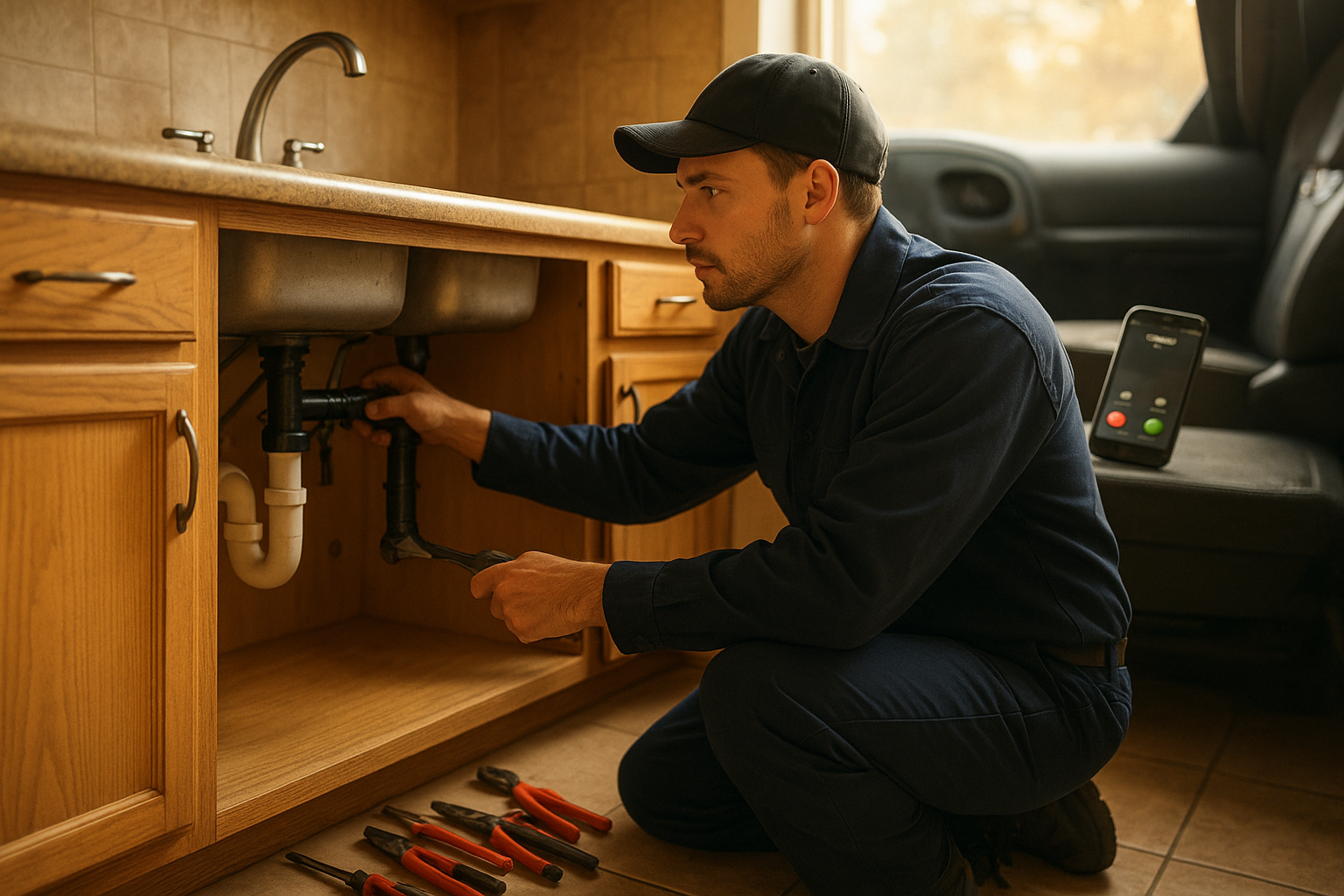
When you're mid-repair, who answers the phone when I'm on a job becomes the difference between a booked appointment and a lost customer.
Who Answers the Phone When I'm on a Job? The Short Answer
For most solo operators and small crews, nobody reliably answers the phone once the truck pulls up to a job site. The technician is on the roof or under the hood, and calling back later means the caller has already moved on. Consequently, the phone either rings out or dumps to a generic voicemail box that few customers actually use anymore.
An AI receptionist changes that equation entirely. Instead of a missed ring, the caller reaches a system that sounds conversational, asks the right questions, and books directly onto your calendar. As a result, the job gets captured the moment the phone rings, not hours later when you finally check your messages.
Why Missed Calls Quietly Drain Trade Business Revenue
Missed calls rarely feel like a crisis in the moment. However, they add up fast. A single missed call for a no-heat emergency in January can represent several hundred dollars of job value walking straight to a competitor.
According to research on business phone behavior compiled by customer service studies, most callers who hit voicemail do not leave a message at all; they simply try the next business on the list. In particular, this pattern is worse for home services, where customers often have an active leak, no cooling, or no power and need an answer right now.
Because the trades employ hundreds of thousands of workers nationally according to the U.S. Bureau of Labor Statistics, competition for that first answered call is intense in nearly every metro area. Owners who fix this one leak often see an immediate lift in booked revenue without spending a dollar more on advertising.
What Happens to Unanswered Calls On the Job Site?
When nobody picks up, an unanswered call typically follows one of three paths. First, it goes to a voicemail box the customer never checks back on. Second, it gets a callback hours later, by which time the customer has already hired someone else. Third, and most damaging, the caller leaves a negative impression of your business before ever becoming a customer.
Similarly, missed calls create a ripple effect across your missed-call recovery pipeline. Every lead that goes cold at the first ring also means fewer completed jobs, fewer invoices, and eventually fewer reviews, which quietly dries up future lead flow from search and referrals.
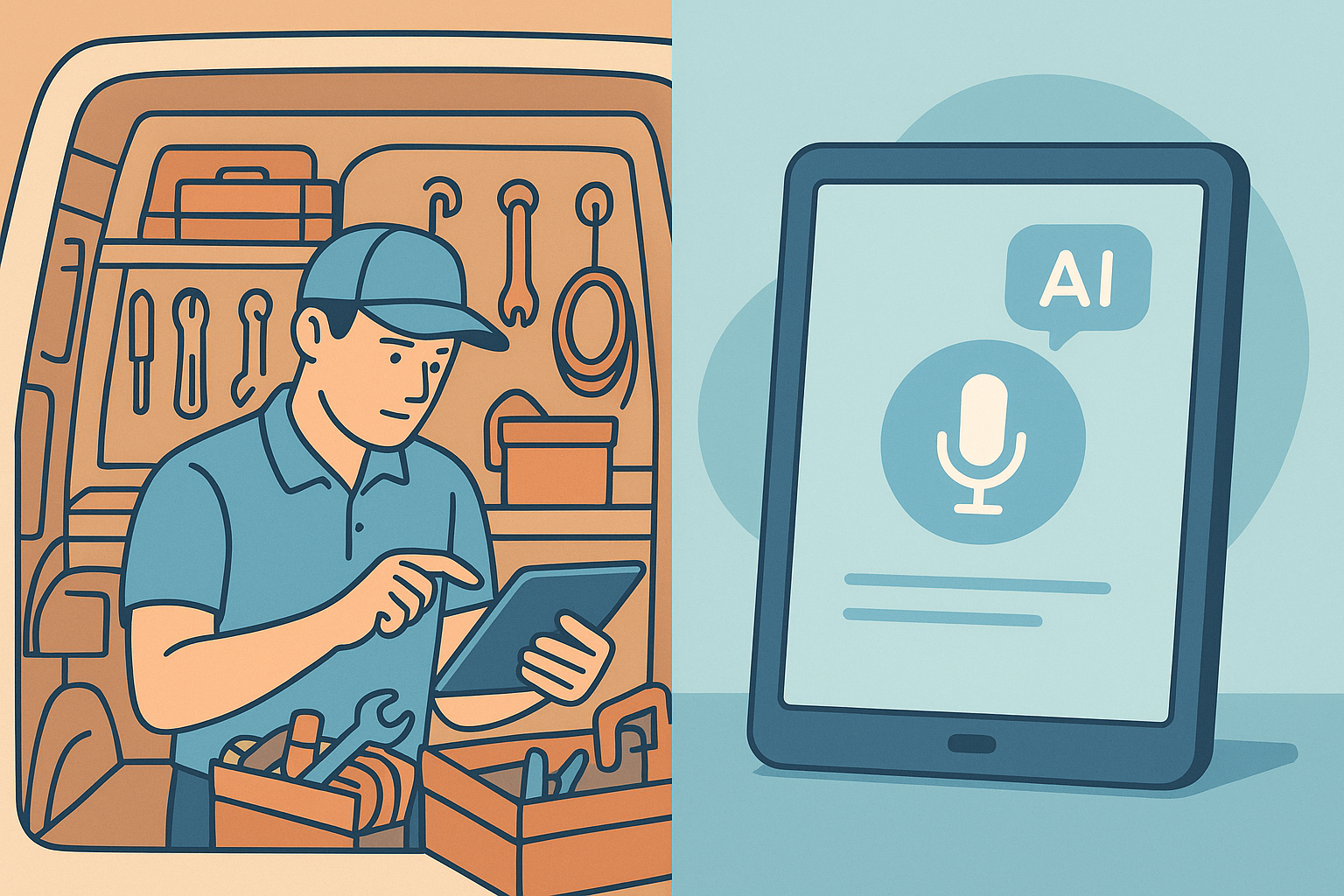
An AI receptionist bridges the gap between fieldwork and the front office.
How an AI Receptionist Covers Your Phone While You Work
An AI receptionist is software that answers phone calls using natural, conversational language instead of a rigid phone tree. Put simply, it listens to the caller, understands the request, and takes action, such as booking an appointment, without a human on the line.
Meet Kate: JobOS Pro's AI Receptionist
Kate is the AI receptionist built into JobOS Pro, and she answers every inbound call around the clock, including nights, weekends, and holidays. She qualifies the caller, checks live technician availability, books the job directly onto the schedule, and sends a confirmation text automatically.
Because Kate is part of the JobOS Pro AI team rather than a bolt-on add-on, booked calls flow straight into dispatch, estimating, and invoicing without any manual re-entry. This matters for HVAC and plumbing crews specifically, since HVAC software and plumbing software workflows depend on accurate first-call information to price the job correctly later.
How to Set Up 24/7 Phone Coverage for Your Trade Business
Setting up reliable phone coverage does not require a full software overhaul. Instead, follow this straightforward process to plug the leak within days rather than months.
- Audit your current call handling by tracking every inbound call for one week, noting how many rang through, went to voicemail, or were answered by a distracted technician.
- Connect an AI receptionist such as Kate to your existing business phone number so incoming calls are answered automatically, day or night, without a hardware swap.
- Configure booking rules and calendar sync so the AI checks live technician availability before confirming a time slot directly with the caller.
- Test call flows and qualifying questions with real scenarios, including emergency calls, so the system asks for the right details every single time.
- Monitor missed-call recovery metrics weekly inside your dashboard to confirm booked jobs, follow-up texts, and reviews are actually increasing month over month.
Who Should Answer Your Calls: Office Staff, Voicemail, or AI?
Office staff can work well, provided you can afford a dedicated dispatcher during every hour customers might call, including evenings and weekends. In contrast, voicemail is the weakest option, since most callers simply hang up rather than leave a message and wait for a callback.
An AI receptionist sits in between these two extremes but arguably outperforms both on pure availability. Above all, it never takes a lunch break, never calls in sick, and never misses the after-five rush when most residential emergency calls actually come in.
Phone Coverage for Franchise and Multi-Location Operators
Multi-location and franchise owners face a harder version of this problem, since a missed call at one branch is easy to miss entirely from headquarters. Therefore, visibility across every location becomes just as important as the call answering itself.
A franchise AI receptionist setup routes each call to the correct branch automatically while feeding answer rates and booked-job data into a single network dashboard. As a result, ownership can spot which locations are leaking calls and fix the pattern before it damages the brand's reputation across the whole territory.
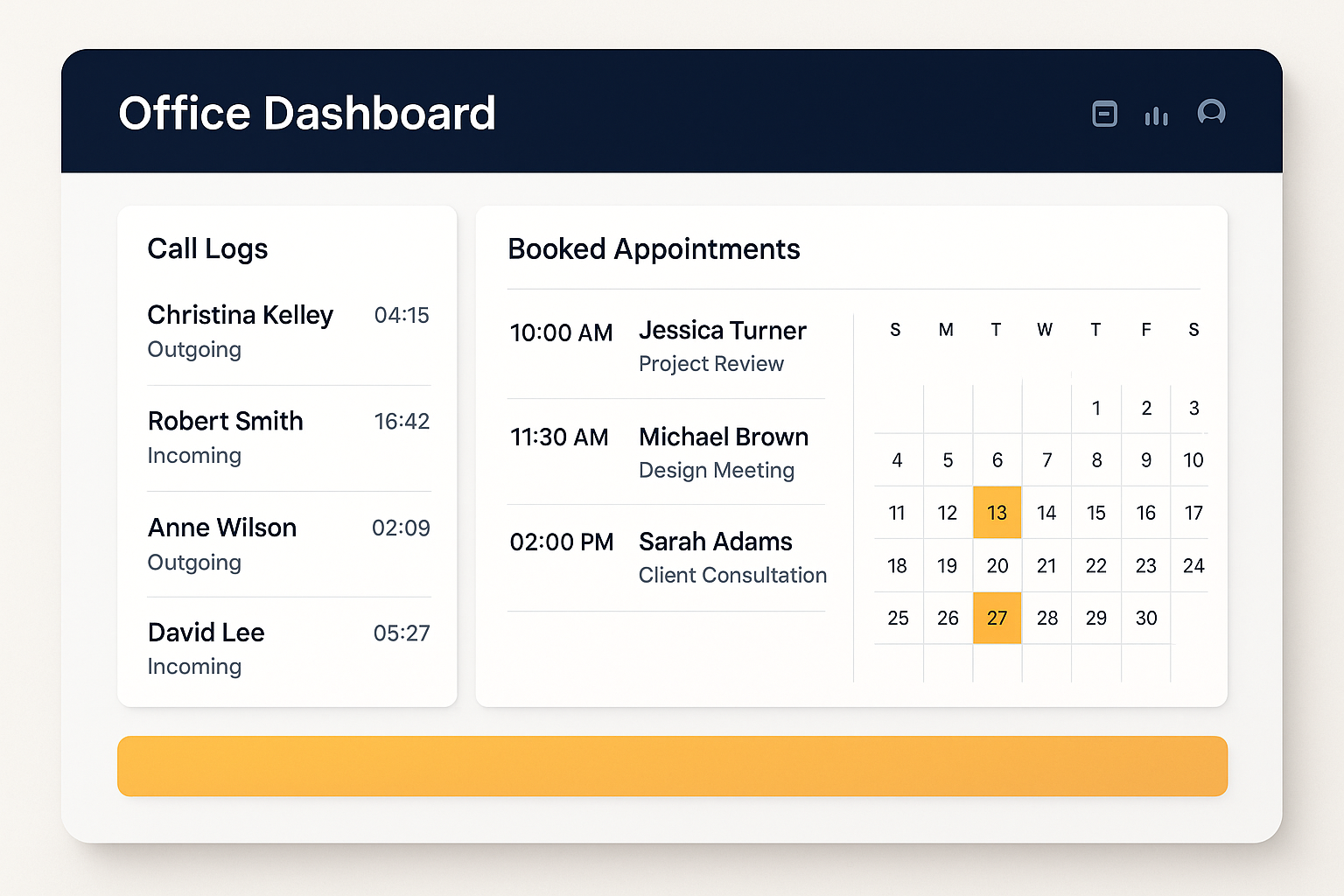
A shared dashboard lets owners see exactly how missed-call recovery is performing across every crew.
Frequently Asked Questions About Who Answers the Phone When I'm on a Job
Who answers the phone when I'm on a job?
When you're on a job, an AI receptionist like Kate or a dedicated office dispatcher should be answering the phone, not voicemail. Kate answers every call 24/7, qualifies the caller, checks live technician availability, and books the job automatically.
What is an AI receptionist for home service businesses?
An AI receptionist is software that answers inbound phone calls using natural conversation, qualifies the caller's need, and books appointments directly into your calendar. It works around the clock, including nights, weekends, and holidays.
How much revenue do missed calls really cost trade businesses?
Industry estimates suggest home service operators lose 20 to 30 percent of potential revenue to internal handoff failures, and missed calls are usually the first leak in that chain. A single missed emergency call can easily represent several hundred dollars in lost job value.
How does Kate qualify and book callers automatically?
Kate asks the caller a short set of qualifying questions, checks your live schedule for open slots, confirms a time, and sends a text confirmation. The booked job then appears on your dispatch calendar without any manual entry.
Is AI call answering better than voicemail?
Yes, in almost every case, because most callers who reach voicemail simply hang up and call a competitor instead. An AI receptionist keeps the caller engaged and moves them toward a booked appointment in real time.
How much does JobOS Pro cost per month?
JobOS Pro is priced at flat monthly tiers of $199, $349, and $549, with unlimited technicians, dispatchers, and office staff included on every tier. This differs from competitors that charge per technician seat, so the bill does not rise as you hire.
How long does it take to set up 24/7 phone coverage?
Most operators can connect an AI receptionist to their existing business number and configure basic booking rules within a day. Fine-tuning qualifying questions and call scripts typically takes another few days of real-world testing.
What's the difference between an answering service and an AI receptionist?
A traditional answering service relies on human operators reading a script, often without access to your live calendar. An AI receptionist like Kate integrates directly with scheduling and dispatch, so it can actually book the job rather than just take a message.
Can AI receptionists handle emergency HVAC or plumbing calls?
Yes, well-built AI receptionists are trained to recognize emergency language such as a burst pipe or no heat, and can prioritize or flag those calls for immediate dispatch. This ensures urgent jobs are not treated the same as routine maintenance requests.
What common mistakes do trade businesses make with missed calls?
The most common mistake is relying on a single technician or owner to answer calls while also running jobs in the field. Another frequent error is failing to follow up on missed calls within minutes, when most callers have already reached a competitor.
Do I need to replace my current software to use Kate?
No, Kate and the broader JobOS Pro platform are designed to run alongside existing tools such as Jobber, ServiceTitan, or QuickBooks. There is no forced migration required to start using AI call answering.
How does multi-location or franchise phone coverage work?
Franchise and multi-location operators can route calls to the correct branch based on caller location while tracking answer rates and booked jobs across every unit from one dashboard. This gives ownership visibility into which locations are leaking calls.
What happens after Kate books a job?
Once Kate books a job, it appears instantly on the dispatch calendar, a confirmation text goes to the customer, and the office team is notified. From there, the job moves through estimating, scheduling, and invoicing inside the same system.
Conclusion
Ultimately, who answers the phone when I'm on a job determines whether your business grows or quietly bleeds revenue to the competitor who happened to answer first. Voicemail and best-effort callbacks simply cannot keep pace with customers who expect an answer right now. In contrast, an AI receptionist like Kate covers every call, qualifies every caller, and books every eligible job, whether you're on a ladder, under a sink, or already home for the night. For most 3-to-15-truck operators, closing this one gap often produces a faster, more measurable revenue lift than any new advertising spend. Learn more at jobospro.com to see how missed-call recovery fits into a full revenue-recovery system built for the trades.
