Why do my estimates go cold is one of the most common questions home service owners ask after a slow month, especially when the leads seemed strong at first. An estimate goes cold when a prospective customer receives a quote, shows interest, and then simply stops responding without ever saying no. In fact, home service businesses commonly lose between 20 and 30 percent of potential revenue not to competitors, but to their own internal handoffs, including estimates that never get a second touch. As a result, this gap between "sent" and "signed" is where entire months of pipeline quietly disappear. Understanding why estimates stall, therefore, is the first step toward recovering that lost revenue.
Estimates go cold primarily because of a follow-up gap: the customer receives pricing, hears nothing else, and a competitor who calls back first wins the job. Price is rarely the true cause. In short, cold estimates are less about your numbers and more about what happens, or doesn't happen, after you hit send.
Why Do My Estimates Go Cold?
Most operators discover this problem only after reviewing months of estimate history side by side with won jobs. Specifically, the pattern usually looks the same: an estimate goes out, the office moves on to the next call, and nobody schedules a deliberate second contact. Consequently, the customer's attention drifts to whichever company follows up first, even if that company's price is higher.
In addition, some estimates go cold because the pricing itself feels confusing or the timing is simply wrong for the household budget that week. However, both of those issues are solvable with a follow-up conversation, which is exactly why treating the first send as the finish line is a mistake. For a deeper look at this specific problem, read our breakdown of the estimate follow-up gap.
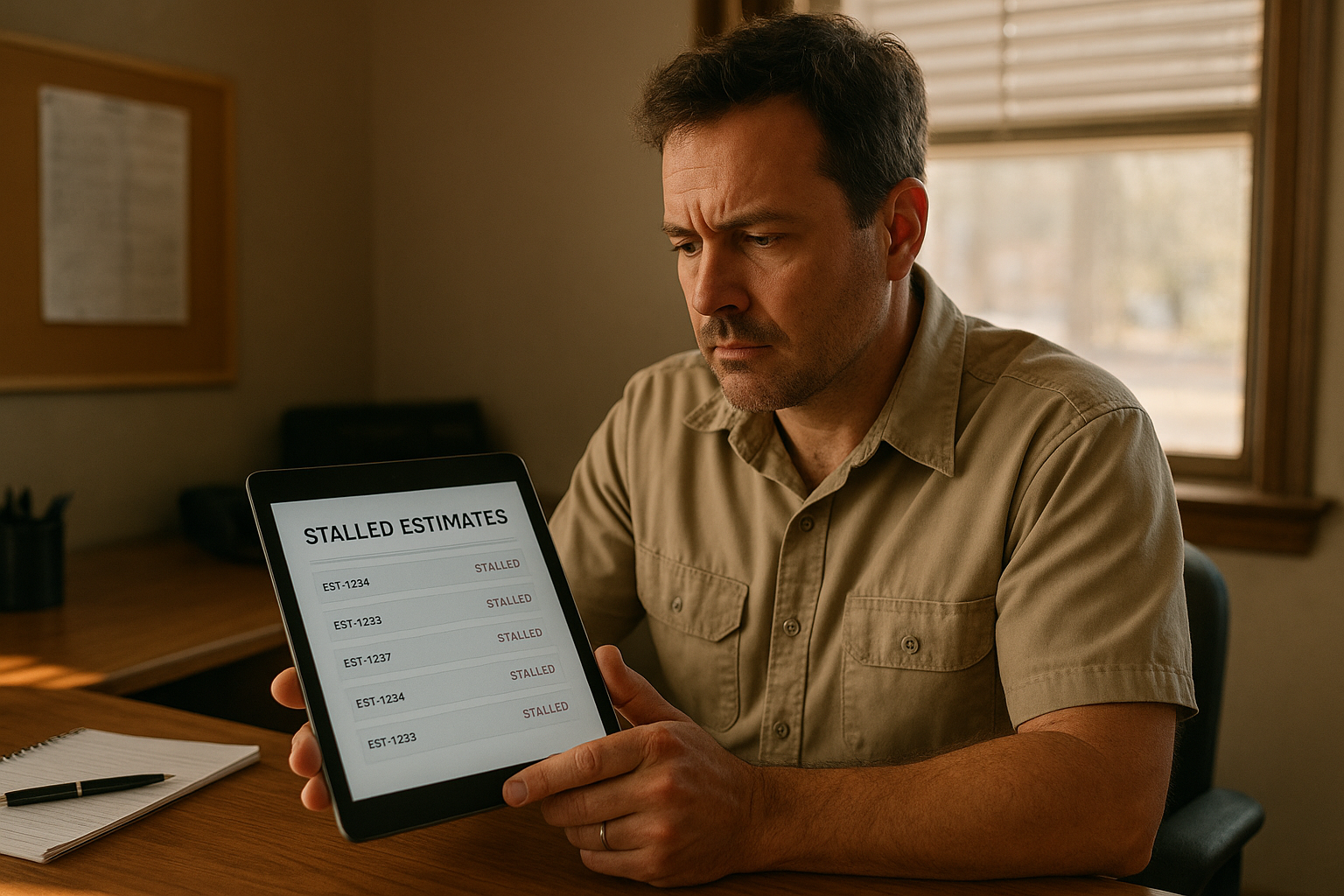
Reviewing stalled quotes often reveals exactly why do my estimates go cold in the first place.
The Real Cost of a Stalled Quote
A widely cited study referenced by Harvard Business Review found that companies contacting a lead within one hour were nearly seven times more likely to convert than those that waited a full day or longer. This is a well-documented gap; you can review the original findings in the Harvard Business Review analysis of online sales leads. Similarly, an estimate sitting untouched for a week behaves the same way as a slow first response: the window for conversion narrows every day it goes without contact.
For a home service business running 3 to 15 trucks, this adds up quickly. Therefore, a company completing 40 estimates a month at an average ticket of $1,200 could be leaving roughly $9,600 to $14,400 in monthly revenue on the table if a third of those quotes go cold. Above all, this is not a marketing problem; it is an operations problem, which means it is fixable without spending another dollar on leads. Our related piece on how operators lose $48K a year to handoff gaps walks through the full math.
Common Reasons Quotes Go Cold
Several recurring patterns explain most cold estimates. In particular, the following issues show up again and again across HVAC, plumbing, and electrical businesses:
- No second contact is ever scheduled after the estimate is sent.
- A missed inbound call means the customer's question never gets answered.
- The estimate lacks financing options, so budget concerns go unaddressed.
- Staff assume "no response" means "not interested," which is often false.
- There is no dashboard showing which estimates are aging and need attention.
Notably, missed calls contribute heavily to this pattern. As a result, we cover that connection in detail in our article on how missed calls cost HVAC businesses real revenue.
How Estimate Follow-Up Gaps Leak Revenue
Every unfollowed estimate represents marketing spend, a technician's drive time, and an office employee's labor that already happened. Consequently, when that quote goes cold, none of that upfront cost gets recovered. In contrast, a business with a structured follow-up cadence converts a meaningfully higher share of the same lead volume without spending anything extra on advertising.
Furthermore, this leakage compounds over time because a customer who feels ignored is unlikely to leave a review or refer a neighbor, which quietly dries up future lead flow too. For strategies specifically aimed at closing this gap, see our estimate follow-up recovery guide.
How to Stop Estimates From Going Cold: A Step-by-Step Process
Fixing this leak does not require new leads; it requires a better process for the leads already in the pipeline. Below is a practical sequence any home service operator can put in place this week.
- Respond within the first hour. Contact every new estimate request within the first hour it comes in, since response speed heavily influences whether a customer chooses your business over a competitor.
- Build in a next step. Include a clear call to action and a scheduled follow-up date directly in the estimate so the customer knows exactly what happens next and when to expect contact.
- Automate the follow-up sequence. Set up automated texts and emails at 24 hours, 3 days, and 7 days after sending so no estimate depends on a staff member remembering to follow up manually.
- Present financing at the point of decision. Offer financing or buy-now-pay-later options directly inside the estimate view so budget concerns get addressed immediately instead of becoming a silent reason to disappear.
- Track every open estimate in one dashboard. Monitor all pending estimates in a single view with aging indicators so your team can prioritize the oldest quotes before they turn permanently cold.

A quick follow-up call is often enough to keep a quote from stalling completely.
What Role Does Automation Play in Warming Up Cold Estimates?
Automation matters because it removes reliance on a busy office team remembering to follow up on every single quote. Specifically, automated text and email sequences fire on schedule regardless of how hectic the day gets, which means fewer estimates fall through the cracks.
Additionally, unifying calls, texts, and email into one inbox prevents a customer's reply from getting buried in a different channel than where the estimate originated. Platforms built for this problem, such as JobOS Pro, pair a unified inbox with an AI receptionist that answers missed calls around the clock, so a follow-up question never goes unanswered simply because it arrived after five. For a related tactic, see our guide on reducing costly callbacks, which often stem from the same communication gaps.
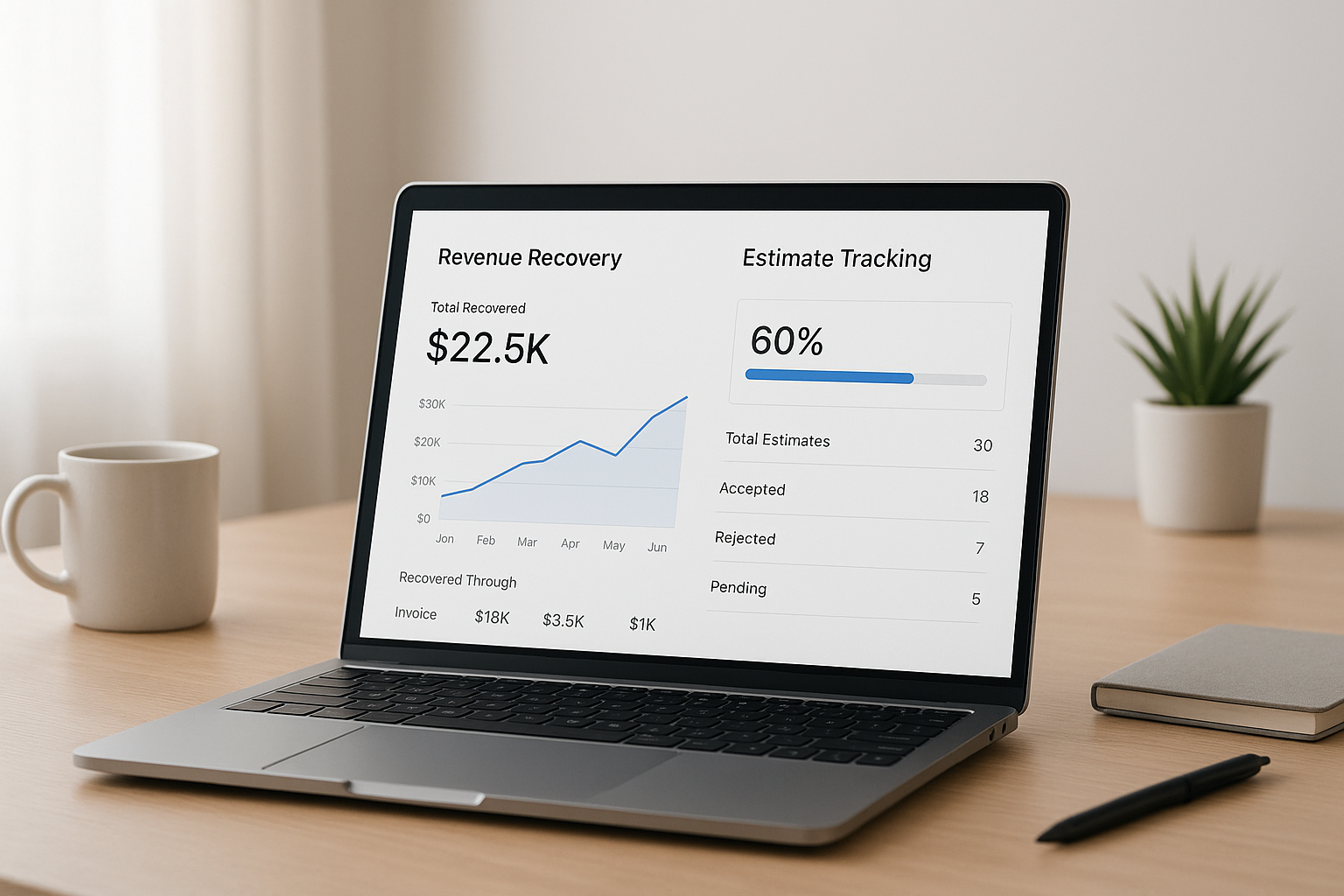
Centralized tracking makes it far easier to catch a cold estimate before it is truly lost.
Frequently Asked Questions About Why Estimates Go Cold
What does it mean when an estimate goes cold?
A cold estimate is a quote that a customer received, showed interest in, and then stopped responding to without ever giving a clear yes or no. It typically happens when there is no structured follow-up after the initial send.
Why do my estimates go cold even when customers seem interested?
Estimates go cold mainly because of a follow-up gap, not lack of interest. The customer gets busy, forgets, or receives a faster response from a competitor while waiting for a second touch that never comes.
How long should I wait before following up on a sent estimate?
Ideally, follow up within 24 hours of sending the estimate, then again within three to five days if there is no response. Waiting longer than a week significantly lowers the chance of conversion.
What is the biggest mistake that causes quotes to stall?
The biggest mistake is treating the estimate as the final step instead of the start of a conversation. Without a scheduled follow-up sequence, even strong leads quietly go quiet.
How much revenue do stalled estimates actually cost a business?
Home service businesses commonly lose 20 to 30 percent of potential revenue to internal handoffs, including unfollowed estimates. For a mid-sized operator, that can mean tens of thousands of dollars per year.
Is price the main reason customers ghost a quote?
Price is rarely the main reason. In most cases, customers ghost a quote because nobody reached out again, not because the number itself was too high.
How does automated follow-up help estimates convert?
Automated follow-up sends timely texts, emails, or calls without relying on staff to remember. This consistency keeps the business top of mind while the customer is still deciding.
What's the difference between a lost bid and a cold estimate?
A lost bid means the customer chose a competitor and said so. A cold estimate means the customer never gave an answer at all, which often signals a process failure rather than a lost sale.
How many follow-up touches does an estimate typically need?
Most estimates need three to five follow-up touches across text, email, and phone before a customer decides. Stopping after one attempt leaves significant revenue on the table.
Can missed phone calls contribute to cold estimates?
Yes, missed calls compound the problem because a customer trying to ask a follow-up question or approve a quote may simply call the next available company instead.
What tools help prevent estimates from going cold?
CRM systems with built-in follow-up sequences, text-to-pay, and dynamic pricing at the point of decision all help keep estimates warm. Platforms that unify calls, texts, and email in one inbox further reduce the chance of a dropped follow-up.
How do I know if my follow-up process has a gap?
Review your last 30 sent estimates and check how many received a second contact attempt. If fewer than half did, there is a clear gap in the process.
Does offering financing reduce the number of cold estimates?
Presenting financing or buy-now-pay-later options at the point of decision often reduces cold estimates because it removes budget hesitation as a reason to delay.
What's a reasonable timeframe to consider an estimate officially lost?
After 14 to 21 days without response despite multiple follow-up attempts, it is reasonable to mark an estimate as lost and shift it to a long-term nurture list.
Bringing It All Together
Ultimately, the answer to why do my estimates go cold almost always traces back to what happens after the quote is sent, not the number on the page itself. Therefore, the fix is rarely more leads; it is a tighter follow-up process, faster response times, and a system that tracks every open quote until it is either won or clearly lost. For example, businesses that automate follow-up, answer every call, and present financing at the right moment consistently convert more of the pipeline they already have.
In addition, closing this gap does not require replacing existing tools overnight. Platforms like JobOS Pro are built to run alongside current software while unifying calls, estimates, and follow-up into one system with flat, unlimited-technician pricing. Above all, treating estimate follow-up as a repeatable process, rather than an afterthought, is what finally stops estimates from going cold.
