Why does my software bill go up every time I hire? It's one of the most frustrating discoveries for home service business owners: you bring on a new technician to keep up with demand, and your field service software renewal jumps right along with your headcount. This happens because most platforms serving HVAC, plumbing, and electrical trades charge per technician or per seat, rather than a flat monthly rate. As a result, every hire quietly becomes a new line item on your invoice. Understanding why this happens, and what alternatives exist, can save operators thousands of dollars a year.
Quick answer: Your software bill rises with every hire because most field service platforms bill per active technician or user seat. Consequently, growth in headcount directly increases your monthly software cost, unlike flat-rate platforms that charge one fixed price no matter how many people use the system.
Why does my software bill go up every time I hire? Because most platforms add a fee per technician added to the account.
Why Does My Software Bill Go Up Every Time I Hire?
In short, your bill increases because the software you're using treats every new technician as a new billable license. Specifically, platforms built for enterprise field service operations, like ServiceTitan, calculate pricing on a per-technician or per-seat basis. That means the vendor's revenue scales up automatically whenever your business scales up its team, even though the software itself hasn't changed.
This model isn't inherently unfair; it simply reflects how the vendor prices usage. However, for a growth-minded owner running 3 to 15 trucks, it creates a strange incentive: hiring, which should strengthen the business, also raises fixed overhead. Therefore, many operators find themselves quietly avoiding hires or delaying software upgrades, both of which slow growth rather than support it.
Understanding Per-Technician Software Pricing
Per-technician pricing, sometimes called per-seat billing, charges a company for each active user license on the platform. In addition to the base subscription, many vendors add fees for dispatchers, office staff, or admin roles as separate seats. As a result, a company that starts with 5 techs and grows to 12 can see its software bill more than double, even if job volume only grows by 40 percent.
For example, a platform charging $100 per technician per month costs $500 monthly at 5 techs but $1,200 monthly at 12 techs. In contrast, the actual software features, the calendar, the CRM, the invoicing tool, haven't grown at all. Only the price has.
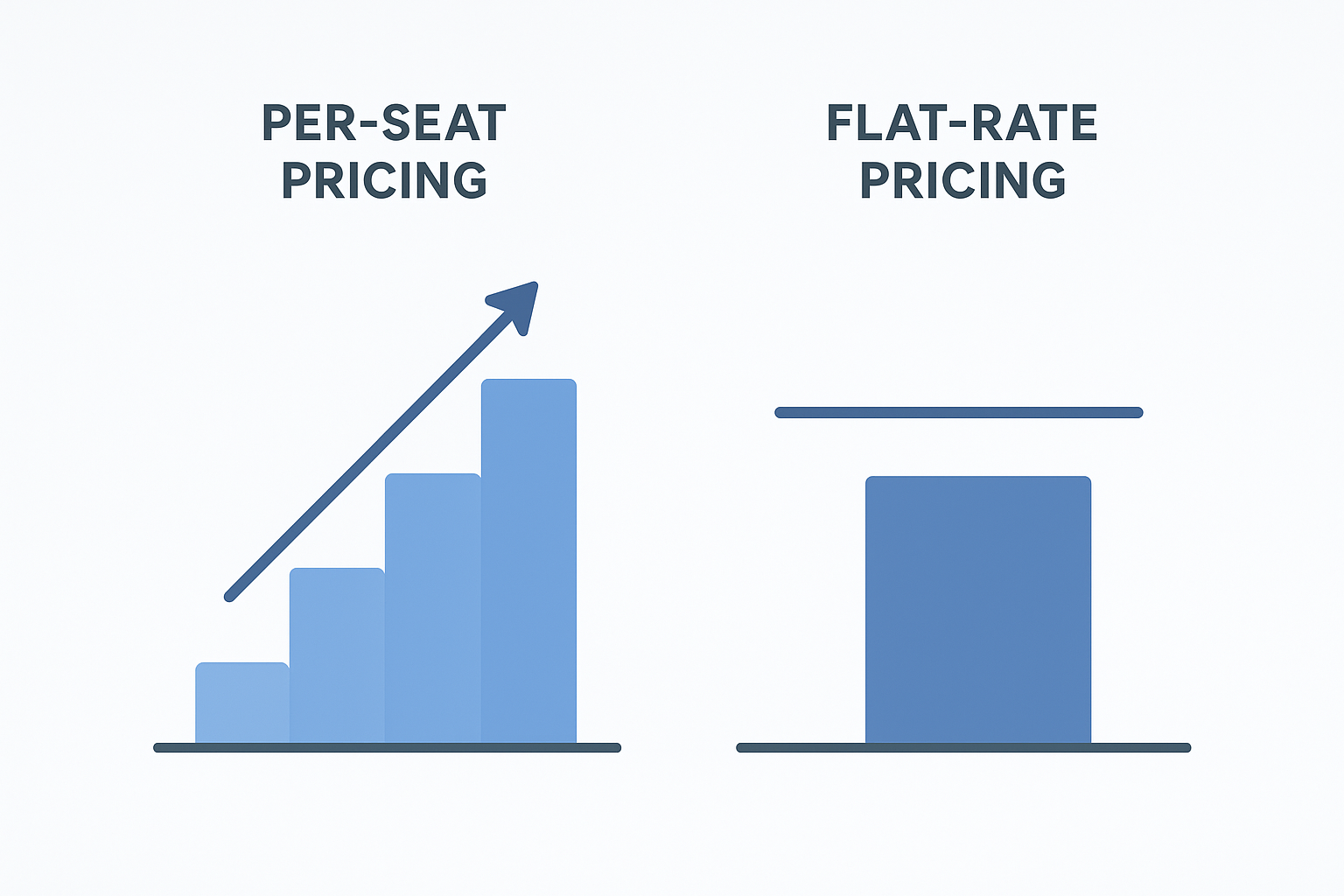
Per-seat pricing climbs with every hire, while flat-rate plans stay level no matter how many technicians join the team.
The Hidden Cost of Per-Seat Billing as You Scale
Beyond the sticker price, per-seat billing creates a slower, harder-to-see cost: it discourages the exact behavior that grows a home service business. Above all, hiring more technicians should let a company answer more calls, book more jobs, and finish work faster. Yet when software costs scale in lockstep with headcount, owners start treating every new hire as a software expense decision instead of a revenue opportunity.
Similarly, this pricing model rarely accounts for the revenue a technician actually generates. According to industry estimates, home service operators lose 20 to 30 percent of potential revenue not to competitors but to internal handoffs, missed calls, cold estimates, and unbilled work, as detailed in this breakdown of unbilled work leakage. Consequently, a software bill that punishes growth compounds a problem that already exists elsewhere in the business.
Furthermore, per-seat pricing tends to hide true costs until renewal time. Owners often underestimate their software spend by 20 percent or more because add-on modules for payments, marketing, or reporting get billed separately per seat as well.
How to Audit Your Software Costs Before Your Next Hire
Before adding another technician, it helps to run a quick cost projection. The following steps outline a simple audit process any owner-operator can complete in under an hour.
- Pull your current per-seat invoice breakdown. Request an itemized statement from your vendor showing exactly what you pay per technician, dispatcher, and office seat across every connected tool.
- Project your 12 to 24 month hiring plan. Estimate how many technicians or office staff you realistically expect to add based on booked demand and revenue targets.
- Multiply per-seat fees against that future headcount. Calculate your projected annual cost under the current pricing model, then compare it against flat-rate alternatives.
- Add up every disconnected tool you currently pay for. List every separate subscription for scheduling, invoicing, reviews, and marketing, since consolidating five to ten tools into one platform often closes the price gap entirely.
- Choose a pricing model that matches your growth stage. Once projected per-seat costs approach a flat monthly plan, switching removes the hiring penalty for good.
This same audit process is useful when evaluating technician utilization rates, since underused seats often reveal where software spend is being wasted regardless of pricing model.
Flat-Rate Alternatives: Software That Doesn't Punish Growth
Fortunately, per-seat billing isn't the only option available to home service businesses. Flat-rate platforms charge one fixed monthly price regardless of how many technicians, dispatchers, or office staff use the system. In other words, hiring stops being a software cost event altogether.
For instance, JobOS Pro publishes flat pricing at $199, $349, and $549 per month, each tier including unlimited technicians, dispatchers, and office staff. That structure replaces five to ten disconnected tools with a single bill that stays the same whether a company runs 3 trucks or 15. This matters most for the growth-minded owner-operator who has outgrown entry-level tools but isn't ready to absorb enterprise per-technician pricing.
Because the platform is built to plug revenue leaks rather than simply record jobs, it also addresses issues like the estimate follow-up gap and missed opportunities to increase average ticket size, both of which often cost more than the software subscription itself.
What Is JobOS Pro?
JobOS Pro is an AI-native operating system built specifically for HVAC, plumbing, electrical, and adjacent home service trades across the United States and Canada. In particular, it covers the full revenue path from missed-call capture and booking through estimates, payments, reviews, and CEO-level reporting inside one platform.
Notably, the platform includes Kate, an AI receptionist that answers calls around the clock, checks live availability, and books jobs automatically. It also runs alongside existing tools such as Jobber, ServiceTitan, and QuickBooks, so operators can trial it for 30 days without migrating data first. For a closer look at how missed follow-ups affect margins, see this guide on estimate follow-up leakage.
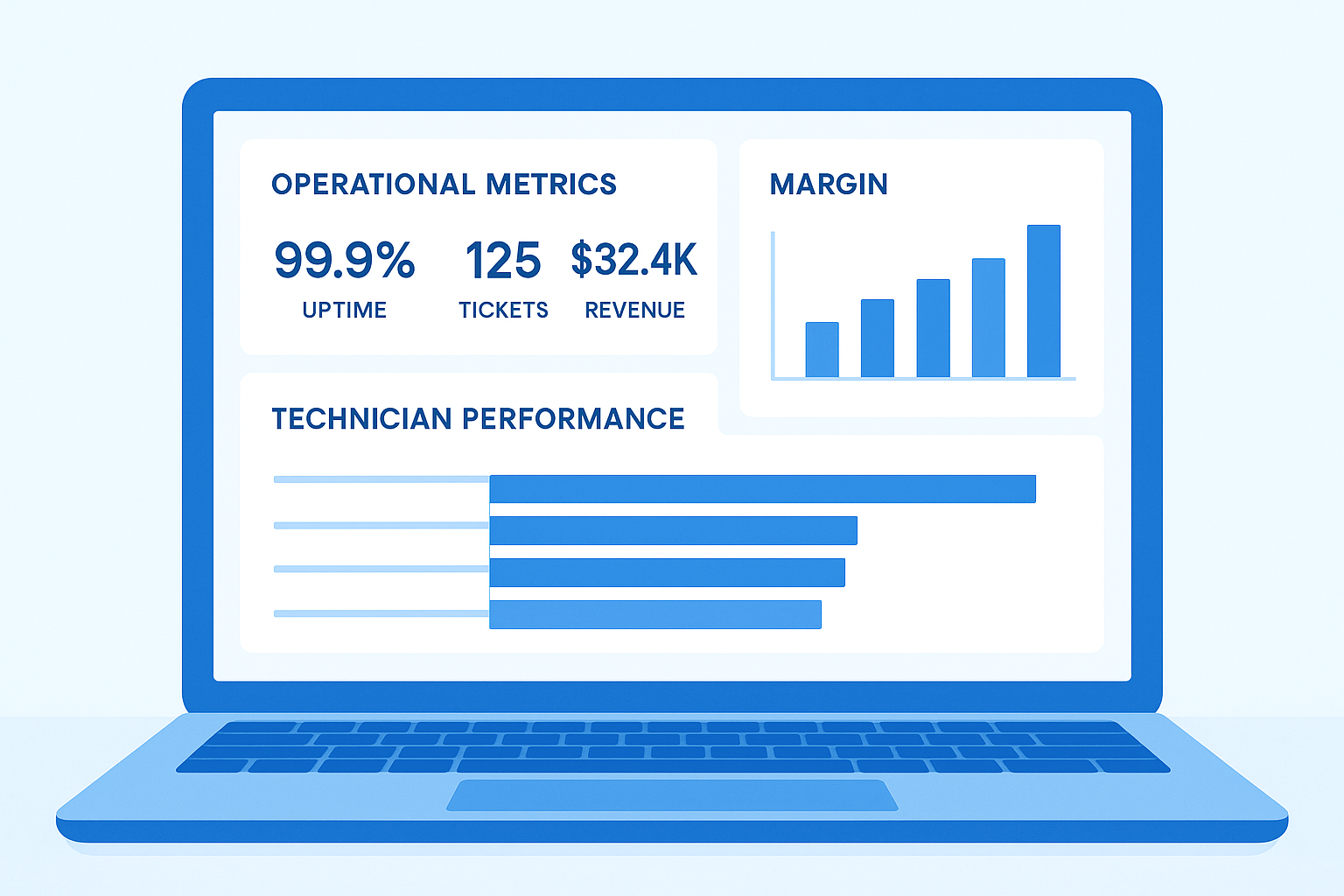
A flat-rate operating system lets owners track margin by job and technician without worrying about per-seat fees.
Frequently Asked Questions
Why does my software bill go up every time I hire?
Your software bill goes up every time you hire because most field service platforms charge per technician or per active seat. Adding a new hire automatically adds a new billable license, so your software cost scales directly with your headcount instead of staying fixed.
What is per-technician software pricing?
Per-technician pricing is a billing model where a vendor charges a fee for each active user or field technician on the account. It's common among enterprise field service platforms and means the invoice rises automatically with staff count.
How much does per-seat pricing cost as a business scales?
Per-seat costs typically run $30 to $200 or more per technician each month, depending on the platform. For a company growing from 5 to 15 trucks, that can mean an extra $3,000 to $18,000 a year in software fees alone.
Why do platforms like ServiceTitan charge per technician?
Enterprise platforms charge per technician because it aligns their revenue with account size and usage. While this suits very large operations with dedicated finance teams, it becomes costly quickly for mid-size crews that hire seasonally.
What's the difference between per-seat and flat-rate software pricing?
Per-seat pricing charges a fee for every user added, so costs rise with headcount. Flat-rate pricing charges one fixed monthly price regardless of how many technicians, dispatchers, or office staff use the system.
How can I estimate future software costs before hiring more technicians?
Multiply your vendor's per-seat price by your projected headcount for the next 12 to 24 months, then compare that total to flat-rate alternatives. This quick audit often shows a flat-rate plan is cheaper well before growth hits its ceiling.
What common mistakes do owners make when choosing field service software?
The most common mistake is choosing software based on its lowest advertised tier without modeling costs at future headcount. Owners also frequently overlook add-on fees for dispatch, payments, or marketing modules billed separately per seat.
Is flat-rate software pricing better for growing home service businesses?
For most growing home service businesses, flat-rate pricing is better because it removes the penalty for hiring and keeps budgeting predictable. It's especially valuable for owners running 3 to 15 trucks who scale staff faster than revenue per job.
How long does it take to switch from per-seat to flat-rate software?
Most operators can migrate core data, such as customers, jobs, and pricing, within a few weeks when the new platform supports running alongside existing tools. A phased switch, rather than a hard cutover, reduces disruption to daily dispatch.
Does JobOS Pro charge per technician?
No, JobOS Pro uses flat monthly pricing at $199, $349, or $549 with unlimited technicians, dispatchers, and office staff on every tier. The bill stays the same whether a company runs 3 trucks or 15.
What are best practices for controlling software costs while scaling a trades business?
Audit total software spend annually, consolidate overlapping tools into one platform, and model pricing against your hiring plan rather than current headcount alone. Above all, prioritize systems that fix revenue leakage instead of just recording jobs.
How much revenue do home service businesses lose to operational handoffs?
Industry estimates suggest home service operators lose 20 to 30 percent of potential revenue to missed calls, unfollowed estimates, and unbilled work rather than to competitors. Fixing these handoffs often matters more than any single software price tag.
Key Takeaways
So, why does my software bill go up every time I hire? Ultimately, it comes down to a pricing model, not a law of nature. Per-technician and per-seat billing structures tie software cost directly to headcount, which quietly discourages the growth these tools are supposed to support. In contrast, flat-rate platforms like JobOS Pro remove that penalty entirely, letting operators add technicians without triggering a bigger invoice. Before your next hire, run the numbers: compare your current per-seat trajectory against a flat monthly plan, and factor in every disconnected tool you're already paying for. As industry data from sources like the U.S. Bureau of Labor Statistics and the Small Business Administration show, labor and operating costs already rise with growth. Software, as described on Wikipedia's overview of software as a service, doesn't have to rise the same way. Choosing the right pricing model now can keep hiring a growth decision instead of a cost decision, and platforms built to plug revenue leakage, like the tools detailed at jobospro.com, make that shift straightforward.
